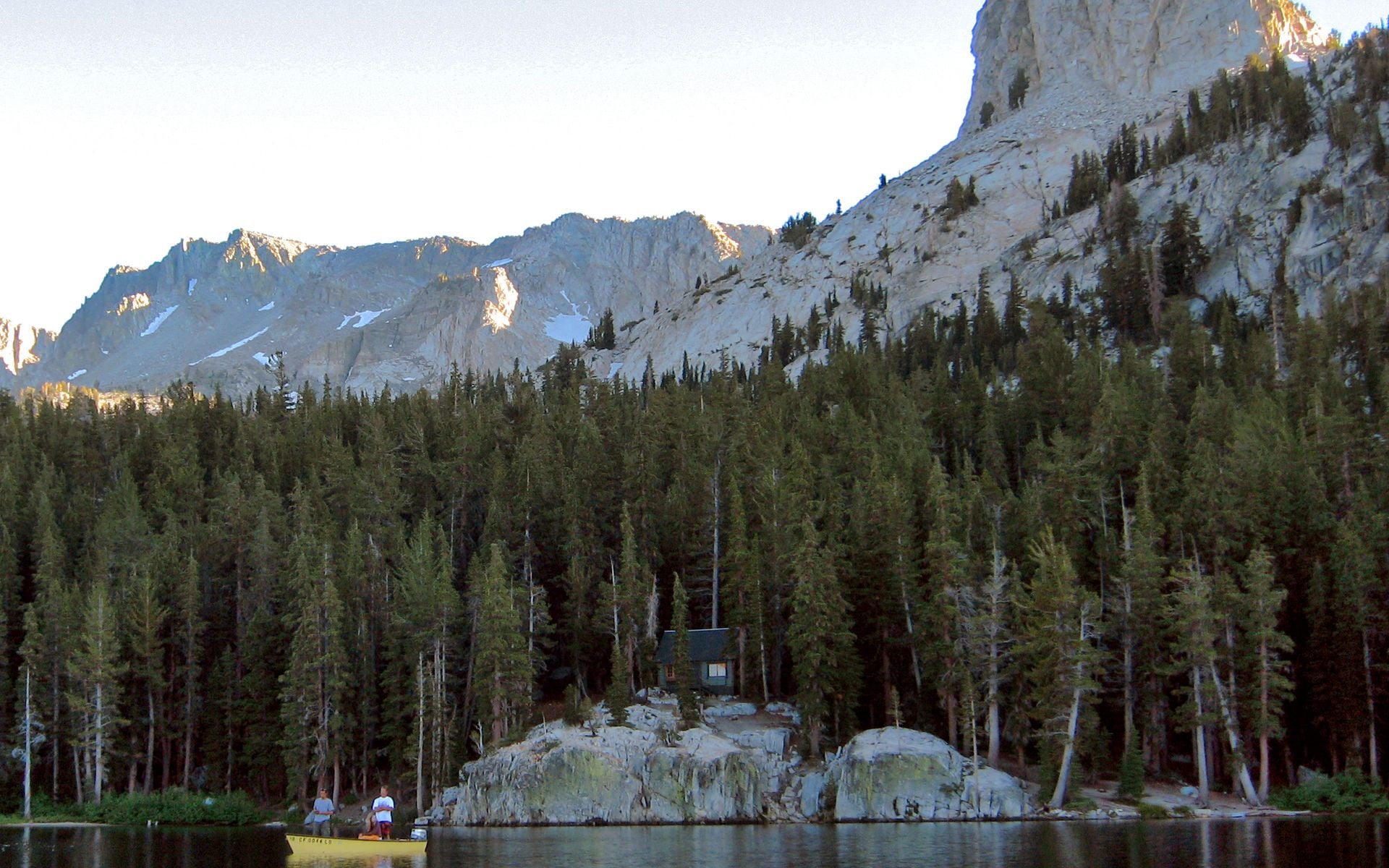
What Defines the High Sierra
The High Sierra is California's high country: a 400-mile wall of granite that holds the state's tallest mountains, deepest snow, and biggest trees. It is not a single destination but a chain of them, from the glacier-carved valleys of the north to the sequoia groves and 14ers of the south. Within the broader California travel guide, this is the region you come to for altitude. What ties it together is elevation and season. Everything up here runs on a mountain calendar, and the biggest planning factor is which roads are open.
The marquee stops fall into three clusters. In the central Sierra, Yosemite National Park is the headliner, with Half Dome, El Capitan, and Yosemite Valley drawing millions. To the south sit Sequoia National Park and neighboring Kings Canyon National Park, home to the largest trees on earth and a canyon deeper than the Grand Canyon. Up north straddling the Nevada line is Lake Tahoe, the big alpine lake that flips between summer beaches and winter ski resorts.
The one road that stitches the range together is Tioga Road, Highway 120 across Yosemite's high country, which links the park to the Eastern Sierra and US-395. It closes with the snow, typically from November until late May or June, and that closure reshapes any trip that spans both sides of the mountains. Plan around it.
Main Bases and Towns
Where you stay depends on which cluster you are targeting. For Yosemite, you can sleep inside the park in Yosemite Valley if you book months out, or base in a nearby town like El Portal or Mariposa on the west side. For the southern parks, Three Rivers is the small entrance town at Sequoia's foothills, about an hour from the giant forest.
Lake Tahoe is the most built-up base and the easiest for first-timers. South Lake Tahoe has the widest range of lodging and dining: Edgewood Tahoe Resort sits right on the lake with its own golf course and beach, and Harrah's Lake Tahoe anchors the casino strip at the Nevada state line for a livelier, lower-cost stay. For a casual dinner after a day on the mountain, Base Camp Pizza Co. at Heavenly Village is the reliable South Lake standby.
Over on the Eastern Sierra, Mammoth Lakes is the base for the eastern high country, a full ski-and-summer town on US-395. The Village at Mammoth and the Village Lodge Mammoth put you in the walkable core near the gondola, and Tamarack Lodge and Convict Lake Resort are classic lakeside options a few minutes out of town for something quieter.
Top Places to Prioritize
If it is your first Sierra trip, Yosemite is non-negotiable. Give it at least a full day in the Valley for the waterfalls and granite walls, and a second day up at Glacier Point or along Tioga Road if it is open. Yosemite has run a peak-season day-use reservation system in recent summers, so check the current-year rules before you drive up; without a reservation you can be turned away at the gate on busy days.
Pair Yosemite with either Tahoe or the southern parks depending on your season. In summer, Tahoe adds beaches, kayaking, and hiking, and it is close enough to combine. Sequoia and Kings Canyon are the move if giant trees and a quieter park are what you want; the General Sherman Tree, the largest on earth by volume, is a short walk, and the drive into Kings Canyon is one of the great mountain roads in the state.
Mammoth Lakes is the fourth pillar and the one people skip, which is a mistake if you like the outdoors. It gives you the Eastern Sierra: Devils Postpile, high alpine lakes, and California's most reliable late-season snow. In winter it is a destination ski resort; in summer it is a hiking and mountain-biking hub. Reach it over Tioga Road from Yosemite when the pass is open, or up US-395 from the south.
When to Go and How Long
The Sierra runs two seasons that barely overlap. Summer and early fall, roughly late June through October, is the hiking window: the high passes are open, the waterfalls are still running early in that stretch, and the whole range is accessible. December through April is ski season, when Tahoe and Mammoth resorts run and the high roads close. May and November are the shoulder gambles, when conditions swing week to week.
For time, budget three to five days to do the High Sierra justice. A tight version is two days in Yosemite plus two at Tahoe. A fuller loop adds Mammoth and the Eastern Sierra over Tioga Road, or swings south to Sequoia and Kings Canyon. Do not try to see Yosemite, Tahoe, Mammoth, and the sequoias in a single trip unless you have a full week; the distances between them are real.
Reserve early on both ends of the year. Summer campgrounds and in-park lodges book out months ahead, and Tahoe and Mammoth lodging spikes over holiday and powder weekends. If you are chasing snow, check our roundup of the best beaches in California for a warm-weather counterpoint when you want to trade the mountains for the coast, and lock your Sierra dates around the passes.
Getting There and Around
You need a car up here, and in winter you need to know how to use tire chains, which Caltrans can require on mountain highways during storms. Distances are the thing people underestimate. Yosemite Valley is about a four-hour drive from San Francisco via Highway 120, and Fresno's airport (FAT) is the closest major hub to both Yosemite and the southern parks. Lake Tahoe is roughly two hours from Sacramento and three-and-a-half to four from San Francisco. Mammoth sits on the eastern side, about five to six hours from Los Angeles up US-395 and only reachable from Yosemite when Tioga Road is open.
The critical routing decision is the Tioga Road closure. From roughly November to late spring, the fast connection between Yosemite's west side and the Eastern Sierra shuts, and you have to loop hundreds of miles around the range instead. Build your itinerary knowing that: in summer you can string the whole range together, in winter you cannot. For the wider picture on driving times and airports across the state, and for stitching the Sierra into a longer route, keep this region's pace in mind and reserve your park entries and lodging before you fix your flights.
Frequently asked questions
How many days do you need for the High Sierra?
Three to five days covers it well. A tight version is two days in Yosemite plus two at Lake Tahoe. A fuller loop adds Mammoth Lakes and the Eastern Sierra over Tioga Road, or swings south to Sequoia and Kings Canyon. Don't attempt all four clusters in under a week; the drives between them are long.
When is Tioga Road open?
Tioga Road (Highway 120 across Yosemite's high country) typically opens in late May or June and closes with the first heavy snow, usually in November. When it is closed, the fast link between Yosemite's west side and the Eastern Sierra and US-395 is gone, and you have to loop hundreds of miles around the range.
Do you need a reservation for Yosemite?
In recent peak summers, yes. Yosemite has run a day-use reservation system on busy months, and without one you can be turned away at the entrance. Rules change year to year, so check the current-season requirements before you drive up. In-park lodging and campgrounds book out months ahead regardless.
What's the closest airport to Yosemite and Sequoia?
Fresno Yosemite International (FAT) is the closest major airport to both Yosemite and the southern parks. Yosemite Valley is about a four-hour drive from San Francisco. For Lake Tahoe, Reno-Tahoe is closest, with Sacramento about two hours away by car.
When is ski season in the Sierra?
Roughly December through April, with Mammoth often running the longest thanks to its high elevation and late snow. Tahoe and Mammoth resorts spike in price over holiday and powder weekends, so book lodging early. Summer and early fall (late June to October) is the hiking season, when the high passes are open.