The Nine Parks and What Each Is For
No other state comes close to California's count. The nine are Yosemite, Sequoia, Kings Canyon, Death Valley, Joshua Tree, Redwood, Lassen Volcanic, Channel Islands, and Pinnacles. They are scattered from the Oregon border to the Mexican line, so you plan around geography, not a single loop. The Sierra Nevada parks (Yosemite, Sequoia, Kings Canyon) sit in the middle of the state along the High Sierra. The desert parks (Death Valley, Joshua Tree) sit east and south. Redwood is the far northwest coast, Lassen the volcanic north, Pinnacles the Central Coast interior, and Channel Islands offshore from Ventura.
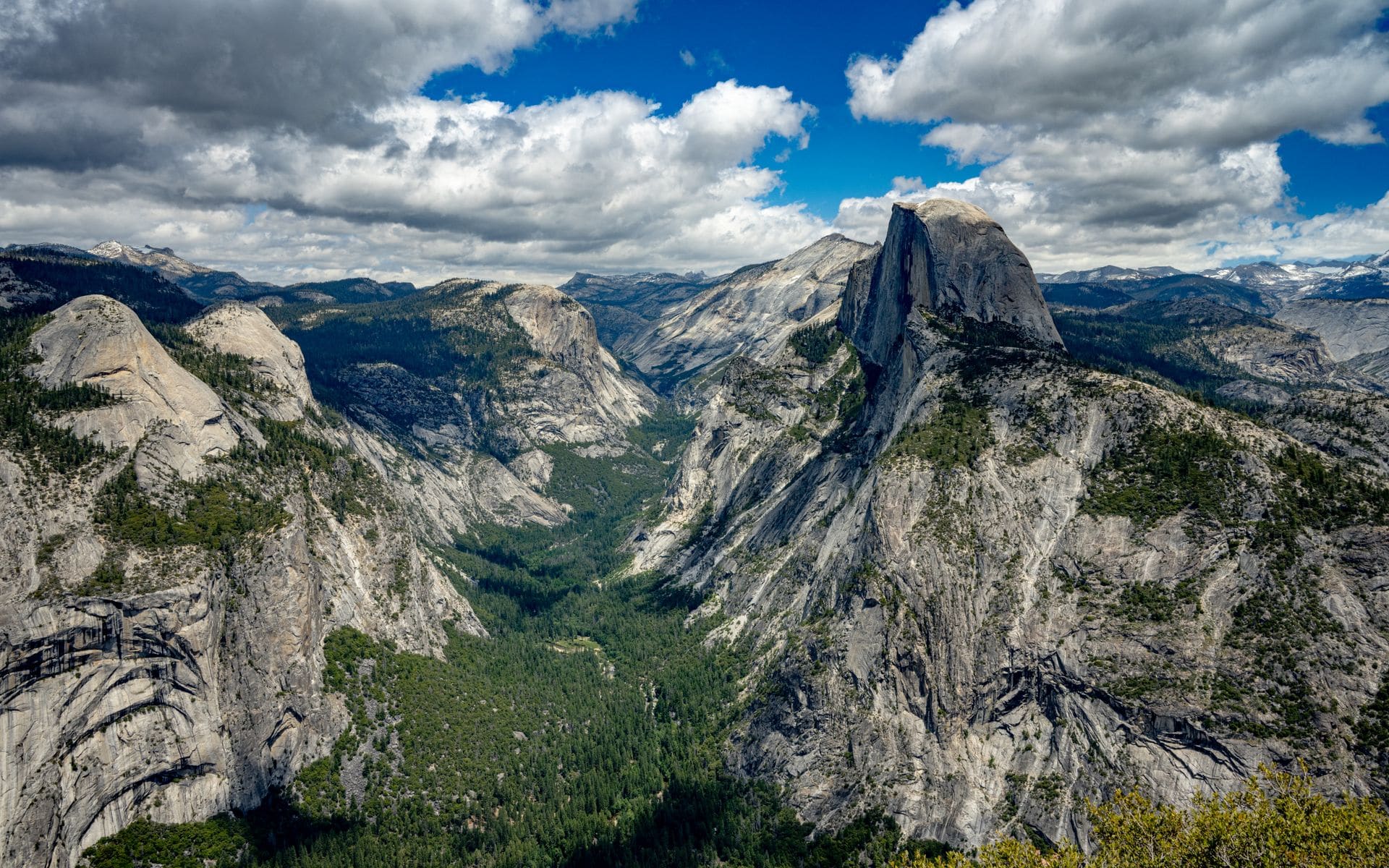
For a first California trip, Yosemite is the anchor: granite domes, waterfalls that peak in May and June, and the giant sequoias of the Mariposa Grove. Sequoia and Kings Canyon, an hour south, hold the largest trees on Earth, including the General Sherman Tree. Joshua Tree is the easy desert win near Palm Springs, good for a day or a weekend. Death Valley is the extreme: the hottest, lowest, driest ground in North America, best October through April.
The quieter four reward travelers who already know the marquee parks. Redwood National and State Parks protect the tallest trees alive. Lassen Volcanic has boiling mud pots and a drive-up volcano. Pinnacles has condors and talus caves. Channel Islands, reached only by boat, is the least visited park in the state and one of the least crowded in the country.
Fees, Passes, and Reservations
Most California parks charge a $35 per-vehicle entrance fee good for seven days. That covers Yosemite, Sequoia and Kings Canyon (one fee for both), Joshua Tree, Death Valley, and Pinnacles. Lassen Volcanic runs $30 per vehicle in summer. Redwood National and State Parks and Channel Islands charge no entrance fee, though Channel Islands means paying for an Island Packers boat out of Ventura.
If you are hitting three or more parks, buy the America the Beautiful annual pass for $80. It covers entrance for everyone in your vehicle at all federal parks for a year, so it pays for itself fast on a California parks run. You can buy it at any staffed entrance station or online before you go.
Yosemite is the one to watch for reservations. In recent peak summers it has required a timed day-use reservation to drive into the park during busy daytime hours, and the rules change year to year, so check the current-season policy before you commit. In-park lodges and popular campgrounds across Yosemite, Sequoia, and the desert parks book out months ahead. If you want a guided approach, the operators in our tour operators and guides directory run day trips and multi-day park tours from the major cities.
When to Go: Season by Season
The Sierra and the deserts run on opposite calendars, and that single fact drives most park itineraries. The Sierra parks are a summer-and-fall show. Yosemite's waterfalls run hardest in May and June from snowmelt, high-country roads like Tioga Road (Highway 120 over the crest) usually open late May or June and close with the first heavy snow, and September brings thinner crowds and warm days. Winter shrinks Yosemite to the valley floor and turns Sequoia and Kings Canyon into a chains-required snow trip.
The desert parks flip it. Joshua Tree and Death Valley are pleasant October through April and dangerously hot May through September, when Death Valley regularly clears 120°F. Spring wildflower blooms, roughly March into April in a wet year, are the desert's best window. Come in summer only with a real heat plan: carry water, hike at dawn, and watch your fuel range in Death Valley, where gas stations are far apart.
The coastal and northern parks are gentler. Redwood is a year-round destination that is greenest and foggiest in summer and quieter in the shoulder months. Pinnacles is best in spring and fall and brutal in summer heat. Channel Islands boats run year-round, with the calmest water and the blue-whale season landing in late summer.
Getting There and Building a Route
Fly into the region closest to your parks. Fresno (FAT) is the nearest major airport to Yosemite, Sequoia, and Kings Canyon. Palm Springs (PSP) and Las Vegas both work for Joshua Tree and Death Valley, and Las Vegas is the fastest way in to Death Valley's east side. San Francisco (SFO) and Sacramento (SMF) serve Lassen and the north, and Los Angeles or Ventura works for Channel Islands.
A rental car is required. These parks sit hours apart on two-lane roads, and there is no useful transit between them. A realistic Sierra pairing is Yosemite plus Sequoia and Kings Canyon over four to five days, since they are only a couple of hours apart. A desert pairing of Joshua Tree and Death Valley works from Palm Springs or Las Vegas over three to four days, though the two parks are still a long half-day of driving apart.
You do not have to choose parks over everything else. Many visitors fold a park or two into a bigger loop that also hits the coast. Our Pacific Coast Highway road trip pairs naturally with a Sierra detour, and if your trip leans toward sand instead of granite, the best beaches in California guide covers the coastal alternative. For the full picture of what the state offers beyond the parks, start at the California travel guide.
What to Do Inside the Parks
Hiking is the core activity in nearly every California park, from Yosemite's Mist Trail past Vernal and Nevada Falls to Sequoia's Congress Trail among the big trees. Our hiking and backpacking guide covers trail picks, permit systems like the one for Half Dome's cables, and how to plan a Sierra backpacking trip. Even non-hikers get a lot from the drive-up viewpoints: Glacier Point in Yosemite, Zabriskie Point at sunrise in Death Valley, and the Cholla Cactus Garden in Joshua Tree.
Beyond walking, the parks each have a signature. Death Valley is a night-sky park, one of the darkest in the country, so plan an evening for the stars. Joshua Tree is a well-regarded rock-climbing area with easier scrambling for everyone else. Channel Islands is a kayaking and wildlife park, best explored by paddle around the sea caves of Santa Cruz Island. Pinnacles has caves you walk through and California condors overhead.
Coastal Redwood pairs the tall trees with actual beaches and tide pools, so it does not feel like a single-note stop. If you want to string park time together with shore time, the parks connect cleanly to the coast: several sit within a half-day of the ocean, and the beaches guide helps you plan the water half of the trip.
Frequently asked questions
How many national parks does California have?
Nine: Yosemite, Sequoia, Kings Canyon, Death Valley, Joshua Tree, Redwood, Lassen Volcanic, Channel Islands, and Pinnacles. That is more than any other state. They are spread from the far north coast to the southern desert, so no single loop covers them all.
Which California national parks can I combine on one trip?
Yosemite, Sequoia, and Kings Canyon pair well since they sit a couple of hours apart in the Sierra, a good four-to-five-day trip. Joshua Tree and Death Valley pair as a desert run from Palm Springs or Las Vegas. Do not try to combine a Sierra park and a desert park in a short trip; they run on opposite seasons and are far apart.
Do I need a reservation to enter a California national park?
Yosemite has used a peak-season timed day-use reservation in recent summers, and the rules change yearly, so check the current policy before you go. The other California parks do not require timed entry, but in-park lodges and popular campgrounds book out months ahead everywhere.
How much does it cost to visit California's national parks?
Most charge $35 per vehicle for seven days; Lassen is $30, and Redwood and Channel Islands have no entrance fee. If you are visiting three or more federal parks, buy the $80 America the Beautiful annual pass, which covers everyone in your car for a year.
When is the best time to visit?
For the Sierra parks (Yosemite, Sequoia, Kings Canyon), aim for May through September, with June for peak waterfalls and September for thinner crowds. For the desert parks (Joshua Tree, Death Valley), come October through April and avoid the dangerous summer heat.