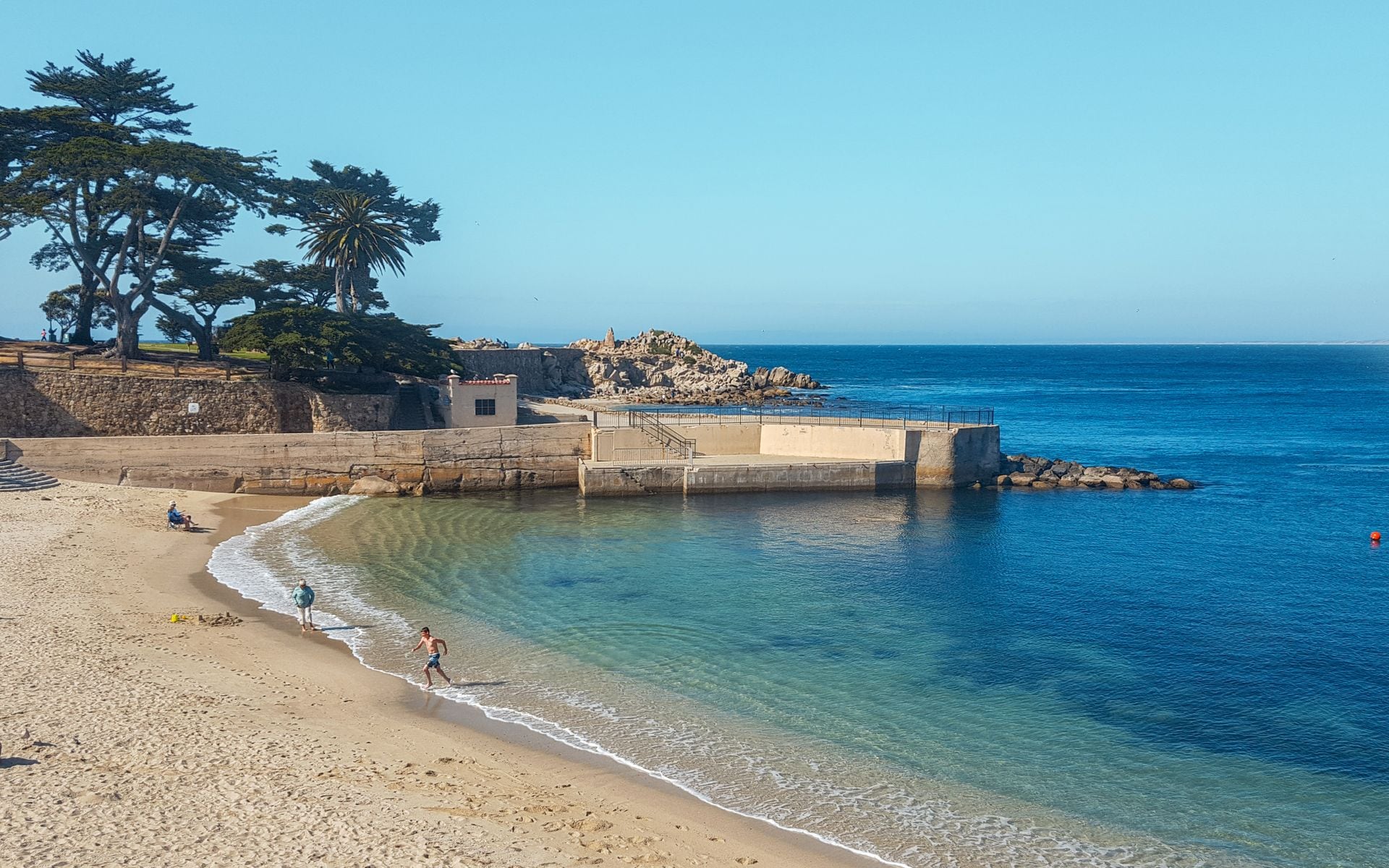
The Coast Splits North and South
The single most useful thing to know about California beaches is that the water gets colder as you go north. Southern California, from San Diego up through Orange County and Los Angeles, has the warmest, most swimmable water, peaking around the upper 60s Fahrenheit in late summer. This is where the classic wide-sand, boardwalk, surf-town beach experience lives. San Diego's Coronado and La Jolla, Orange County's Laguna and Huntington, and LA's Santa Monica and Manhattan Beach are the headliners.
Central and Northern California trade warmth for scenery. Big Sur, the Monterey Peninsula, and the San Francisco coast are spectacular to look at, but the water runs in the 50s year-round and rip currents are serious. You go to these beaches to walk, tide-pool, watch sea otters and elephant seals, and photograph the cliffs, not to swim without a wetsuit. Farther north, the Mendocino and Redwood coasts are wild, foggy, and often empty.
Weather adds a twist. Coastal Southern California gets a stretch of gray morning cloud in late spring and early summer, the June Gloom, that can hide the sun until midday. The warmest, clearest beach weather statewide is late summer into fall, August through October, when the marine layer thins and the water hits its yearly high.
Southern California: The Swimming Coast
San Diego is the softest landing for beach travelers. Coronado's wide flat sand, La Jolla Cove's sea lions and snorkeling, and Mission Beach's boardwalk cover families, snorkelers, and boardwalk types in one metro. The water is the warmest in the state and the lifeguards are among the best staffed.
Orange County is the surf heartland. Huntington Beach trademarked the name Surf City, Laguna Beach stacks small coves under bluffs, and Newport has both a family bay side and a serious ocean side. Los Angeles gives you the full range from the Santa Monica Pier's Ferris wheel to the volleyball courts of Manhattan and Hermosa. All of it is warm enough to swim June through October.
These beaches also work as a base for more than sand. Whale-watching boats run out of Newport and Dana Point, and the beach towns have real dining and lodging. If you want to build a whole trip around the southern shore, the best beaches in California guide ranks the specific stretches worth your time.
Central and Northern California: The Scenic Coast
From Santa Barbara north, the beach experience shifts from swimming to spectacle. Santa Barbara itself keeps some southern warmth and an easy palm-lined waterfront, and it doubles as a wine base, so a beach morning and an afternoon of wine tasting in the Santa Ynez Valley is an easy day. Farther north, Pfeiffer Beach in Big Sur has purple-tinged sand and a sea arch, and Carmel's white-sand beach sits right below town.
Around San Francisco, Ocean Beach and Baker Beach give you sand with a Golden Gate Bridge backdrop, but the water is cold and the currents are dangerous, so these are walking beaches. Half Moon Bay and Santa Cruz add a mellower feel, and Santa Cruz keeps a genuine boardwalk with a wooden roller coaster on the sand.
The far North Coast, Mendocino up through the Redwood coast, is for travelers who want empty, foggy, dramatic shoreline and tide pools rather than a swim. Many of these beaches connect directly to coastal hikes, so pair them with the hiking and backpacking guide for bluff trails and headland loops.
Access, Cost, and the Rules
California beaches are unusually public. State law keeps the wet sand open to everyone, so even beaches fronted by mansions have legal public access, sometimes down marked stairways between homes. The beaches themselves are free to walk on. What you pay for is parking, and it adds up: state-beach lots commonly run $10 to $15 a day, and city beach parking in LA or San Diego can be pricier and fill early on summer weekends.
Facilities track with the crowds. The big Southern California city beaches have lifeguards, restrooms, showers, and rentals for chairs, bikes, and boards. The wild northern beaches often have a gravel pullout and nothing else, so bring what you need. Dogs are welcome on some beaches and banned on others, and the rules are posted, so check before you unclip the leash.
Safety is real on this coast. Rip currents cause most ocean rescues in the state; if one pulls you out, swim parallel to shore rather than against it. Sneaker waves and unstable bluffs kill people every year on the North Coast, so keep back from the surf line on the wild beaches and never turn your back on the water. Guided kayak, tide-pool, and coastal-nature outings through the operators in our tour operators and guides directory are a safer way to explore the rougher shore.
Fitting Beaches Into a Bigger Trip
Most travelers do not build a whole trip around one beach; they string the coast together on a drive. The classic version is the Pacific Coast Highway run down Highway 1, which threads nearly every beach worth stopping for between San Francisco and Los Angeles. Our Pacific Coast Highway road trip lays out the stops, the drive times, and where to overnight.
If your trip is anchored in a city, the beach is rarely far. San Diego, Los Angeles, and Santa Barbara all put swimmable sand within a short drive of downtown hotels, and the beach towns themselves have plenty of lodging and dining. Start from the California travel guide to see how the coast fits with the parks, the cities, and the wine country.
One planning note: pack layers even for a beach trip. Coastal California cools off fast once the sun drops and the fog rolls in, and a San Francisco beach day can call for a jacket in July while San Diego stays in shorts. The farther north you go, the more that matters.
Frequently asked questions
Where is the warmest water for swimming in California?
Southern California, from San Diego up through Orange County and Los Angeles, has the warmest and most swimmable water, peaking in the upper 60s Fahrenheit in late summer. The water gets progressively colder heading north, and around San Francisco and above, it stays in the 50s year-round and calls for a wetsuit.
When is the best time for a California beach trip?
Late summer into fall, roughly August through October, brings the warmest water and the clearest skies once the late-spring June Gloom marine layer has thinned. Summer is warm and busy; spring mornings can be gray on the southern coast.
Are California beaches free?
The beaches themselves are free and public by state law, including the wet sand in front of private homes. What you pay for is parking, commonly $10 to $15 a day at state-beach lots and often more at city beaches, which fill early on summer weekends.
Which beaches are safe for kids?
The wide, lifeguarded Southern California beaches like Coronado in San Diego, the bay side of Newport Beach, and Santa Monica are the easiest for families, with gentle water and full facilities. Avoid the North Coast and Big Sur beaches for swimming; their cold water, rip currents, and sneaker waves make them for walking, not wading.