The Month-by-Month Table
Read this by region, not by a single statewide average, because on any given week the coast, the mountains, and the deserts can be 40 degrees apart. Temperatures below are typical daytime highs in Fahrenheit.
| Month | SF Bay Area | LA / SoCal Coast | Sierra (Yosemite, Tahoe) | Deserts (Palm Springs, Death Valley) | Crowds | |-------|-------------|------------------|--------------------------|--------------------------------------|--------| | January | 57, cool and wet | 68, mild, dry spells | 40s valley / teens up high, snow | 70 / 65, cool and clear | Low, ski towns busy | | February | 60, wet | 68, mild | Peak snowpack, ski season | 75 / 70, ideal | Low, ski towns busy | | March | 62, greening up | 70, some marine layer | Snow lingers, ski season | 80 / 80, warm and dry | Rising, spring break | | April | 65, mild, showers ease | 72, warming | Passes still snowed in | 88 / 90, warm | Busy, spring break | | May | 68, marine layer | 72, May Gray | Waterfalls peak, Tioga still closed | 95 / 100, heating up | Rising | | June | 70, foggy mornings | 75, June Gloom | High country opening, prime | 104 / 110, hot | High | | July | 68, cool and foggy | 80, sunny | Prime hiking, dry | 108 / 116, dangerous | Peak | | August | 70, fog easing | 84, warmest | Prime hiking | 106 / 115, dangerous | Peak | | September | 74, warm and clear | 83, warm ocean | Prime, first cold nights | 100 / 106, cooling | Easing | | October | 72, best of the year | 79, warm | Tioga closes late month, crisp | 90 / 92, comfortable | Moderate | | November | 63, rain returns | 73, mild | First snows, passes closing | 78 / 78, ideal | Low | | December | 57, wet and cool | 68, mild | Ski season opening | 68 / 65, cool | Holiday spikes |
The Coast: Fog First, Then the Warm Months
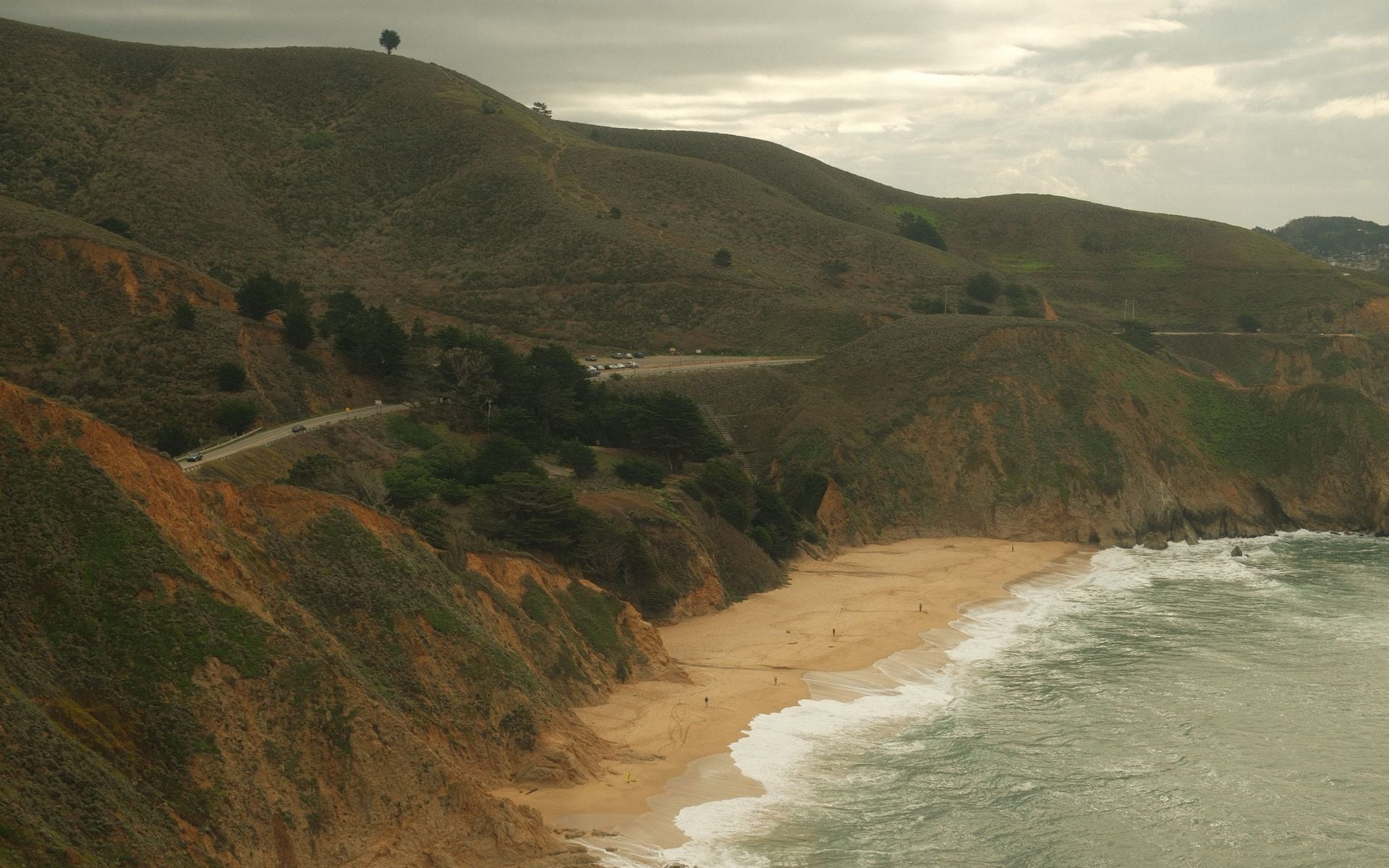
The California coast runs backward from what most visitors expect. Summer mornings in San Francisco and the north are cool and gray, wrapped in fog that can sit until early afternoon. July on the water in the San Francisco Bay Area often feels colder than October. The warm, clear coastal weather arrives in September and October, once the fog machine finally shuts off for the fall.
Southern California is milder and sunnier year-round, but it has its own gray stretch. Locals call it May Gray and June Gloom, when the marine layer holds a low overcast through the mornings before it burns off. The beach cities of Los Angeles, Orange County, and San Diego hit their warmest ocean water and best beach days from August into October.
Winter on the coast is the rainy season, roughly November through March, but it comes as a handful of real storms with dry, mild days in between. A December week in San Diego can deliver plenty of 68-degree sunshine. Pack layers everywhere on the coast in every season, because the swing from foggy morning to warm afternoon is real.
The Sierra: Two Seasons, One Mountain Range
The Sierra Nevada splits cleanly into a ski season and a hiking season. Ski and snowboard season at Lake Tahoe and Mammoth Lakes runs December through April in a typical year, with Mammoth often holding snow into May or June. The snowpack peaks around February and March, which is also when winter driving into the mountains is most likely to require tire chains and when passes close during storms.
The summer window opens as the snow melts. Yosemite's Tioga Road across the high country usually opens in late May or June and closes with the first heavy snow in October or November. July through September is the prime stretch for the alpine lakes, the passes, and the big backpacking country. Nights get cold fast at elevation, even in July, so a warm layer is not optional.
Yosemite waterfalls run on snowmelt and peak in May and early June, then slow to a trickle by late summer. If the falls are the reason you are going, come in spring. To line up flights with the season and the closest hub, check the California airports guide.
The Deserts: Perfect in Winter, Deadly in Summer
The desert calendar is the inverse of the mountains. Palm Springs, Joshua Tree, and Death Valley are at their best from October through April, when daytime highs sit in the 70s and 80s and nights turn cool and clear. Those are the months to hike, camp, and drive the desert park roads in comfort.
From May through September the deserts turn genuinely dangerous. Death Valley routinely runs past 116 degrees in July and August and holds the record for the hottest air temperature ever measured on Earth. Summer hiking there past mid-morning is a real safety risk, not just an uncomfortable one. Carry water, watch your fuel range, and avoid midday exertion.
Palm Springs stays busy in spring, when festival season and warm-but-manageable weather draw crowds and drive hotel prices up. For a quieter desert with the same good weather, aim for late fall or January.
Reading the Table for Your Trip
Use the season to pick the region, then lock the logistics, and cross-check your dates against the best time to visit California guide. If you are set on the coast and the cities, September and October are the safe bet. If Yosemite's high country or Tahoe hiking is the goal, July through September. If it is skiing, December through April. If it is the deserts, the cooler half of the year. Trying to do all of it in one summer week means fighting fog on the coast and dangerous heat in the desert on the same trip.
Wildfire season peaks from late summer into fall, mostly affecting the mountains and the North Coast, so watch air-quality and road-closure alerts if you travel in September or October. It rarely derails a trip, but flexibility helps.
Once you have your month and region, sort out the driving. California distances are long, and how you connect regions matters as much as the weather. Start with the getting around California guide and the full California travel guide to build the route.
Frequently asked questions
What is the warmest month in California?
It depends on the region. The Southern California coast is warmest in August and September. Death Valley and the deserts peak in July and August, often past 115 degrees. The San Francisco coast is warmest in September and October, not midsummer.
When does it rain in California?
The wet season runs roughly November through March, and it arrives as a handful of real storms rather than steady drizzle. Summers are dry statewide. The deserts get very little rain in any month.
When can I drive Yosemite's Tioga Road?
Tioga Road across Yosemite's high country typically opens in late May or June and closes with the first heavy snow, usually in October or November. Outside that window the route is closed by snow, so plan high-country trips for summer and early fall.
Is it too hot to visit Death Valley in summer?
For hiking, yes. From May through September, Death Valley regularly tops 116 degrees and can exceed 120 in July. You can drive through with a working vehicle and plenty of water, but summer hiking past mid-morning is a genuine safety risk. Visit October through April instead.