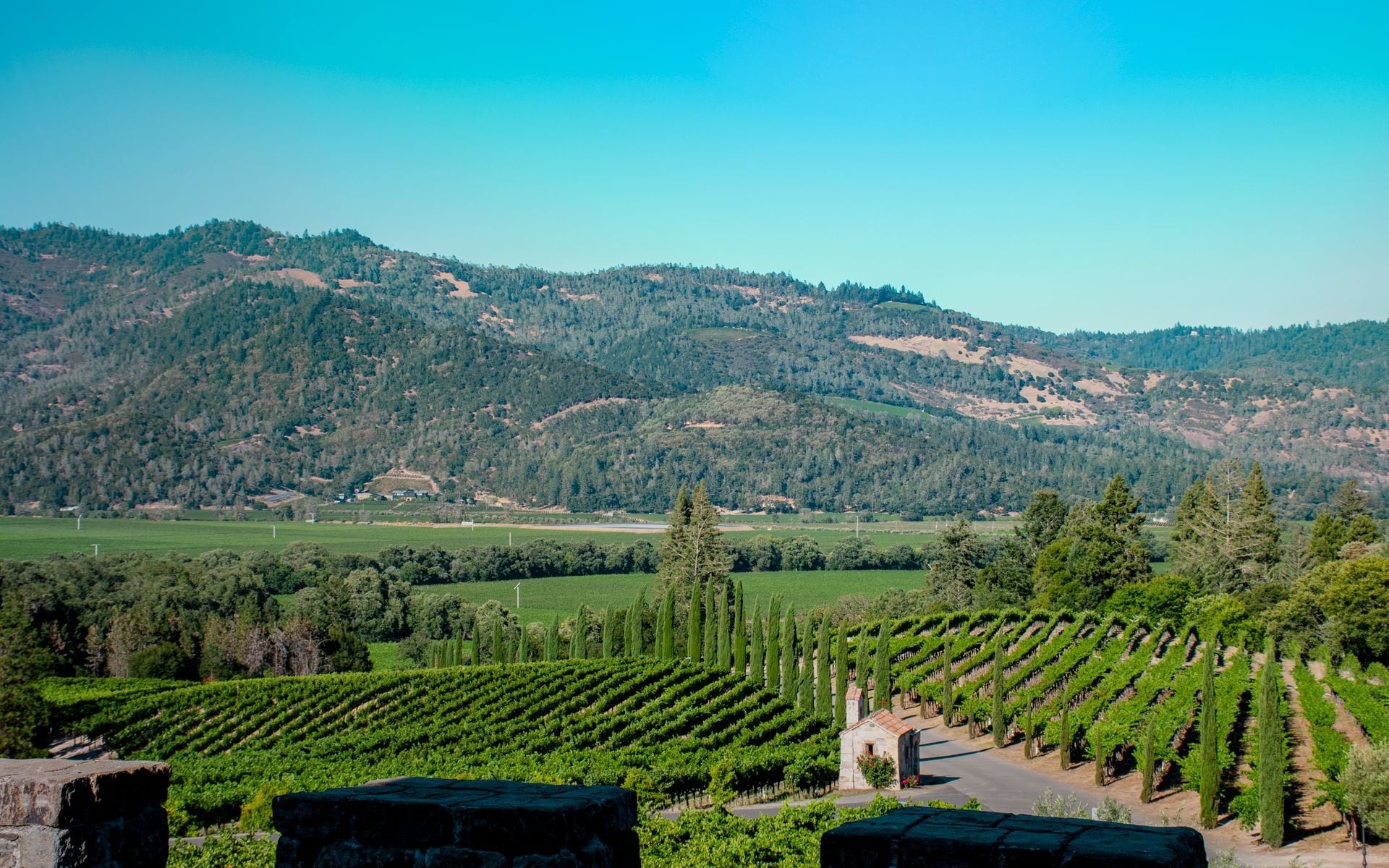
What Defines Wine Country
California's Wine Country is really two neighboring regions with different personalities, and knowing the difference saves you from picking wrong. Napa Valley is the polished one: a narrow, 30-mile valley running north from the town of Napa through Yountville, Oakville, Rutherford, St. Helena, and Calistoga, packed with big-name Cabernet houses, Michelin kitchens, and tasting fees to match. Sonoma Valley, just over the Mayacamas ridge to the west, spreads out wider and stays more relaxed, with a historic plaza in the town of Sonoma, family wineries around Kenwood and Glen Ellen, and lower prices.
The geography is simple once you see it. In Napa, two roads run the length of the valley: Highway 29 down the busy west side through the towns, and the quieter Silverado Trail on the east. You crisscross between them. Sonoma is looser, strung along Highway 12 and spilling north toward Healdsburg and the Russian River. Distances inside each valley are short, often 10 to 20 minutes between wineries, so the driving is easy. The catch is traffic on Highway 29 on summer and fall weekends, which can turn a 15-minute hop into 40.
This is farm country that happens to make luxury goods, and it reads that way: mustard blooming yellow between the vines in late winter, the green rush of spring, and the harvest, called the crush, running roughly late August into October when the whole valley smells of fermenting fruit. Come for the wine, but the food, the light, and the pace are half of why people keep coming back.
Main Bases and Towns
Pick your base by budget and vibe. The town of Napa is the most practical hub: central, walkable downtown, the Oxbow Public Market for a low-key lunch of oysters and tacos, and the widest range of hotel prices. Yountville, ten minutes north, is the food capital, small and expensive, and worth a night if a big dinner is the point of your trip. St. Helena and Calistoga sit farther up-valley, closer to the wineries and the Calistoga hot springs.
On the Sonoma side, the town of Sonoma itself is the easy choice, built around a green plaza lined with tasting rooms and restaurants where you can walk between pours and skip the car for an afternoon. Healdsburg, about 40 minutes north, is the upscale small-town base for Dry Creek and Russian River Valley wineries.
For eating, Oxbow Public Market in Napa is the reliable, no-reservation move for a casual meal between tastings. If you want a landmark dinner, Yountville is where you book weeks ahead. Across both valleys, the pattern is the same: reserve dinner early, keep lunch loose.
Top Wineries to Prioritize
You cannot do it all, so aim for three or four tastings a day, not six. In Napa, Domaine Carneros in the cooler Carneros district at the valley's south end pours sparkling wine on a hilltop terrace and is an easy first or last stop coming from the Bay. Trefethen Family Vineyards, just north of the town of Napa, is a working estate with a restored 19th-century winery building and strong Chardonnay and Cabernet. Farther up-valley, Monticello Vineyards and Baldacci Family Vineyards on the Stags Leap side are smaller, appointment-based rooms where the pours feel personal rather than processed.
Over in Sonoma, St. Francis Winery near Kenwood is known for its food-and-wine pairings and generous red pours, a good value against Napa's fees. Book everything: most Napa and many Sonoma wineries now require reservations, and the days of walking in cold are largely gone at the better rooms. Expect tasting fees of roughly $30 to $75 per person, often waived with a bottle purchase.
For a fuller ranked list across both valleys, see the best wineries in California. If you would rather not drive between pours, a car service or small-group tour lets everyone taste, and Sonoma's walkable plaza is the one place you can genuinely do it on foot.
How Long, When to Go, and Getting There
Two days is the sweet spot: one for Napa, one for Sonoma, with a night in between. A weekend from San Francisco works cleanly. If you only have a day, pick one valley and don't try to straddle both, because the drive over the ridge eats an hour you would rather spend tasting.
Timing matters more than people expect. Fall, roughly September into early November, is the harvest and the busiest, priciest, most atmospheric window. Spring, April and May, brings green hills, smaller crowds, and better hotel rates. Summer inland gets hot, often in the upper 80s and low 90s, and weekends jam up. Winter is quiet and wet but the mustard bloom and empty tasting rooms have their own appeal. Weekdays beat weekends in every season.
Getting here is straightforward. From San Francisco, Napa is about 90 minutes by car via I-80 and Highway 29 (roughly 50 miles); Sonoma is closer, about an hour up US-101. There is no useful train, so you drive, and you should plan a designated driver or a car service given the tastings. Fly into San Francisco (SFO) or Oakland (OAK). For where to bed down across the state, see our guide to where to stay in California, and if you are pairing wine with the coast, the best beaches in California are a couple of hours away over on the shore.
Fitting Wine Country Into a Bigger Trip
Most visitors tack Wine Country onto a San Francisco stay, and that is the smart play; if you are still shaping the wider trip, start with our California travel guide. Two nights in the city, then two in the valleys, gives you a full week without long drives. From here you can loop east toward Lake Tahoe or the Sierra, or drop back to the coast and pick up Highway 1.
Keep the days unhurried. The mistake first-timers make is over-scheduling, booking five tastings and a two-hour lunch and then white-knuckling the drive between them. Three good stops, a proper lunch, and time to sit on a terrace beats a checklist every time. This is the one part of California where doing less is the whole point. Start with the deeper guides to Napa Valley and Sonoma Valley to lock in your reservations, and build the rest of the trip around a relaxed pace.
Frequently asked questions
How many days do you need in Wine Country?
Two days is ideal: one for Napa, one for Sonoma, with a night in between. A single day works if you commit to just one valley. Trying to cover both in a day means an hour of driving over the ridge that you would rather spend tasting.
When is the best time to visit Napa and Sonoma?
Fall harvest, roughly September into early November, is the most atmospheric but also the busiest and most expensive. Spring (April and May) brings green hills, thinner crowds, and better hotel rates. Summer gets hot inland (upper 80s to low 90s) and jams up on weekends. Weekdays beat weekends year-round.
How far is Wine Country from San Francisco?
Napa is about 90 minutes by car (roughly 50 miles) via I-80 and Highway 29. Sonoma is closer, about an hour up US-101. There is no useful train, so plan on driving and line up a designated driver or a car service since you will be tasting.
Do you need reservations for wine tastings?
Yes, at most Napa wineries and many of the better Sonoma rooms. Walk-in tasting has largely disappeared at the top estates. Book ahead, plan three or four tastings a day rather than six, and expect fees of roughly $30 to $75 per person, often waived with a bottle purchase.
Napa or Sonoma: which should I choose?
Napa is polished, pricier, and heavy on big-name Cabernet and fine dining. Sonoma is more relaxed and more affordable, with a walkable historic plaza and family wineries. If it is your first trip and you want the marquee experience, do Napa; if you want to slow down and spend less, do Sonoma.