The Whales and Their Seasons
California sits on one of the great whale highways, and the calendar tells you what you will see. Gray whales run the biggest show: about 20,000 of them migrate down the coast from December through February on their way to Baja, then back north from February into April, often with calves. This winter-to-spring window is the classic California whale-watching season and the most reliable time to see them close to shore.
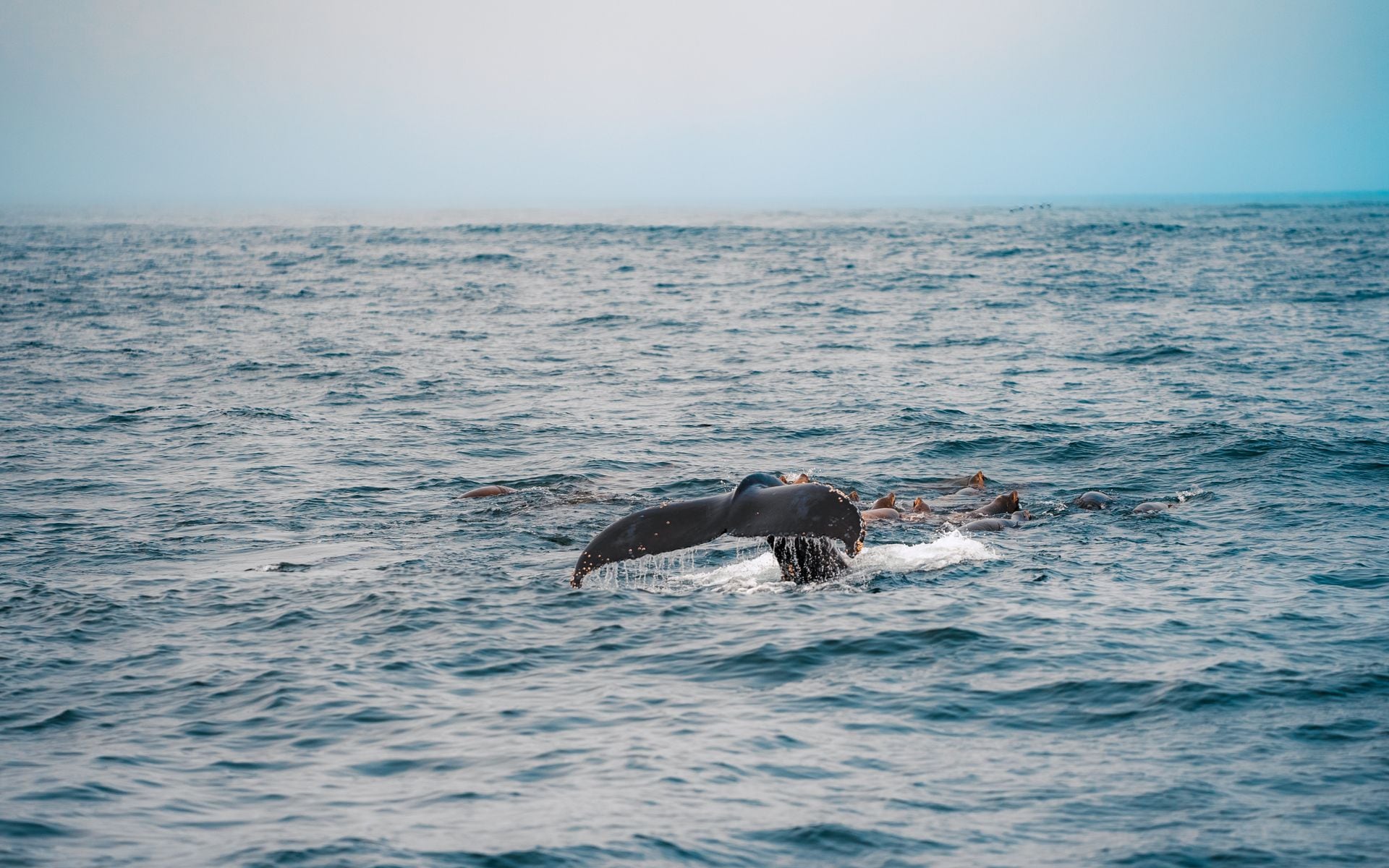
Summer and fall bring the giants. Blue whales, the largest animals that have ever lived, and humpback whales feed off the coast roughly May through October, with Monterey Bay the premier spot because a deep submarine canyon pulls nutrient-rich water and krill close to land. Humpbacks are the crowd-pleasers, breaching and lunge-feeding near the boats.
On top of the seasonal migrants, some marine life is a near-guarantee year-round. Common and bottlenose dolphins travel in pods that can number in the hundreds, and California sea lions, harbor seals, and seabirds show up on nearly every trip. Even on a slow whale day, the dolphins usually deliver.
The Best Places to Go
Monterey Bay is the standout, thanks to that offshore canyon that puts deep water and feeding whales within a short boat ride of the harbor. It is the best place in the state for the summer and fall blue and humpback whales, and it also sees the winter gray-whale migration. If you want the highest odds of a memorable trip, Monterey is the pick.
Southern California is the volume leader for the gray-whale season and the easiest to combine with a beach vacation. Boats run out of Orange County's Newport Beach and Dana Point and out of San Diego, all with quick access to the migration lanes. Dana Point brands itself the Dolphin and Whale Watching Capital, and the huge resident dolphin pods there back it up.
The North Coast offers a wilder, quieter version. Mendocino and the Redwood coast see the gray-whale migration from shore-side headlands and a smaller fleet of boats, with far fewer people around. Wherever you launch, browse the operators and compare trips in our whale watching tours directory before you book.
The Operators and What a Trip Costs
A standard whale-watching trip runs about two to three hours and costs roughly $40 to $60 per adult, with discounts for kids and often a guarantee: many operators will re-book you free if no whales are spotted. Larger boats are steadier and cheaper; small rigid-hull boats get you closer to the water for more money.
In Southern California, the Orange County harbors have the densest fleet. Newport Landing Whale Watching and Davey's Locker run daily trips out of Newport Beach, and Dana Wharf Sportfishing and Whale Watching has operated out of Dana Point for decades. For a small-boat, up-close experience, Capt. Dave's Dana Point Dolphin and Whale Watching Safari and Newport Coastal Adventure run smaller vessels. Down in San Diego, San Diego Whale Watch and Legacy Whale Watch cover the southern migration lanes.
In Monterey, Discovery Whale Watch runs trips out onto the bay to the summer feeding grounds and the winter migration. Any of these are reputable, established operators. Reserve ahead in peak gray-whale season (December through April) and on summer weekends, since the popular sailings fill up, especially the smaller boats.
How to Have a Good Trip
Morning trips usually mean calmer seas, since afternoon wind builds chop, so book the earliest sailing you can. Dress in warm layers even on a hot day: it is cold and windy on the open water once the boat leaves the harbor, and the wind chill surprises people who dressed for the beach. Bring a hat and sunglasses.
If you are prone to motion sickness, take medication before you board, not after you feel queasy, and pick a larger, more stable boat over a small one. Sit toward the middle of the vessel where the motion is least, and keep your eyes on the horizon. A rough two hours can ruin an otherwise great sighting.
Bring binoculars and a camera with some zoom, and be patient. Whales surface unpredictably, and the naturalists on board are good at reading the water and pointing you to the action. Even when the whales are slow, the dolphins, sea lions, and coastal views make the trip worth it. For the shoreline half of the experience, our best beaches in California guide covers where to spend the rest of the day.
Fitting Whale Watching Into Your Trip
Whale watching slots into almost any California coastal itinerary because the harbors sit right in the beach towns and cities you are already visiting. A Monterey trip pairs with the Central Coast and the aquarium; an Orange County trip pairs with a beach stay and a run over to the region's theme parks like Disneyland, a short drive inland from the coast.
On a road trip, a whale-watching morning is an easy add. Our Pacific Coast Highway road trip passes every major whale-watching harbor between San Francisco and San Diego, and the cliff-top stretches of that route are among the best scenic drives for spotting whales from land when you are not on a boat.
For the full picture of how a whale trip fits with the beaches, the drives, and the coastal towns, start at the California travel guide. Then pick your season: winter and spring for the gray-whale migration statewide, summer and fall for the blue and humpback whales, with Monterey the best single bet for the big feeders.
Frequently asked questions
When is the best time to go whale watching in California?
It depends on the whale. Gray whales migrate along the coast from December through April, the classic season. Blue and humpback whales feed offshore from roughly May through October, best seen in Monterey Bay. Dolphins and sea lions appear year-round, so there is no truly bad month.
Where is the best place to see whales?
Monterey Bay is the standout because a deep offshore canyon brings feeding whales close to the harbor, making it the top spot for summer and fall blue and humpback whales. For the winter gray-whale migration and easy pairing with a beach trip, the Orange County harbors of Newport Beach and Dana Point and San Diego are excellent.
How much does a whale-watching tour cost?
A typical two-to-three-hour trip runs about $40 to $60 per adult, with discounts for children. Many operators offer a sighting guarantee that re-books you free if no whales are seen. Smaller, closer-to-the-water boats cost more than the large stable vessels.
Will I see a whale?
In peak season your odds are high, and many operators guarantee a sighting or a free return trip. Even on a slow whale day, large dolphin pods, sea lions, and seabirds are near-certain, so trips rarely come back empty. Book a calmer morning sailing for the best conditions.