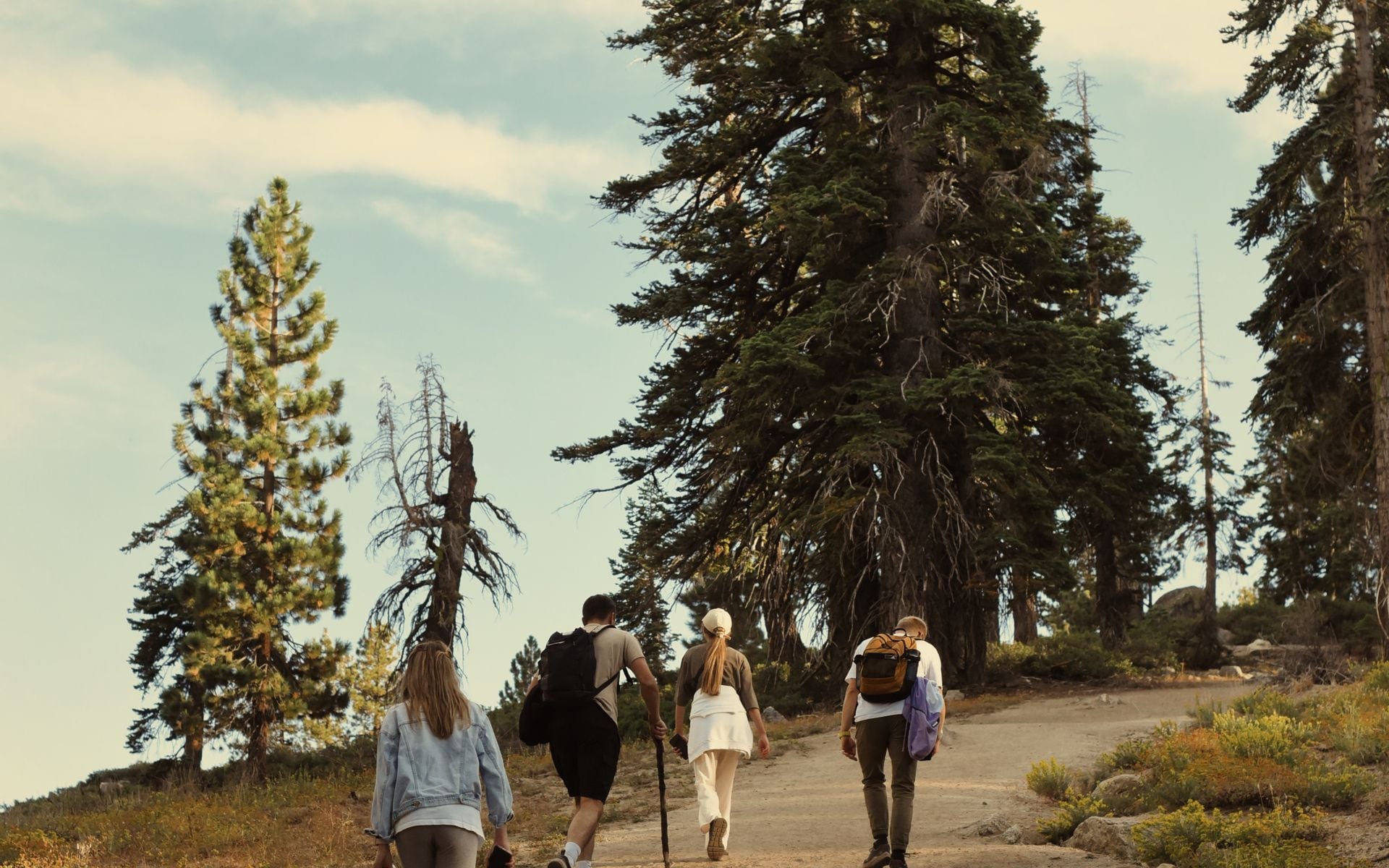
The Terrain: Four Kinds of Hiking
California hiking breaks into a few distinct worlds, and knowing which one you want narrows everything else. The Sierra Nevada is the marquee: granite, alpine lakes, and the John Muir and Pacific Crest Trails, centered on Yosemite, Sequoia, and Kings Canyon in the High Sierra. This is where the biggest-name day hikes and nearly all the classic backpacking live, and it is a summer-and-fall pursuit because snow buries the high country the rest of the year.
The coast is the second world: bluff trails, headland loops, and redwood paths that stay open all year. Point Reyes north of San Francisco, the Big Sur trails, the Marin Headlands, and Torrey Pines above La Jolla give you ocean-view hiking without altitude or a snow season. The desert is the third: Joshua Tree and Death Valley reward cool-season walking and turn deadly in summer heat.
The fourth is the volcanic and northern high country, Lassen and Mount Shasta, which shares the Sierra's summer season but sees a fraction of the crowds. Match your trip's dates to the right world and you avoid the classic mistake of driving to a trailhead that is still under ten feet of snow.
The Signature Day Hikes
In Yosemite, the Mist Trail past Vernal and Nevada Falls is the one everyone wants, a steep, wet, cable-railed climb that peaks with the waterfalls in May and June. The valley floor loops are flat and easy, and Glacier Point offers a huge view for almost no effort. In Sequoia, the Congress Trail loops among the largest trees on Earth, and Moro Rock's stairway climbs to a granite-dome view of the Great Western Divide.
The coast delivers shorter, gentler hikes with a payoff. Torrey Pines above San Diego drops from cliff-top trail to beach. Point Reyes has the lighthouse and the Tomales Point elk trail. Big Sur's Ewoldsen and McWay Falls trails hang over the ocean. These pair naturally with the rest of a coastal trip, so a morning hike and an afternoon on the sand from the best beaches in California guide is an easy combination.
The desert hikes work only in the cool season. Death Valley's Golden Canyon and the Mesquite Flat dunes, and Joshua Tree's Ryan Mountain and Hidden Valley, are short but exposed, and they demand water and an early start. From October through April they are some of the best hiking in the state; from May through September they are a heat hazard.
Backpacking and the Permit Systems
California backpacking runs on wilderness permits, and the good routes are competitive. Half Dome's final cables require a permit issued by lottery, applied for in the spring for the summer season. The John Muir Trail, the Rae Lakes Loop, and any overnight in the Yosemite or Sequoia-Kings Canyon backcountry need a wilderness permit with a quota, and the popular trailheads fill the moment reservations open. Apply months ahead and have backup dates.
The high season is short. Most Sierra passes are snow-free and safe roughly from July into September, sometimes June in a light snow year and October in a dry fall. Before then you need snow-travel skills and after the first storms the window slams shut. Afternoon thunderstorms are common in mid-summer, so start early and be off the exposed ridges by early afternoon.
If you want the high country without solo route-finding, a guide is the sane choice, especially for a first Sierra backpacking trip or a summit like Mount Shasta or Mount Whitney. The outfitters in our tour operators and guides directory run guided day hikes, backpacking trips, and permitted climbs across the state.
When to Hike Where
There is no single hiking season in California; there are three, running on different calendars. The Sierra and northern high country peak July through September. The coast is a year-round hiking region, best in spring for wildflowers and green hills and in fall for clear, dry days, with a foggy but walkable summer. The desert is an October-through-April season and off-limits in summer heat.
That spread is the advantage: some part of California is in prime hiking shape almost every month. In winter, when the Sierra is buried, the coast and the desert are at their best. In summer, when the desert is dangerous, the Sierra is wide open. Spring and fall are the sweet spots when the most regions overlap.
Weather changes fast with elevation. A Sierra trailhead can be 30 degrees colder than the valley you drove up from, and coastal fog can erase an ocean view by midday. Carry layers, more water than you think you need, and check trail and road status before you leave, since high roads like Yosemite's Tioga Road are closed much of the year.
Building Hiking Into a California Trip
Few visitors come to California only to hike, and the trails slot cleanly into a broader route. A coastal road trip can string together short bluff and redwood hikes between towns; our Pacific Coast Highway road trip passes trailheads the whole way down. A Sierra trip can pair marquee day hikes with a rest day of wine tasting in the foothills, and a Central Coast base lets you trade a morning trail for an afternoon of surfing.
Match your lodging to your hiking. Staying inside or just outside a park saves the daily drive-in and the parking scramble at popular trailheads, which fill by mid-morning in summer. Book in-park lodges and campgrounds months ahead, since they sell out well before the season.
For the full picture of how hiking fits with the parks, the coast, and the cities, start at the California travel guide. Then pick your season first and your trails second, because in California the calendar decides where you can walk.
Frequently asked questions
When is the best time to hike in California?
It depends on the region. The Sierra Nevada high country is best July through September. The coast hikes year-round, with spring and fall the sweet spots. The desert parks like Joshua Tree and Death Valley are best October through April and dangerous in summer. Because the seasons stagger, some part of California is in prime hiking shape almost every month.
Do I need a permit to hike in California?
Day hikes usually need no permit beyond the park entrance fee, with exceptions like Yosemite's Half Dome cables, which require a lottery permit. Any overnight backpacking trip in the Sierra needs a quota wilderness permit that you should reserve months ahead, since the popular trailheads fill immediately when reservations open.
What are the best beginner-friendly hikes?
Yosemite's valley-floor loops and Glacier Point, Sequoia's Congress Trail among the big trees, Torrey Pines above San Diego, and the Point Reyes coastal trails are all high-reward and low-difficulty. Save the steep Sierra climbs and desert summits for hikers ready for the distance and elevation.
How hard is Sierra backpacking for a first-timer?
It is serious. High elevation, a short snow-free season, competitive permits, and afternoon thunderstorms all raise the difficulty. A guided trip through a licensed outfitter is the safest way to do your first Sierra backpacking route or a peak like Mount Whitney or Mount Shasta.