What to Expect
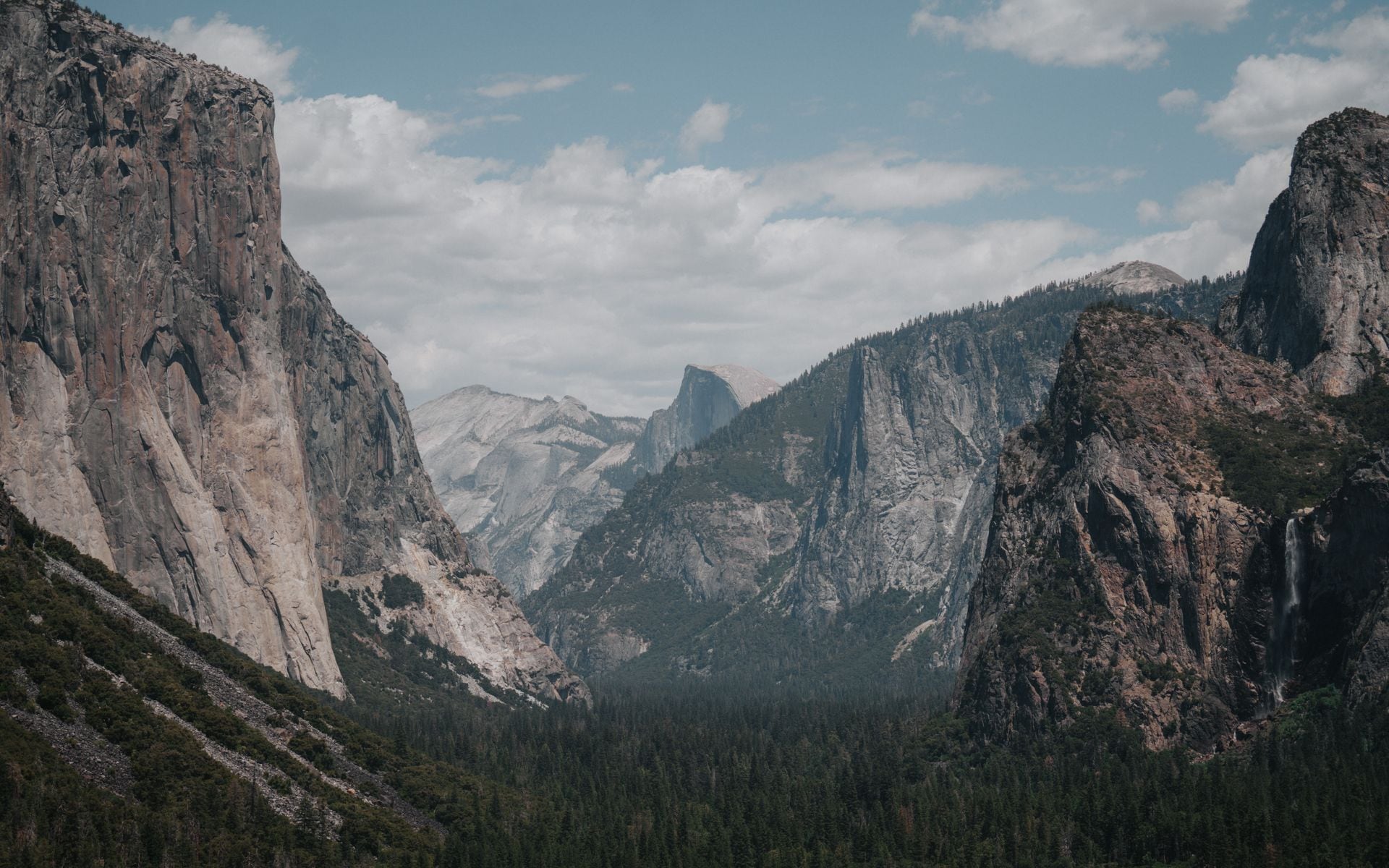
Yosemite is a big park, about 1,200 square miles, but most first-time visitors spend their time on the seven-square-mile floor of Yosemite Valley. That is where the postcard is: El Capitan's 3,000-foot granite face, the rounded dome of Half Dome, and Bridalveil Fall dropping right beside the road at Tunnel View. The valley sits at 4,000 feet, so summer days run warm and dry and the nights cool off fast. Cell service is thin to nonexistent in the valley, so download your maps before you arrive.
The park has more than one personality. The valley is the waterfall-and-granite core. An hour and a half south you reach the Mariposa Grove of giant sequoias near the south entrance. High above the valley, Tioga Road (Highway 120) climbs to 9,945 feet at Tioga Pass and opens up Tuolumne Meadows, a subalpine world of meadows and domes that most valley visitors never see. Tioga Road is closed by snow for roughly half the year, usually from November until late May or June, so it is a summer-and-early-fall option only.
Yosemite is one of the most visited national parks in the country, drawing close to four million people a year, and it feels like it in July. If you can shift your dates to late spring or fall, do it. If you are touring the southern Sierra parks too, pair this trip with Sequoia National Park and Kings Canyon National Park for a fuller Sierra loop.
What to Do
The Mist Trail is the classic Yosemite hike. From the Happy Isles trailhead you climb a granite staircase alongside the Merced River to the top of Vernal Fall (about 3 miles round trip and genuinely steep) or push on to the top of Nevada Fall (about 7 miles round trip). In late spring the spray soaks you, which is the point. Lower Yosemite Fall is an easy paved loop for the family. The Yosemite Falls Trail to the top is a serious 7.2-mile round trip with about 2,700 feet of climbing.
Half Dome is the trophy: a 14- to 16-mile round-trip day with cables bolted to the final granite pitch. You need a permit through the recreation.gov lottery, and demand far outstrips supply, so plan months out. For a view without the mileage, drive up to Glacier Point (open roughly late May through October) for a look straight down at the valley and across to Half Dome. Tunnel View, right off Highway 41, is the drive-up shot everyone knows.
Beyond hiking, the valley floor has a flat paved bike-and-walk loop, the Merced River for a summer float or swim, and the Ansel Adams Gallery for prints and photo walks. For giant trees, walk the Mariposa Grove trails past the Grizzly Giant. In February the setting sun sometimes lights Horsetail Fall on El Capitan a deep orange, the natural event photographers call the firefall. Yosemite anchors any tour of California's national parks, and it headlines our roundup of the best national parks in California.
Getting There and Parking
There are four road entrances. Arch Rock (Highway 140 from Merced) follows the river and has the gentlest grade, a good pick for RVs and nervous mountain drivers. Big Oak Flat (Highway 120 from the west) comes in from the Bay Area direction. The South Entrance (Highway 41 from Oakhurst and Fresno) puts you near the Mariposa Grove. Tioga Pass (Highway 120 east) is the seasonal high-country entrance from the Eastern Sierra and is closed in winter.
Fresno Yosemite International (FAT) is the closest major airport, about two and a half hours to the valley. From San Francisco plan on about four hours for roughly 190 miles, since the last stretch is mountain road, not freeway. From Los Angeles it is a solid five to six hours. There is no rental-car-free way in; you need a vehicle, though the free Yosemite Valley shuttle handles getting around once you park.
Summer parking in the valley fills by mid-morning. Get in before 9 a.m. or plan to circle. Yosemite has run a peak-season day-use reservation system in several recent summers, requiring a booking to drive in during the busiest hours. The rules change year to year, so check the current-season requirements on nps.gov before you go. Standard entrance is $35 per vehicle, good for seven days.
Best Time to Go
May and June are the sweet spot for waterfalls. The Sierra snowpack is melting, so Yosemite Falls, Bridalveil, and the Mist Trail cascades are at full roar, and the valley is green. This is also when crowds start building, so start early. By August many of the smaller falls slow to a trickle or dry up entirely, though the granite and the sequoias do not care what month it is.
September and October are the quiet reward: warm days, cool nights, thinning crowds, and the first fall color in the black oaks and dogwoods. Winter is beautiful and underrated. The valley stays open and plowed, and you can skate at the Curry Village rink, but Tioga Road, Glacier Point Road, and the Mariposa Grove road close under snow. Carry chains from November through April; rangers can require them on any park road at any time.
If your trip is built around the high country and Tuolumne Meadows, you are effectively locked into July through September, because that is the reliable Tioga Road window. Extend the trip east over the pass toward Mammoth Lakes only in summer, and read the wider High Sierra region guide to line up the rest of your mountain days.
Where to Stay and Eat
In-park lodging books out months ahead, so reserve as early as you can. The Ahwahnee is the grand 1927 hotel with the timbered dining room and rates to match. Yosemite Valley Lodge sits near the base of Yosemite Falls and is the practical mid-range choice. Curry Village offers heated canvas tent cabins for a cheaper valley bed, and the historic Wawona Hotel near the south entrance is a quieter Victorian option. All are run by the park concessioner through TravelYosemite.
Gateway towns cover the overflow. Mariposa (west, on Highway 140), Oakhurst (south, on Highway 41), and Groveland (northwest, on Highway 120) all have motels and restaurants within an hour or so of a park entrance. Tenaya Lodge at Fish Camp, just outside the south entrance, is a full-service resort if you want amenities near the Mariposa Grove.
For food inside the park, The Ahwahnee Dining Room is the splurge (reservations required for dinner), the Mountain Room at Yosemite Valley Lodge does a solid sit-down dinner with a view of the falls, and Base Camp Eatery handles quick, casual meals. Pack a cooler either way, because valley food is limited and lines are long at peak lunch.
Frequently asked questions
Do I need a reservation to enter Yosemite?
In several recent summers Yosemite has required a peak-season day-use reservation to drive in during the busiest daytime hours, on top of the standard $35-per-vehicle entrance fee. The exact dates and rules change every year, so confirm the current-season requirement on nps.gov before you travel. Outside the peak reservation window you just pay at the gate.
How many days do you need in Yosemite?
Two full days lets you do the valley properly: one day for the Mist Trail and the waterfalls, one for Glacier Point, Tunnel View, and the Mariposa Grove. A single day is enough to see the highlights if you start early. Add a third day if you want the high country at Tuolumne Meadows in summer.
When are the waterfalls best?
May and June, when the Sierra snowmelt peaks. By late summer many falls slow dramatically or dry up. If waterfalls are your priority, aim for late spring and expect company.
What is the closest airport to Yosemite?
Fresno Yosemite International (FAT) is closest, about two and a half hours to Yosemite Valley. San Francisco is around four hours by road and Los Angeles five to six. You will need a rental car regardless of which airport you choose.
Is Tioga Road open when I visit?
Tioga Road (Highway 120 over the Sierra crest) is closed by snow roughly November through late May or June and typically opens for summer and early fall only. If your plan includes Tuolumne Meadows or crossing to the Eastern Sierra, you are limited to about July through September.