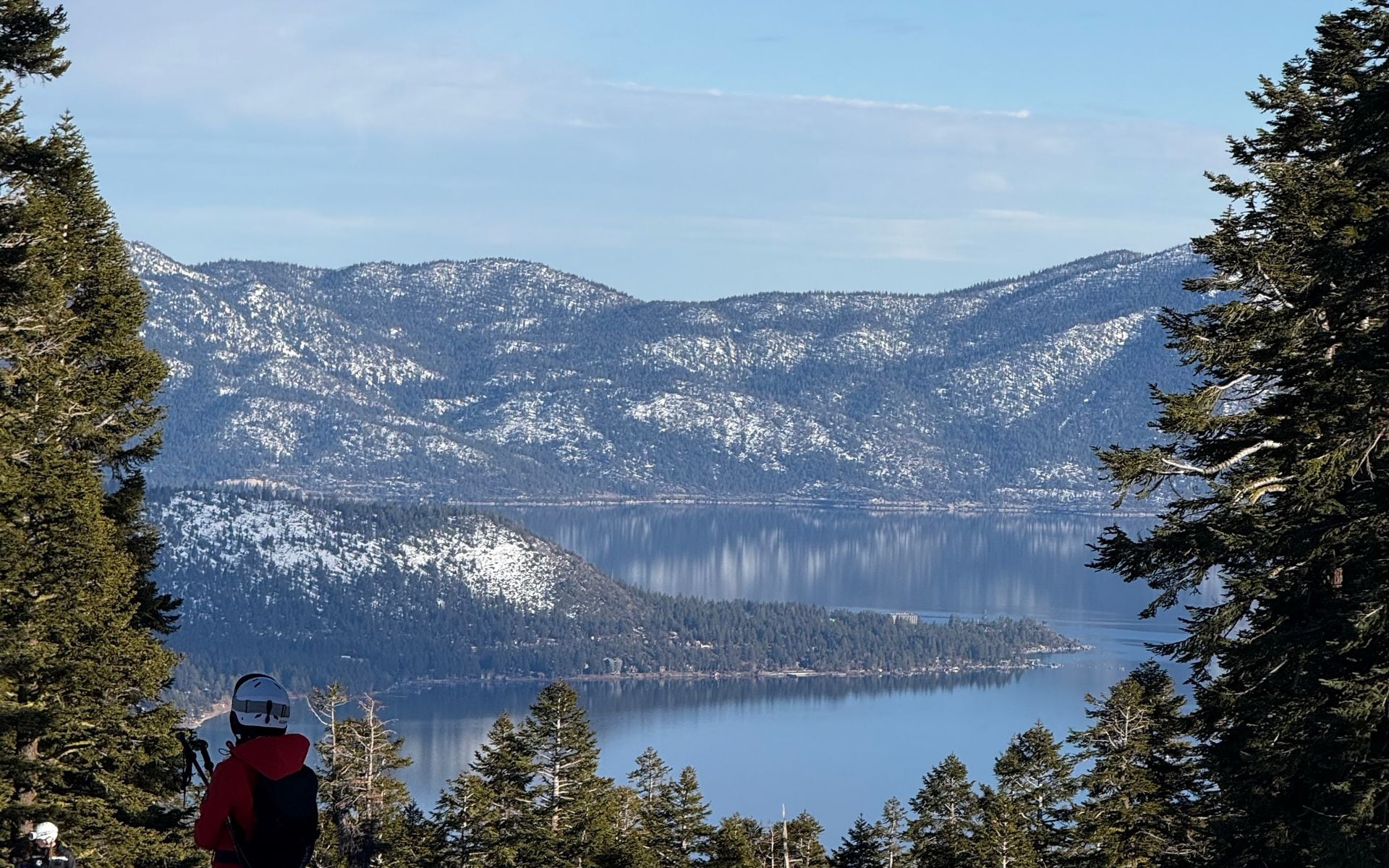
Where the Snow Is
California skiing splits into two main zones, both in the Sierra Nevada. The Lake Tahoe basin, straddling the California-Nevada line about a three-and-a-half to four-hour drive from San Francisco or Sacramento, holds the largest concentration of resorts. Mammoth Mountain sits farther south along the Eastern Sierra, roughly five to six hours from Los Angeles up Highway 395, and gets the highest base elevation and the longest season of any major California resort.
Around Tahoe you have a dozen resorts within an hour of each other. Palisades Tahoe (the former Squaw Valley, which hosted the 1960 Winter Olympics) and neighboring Alpine Meadows share a lift-connected 6,000 acres on the north shore. Heavenly straddles the state line above South Lake Tahoe with runs that look straight down at the water. Northstar, Kirkwood, and Sugar Bowl round out the north and west shore, each with its own personality. All of this sits in the High Sierra, and both Lake Tahoe and Mammoth Lakes have full destination towns built around the lifts.
Southern California even has snow of its own. Big Bear Lake in the San Bernardino Mountains, about two hours from Los Angeles, runs Snow Summit and Bear Mountain, and Mountain High near Wrightwood is closer still. The terrain is smaller and the snow less reliable than the Sierra, but for an Angeleno who wants a day on the slopes without a Tahoe road trip, it works. For the full lineup ranked, see the best ski resorts in California.
When the Season Runs
The core California ski season is December through April, with the reliable window opening around mid-December once storms have laid a base. January and February bring the biggest storm cycles and the deepest powder days. March often delivers the best all-around conditions: a deep snowpack, longer daylight, and warmer, sunnier afternoons.
Mammoth is the outlier that stretches the calendar. With a 11,053-foot summit and a base above 7,900 feet, it holds snow long after the Tahoe resorts close, and in big snow years it spins lifts into late May, sometimes into June or the Fourth of July. If you want to ski in spring, Mammoth is the answer.
Timing your drive matters as much as your dates. Sierra storms close and chain-control roads with little warning, and Interstate 80 and Highway 50 into Tahoe can back up for hours after a big dump. Carry chains, check road conditions before you leave, and never plan to arrive the same afternoon a major storm is forecast to hit the passes.
What It Costs and How to Save
Walk-up single-day lift tickets at the major resorts are expensive, commonly $150 to $250 at the window on peak dates, and buying at the ticket booth the morning of is the most expensive way to ski. Nearly everyone saves by buying online in advance or, if they ski more than a few days a season, by getting a multi-resort season pass.
The two passes to know are the Ikon Pass and the Epic Pass, and they carve up California's resorts between them. Ikon covers Palisades Tahoe, Mammoth, June Mountain, and Big Bear. Epic covers Heavenly, Northstar, and Kirkwood. If your whole trip is Tahoe, pick the pass that matches the resorts you want, or buy dated lift tickets online a week or two out for a single visit. Rentals run roughly $50 to $75 a day, and group lessons a similar range, both cheaper reserved online than walked up.
Lodging is the other big line item. Ski-in-ski-out and lakefront rooms carry a premium, especially over holiday weeks. Edgewood Tahoe Resort and Harrah's Lake Tahoe put you right in South Lake Tahoe near Heavenly, and the Village at Mammoth clusters lodging, food, and a gondola at the base of the mountain. Book holiday weeks and powder-season weekends well ahead.
Getting There and Around
For Tahoe, the practical airports are Reno-Tahoe (RNO) in Nevada, about 45 minutes to the north shore, and Sacramento (SMF), about two hours west. From San Francisco it is a three-and-a-half to four-hour drive on Interstate 80 in good conditions. For Mammoth, the small Mammoth Yosemite Airport (MMH) has seasonal flights, but most visitors drive up Highway 395 from Los Angeles, about five to six hours, or fly into Reno and come down 395 from the north.
A car with proper tires is close to essential. Sierra roads require chains or four-wheel drive with snow tires during storm cycles, and rental agencies do not always supply chains, so confirm before you drive into the mountains. Once you are based in a resort town, free shuttles at Mammoth, Heavenly, and Northstar mean you can leave the car parked on a ski day. Guided backcountry and snowmobile operators are listed in our tour operators and guides directory.
The mountains are only one season of the Sierra. The same towns that run lifts in winter turn into hiking, kayaking and paddling, and wildlife watching bases once the snow melts, so a Tahoe or Mammoth trip works most of the year. If you would rather trade snow for sand, the best beaches in California and the coastal Pacific Coast Highway road trip run at their best in the same fall-and-spring shoulder seasons. The full picture is on the California travel guide.
Picking the Right Resort for You
If you want the biggest terrain and the steepest expert lines, Palisades Tahoe and Mammoth are the headliners. Palisades has the Olympic pedigree and lift-connected acreage with Alpine Meadows; Mammoth has the elevation, the reliable snow, and long groomers alongside serious steeps off the top.
Families and mixed-ability groups often do best at Northstar, which is known for its grooming, tree runs, and a well-run kids' program, or at Big Bear's Snow Summit for a Southern California day trip. Beginners get the gentlest introduction and the shortest drives at the smaller areas, while South Lake Tahoe's Heavenly rewards intermediates who want mileage and lake views on nearly every run.
Match the resort to your group and your base town rather than chasing the single highest-rated mountain. A north-shore group and a South Lake group will have very different weeks even though both are on the same lake, and the Eastern Sierra is a different trip again. Sort out where you are sleeping first, then let that narrow which lifts you ride.
Frequently asked questions
When is the best time to ski in California?
The core season runs December through April. January and February bring the biggest storms and deepest powder, while March often has the best all-around mix of deep snow, longer days, and warmer afternoons. Mammoth Mountain stretches the season latest, frequently staying open into late May or June in big snow years.
Should I ski Lake Tahoe or Mammoth?
Choose by where you are starting. Tahoe is closer to San Francisco and Sacramento (about 3.5 to 4 hours) and packs a dozen resorts around one lake. Mammoth is closer to Los Angeles (5 to 6 hours up Highway 395), sits at a higher elevation with more reliable late-season snow, and centers on one big mountain and the Village at Mammoth base area.
How much does a lift ticket cost?
Walk-up single-day tickets at major resorts commonly run $150 to $250 on peak dates, and buying at the window the morning of is the most expensive option. Buy dated tickets online in advance, or if you ski several days, an Ikon Pass (Palisades, Mammoth, June, Big Bear) or Epic Pass (Heavenly, Northstar, Kirkwood) usually pays off.
Do I need tire chains to drive to the ski resorts?
Often, yes. Sierra roads enforce chain controls during storm cycles, requiring chains or four-wheel drive with snow tires. Rental agencies do not always provide chains, so confirm before heading up, carry them, and check current road conditions before you leave. Never plan to arrive the same afternoon a major storm is forecast to hit the passes.