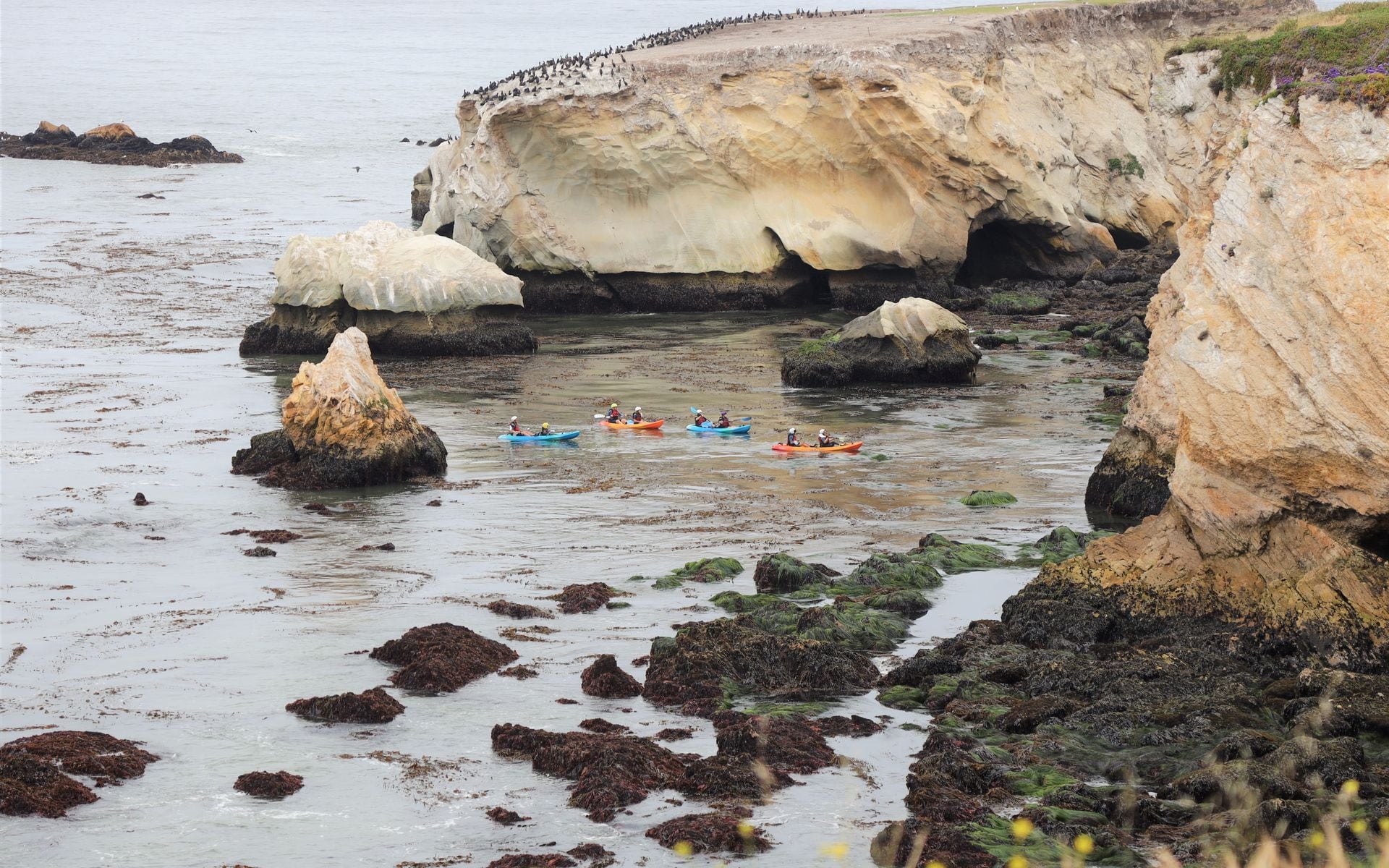
Where to Paddle in California
The most rewarding paddling in the state is sea kayaking the central and southern coast, where protected bays and harbors give beginners calm launches and the open coast gives experienced paddlers sea caves and kelp forests. Inland, the Sierra lakes and the Sacramento-San Joaquin Delta offer flatwater with no swell to read, which makes them the easiest place to learn. Between the two, coastal lagoons like Elkhorn Slough put you eye to eye with more wildlife than almost anywhere else on the West Coast.
For a first-timer, calm water and a warm afternoon beat a scenic but exposed stretch of open ocean every time. Harbors at Monterey, Morro Bay, and Santa Barbara, the flat reaches of Lake Tahoe's shoreline, and the sloughs of the Central Coast are the forgiving choices. Save the Mendocino sea caves and the outer Channel Islands crossings for when you have real ocean experience or a guide. Many paddlers pair a coastal outing with the region's other draws, from the best beaches in California to the coast-hugging Pacific Coast Highway road trip.
Wildlife is half the reason people paddle here. Sea otters, harbor seals, sea lions, and shorebirds are routine sightings from a kayak on the Central Coast, and a low, quiet boat gets you closer than any tour bus. If animals are the draw, read it alongside wildlife watching to plan a trip around what you most want to see.
Sea Kayaking the Coast
Monterey Bay is the marquee sea-kayaking destination. Launch from the harbor and you are quickly among sea otters rafting in the kelp, with Cannery Row and the aquarium behind you. Monterey Bay Kayaks runs guided tours and rentals right on the water, and the calm inner bay is beginner-friendly on most mornings. Just north, Elkhorn Slough at Moss Landing is the wildlife jackpot, a tidal estuary thick with otters, seals, and hundreds of bird species, and Kayak Connection guides paddles there. Base yourself in Monterey and Carmel for easy access to both.
Down south, La Jolla is the standout. The La Jolla Ecological Reserve protects a stretch of coast where you paddle over bright green water into a series of sea caves and past leopard sharks in the shallows in summer. La Jolla Kayak runs the classic guided cave-and-cove tour. It is one of the best paddles in the state and manageable for beginners on a calm day. The full story on the town is on the La Jolla page.
For a bigger adventure, the Channel Islands off Santa Barbara and Ventura hold some of the finest sea caves on the West Coast, including the enormous Painted Cave on Santa Cruz Island. This is advanced, exposed-water paddling reached by boat, and outfitters like Channel Islands Kayak Center run trips out to the islands. Read the Channel Islands National Park page before you plan an island crossing.
Lakes, Rivers, and Flatwater
Lake Tahoe is the flatwater centerpiece. The water is famously clear, and paddling into Emerald Bay past Fannette Island on a calm morning is one of the best short trips in the Sierra. Rent from the shoreline outfitters around the lake, launch early before the afternoon wind builds, and treat the cold water with respect year round. The Lake Tahoe page covers where to base and launch.
In the north, Tomales Bay near Point Reyes is known for summer and fall bioluminescence tours, where each paddle stroke lights up the water on a dark night. The Russian River in Sonoma County is an easy warm-weather float, and the vast Sacramento-San Joaquin Delta gives you hundreds of miles of flat sloughs and channels for multi-day paddling. These inland options run warmer and calmer than the coast, which makes them a good call in summer when the ocean fog sits heavy.
Whitewater is a separate world with its own outfitters, concentrated on rivers like the American, the Kern, and the Tuolumne in spring and early summer when snowmelt is high. If you want moving water, book a guided rafting or whitewater kayaking trip rather than heading out solo, and go in the May-to-July window when flows are reliable.
Seasons, Cost, and Gear
The best all-around paddling window on the coast is roughly April through October, and early mornings almost always beat afternoons because coastal wind builds through the day. Central Coast summers bring fog that can hang until midday, while fall often delivers the clearest, calmest water of the year. Sierra lakes are a summer-and-early-fall activity once the ice is off and the roads are open, generally June through September.
Expect to pay roughly $30 to $50 to rent a single kayak for a couple of hours and about $60 to $100 per person for a guided half-day tour, with wildlife and sea-cave tours at the higher end. Guided trips are the smart choice your first time in a new spot: you get the boat, the safety brief, a wetsuit or spray gear, and a guide who reads the water and the wildlife rules for you. Outfitters that run multi-activity and combo trips are listed in our tour operators and guides directory.
California ocean water is cold most of the year, generally in the 50s to low 60s Fahrenheit even in summer, so a wetsuit is standard on the coast outside a warm afternoon. Reputable outfitters provide one with a tour. Bring a hat, reef-safe sunscreen, water, and shoes you can get wet, and after a chilly paddle in the Eastern Sierra you are not far from the region's hot springs to warm back up.
Planning a Safe Paddle
The ocean is not a lake. Check the marine forecast for wind, swell, and small-craft advisories before any coastal launch, and turn around if conditions build. Cold water is the real hazard on the California coast: a capsize without a wetsuit can bring on hypothermia fast, so dress for the water temperature, not the air. Always wear the life jacket, not just carry it.
Give wildlife room. It is exciting to drift near otters and seals, but the law and simple ethics require you to keep your distance and never chase or crowd them. A good guide will show you how close is too close. Keep clear of moorings, boat channels, and surf zones, and be honest about your fitness and skill when you pick a route.
For your first outing, book a guide, go on a calm morning, and pick a protected spot like Monterey Bay, La Jolla Cove, or a Sierra lake shoreline. Build up to the exposed coast and the island crossings. Paddling fits naturally into a wider California trip, so slot it between drives and hikes; the full regional picture is on the California travel guide.
Frequently asked questions
Where is the best place to kayak in California for beginners?
Calm, protected water is what you want first. Monterey Bay harbor, La Jolla Cove on a flat morning, Morro Bay, and the shoreline of Lake Tahoe are all forgiving beginner spots, and each has outfitters running guided tours. Elkhorn Slough at Moss Landing is beginner-friendly and delivers the best wildlife in the state. Save the Mendocino and Channel Islands sea caves for when you have experience.
How much does kayaking cost in California?
Renting a single kayak runs roughly $30 to $50 for a couple of hours. Guided half-day tours run about $60 to $100 per person, with wildlife and sea-cave tours at the higher end. Guided trips include the boat, safety gear, and usually a wetsuit, which makes them the best value your first time in a new spot.
Do I need a wetsuit to kayak on the California coast?
Usually, yes. California ocean water stays in the 50s to low 60s Fahrenheit even in summer, and cold water is the main safety risk if you capsize. A wetsuit is standard on the coast outside a warm, calm afternoon, and reputable outfitters provide one with guided tours. On warm inland lakes and rivers in summer you can often skip it.
When is the best season to kayak in California?
On the coast, April through October is the prime window, with early mornings beating afternoons because wind builds through the day and fall bringing the calmest water. Sierra lakes like Tahoe are a summer-and-early-fall activity, roughly June through September. Whitewater rivers peak on spring snowmelt from about May through July.