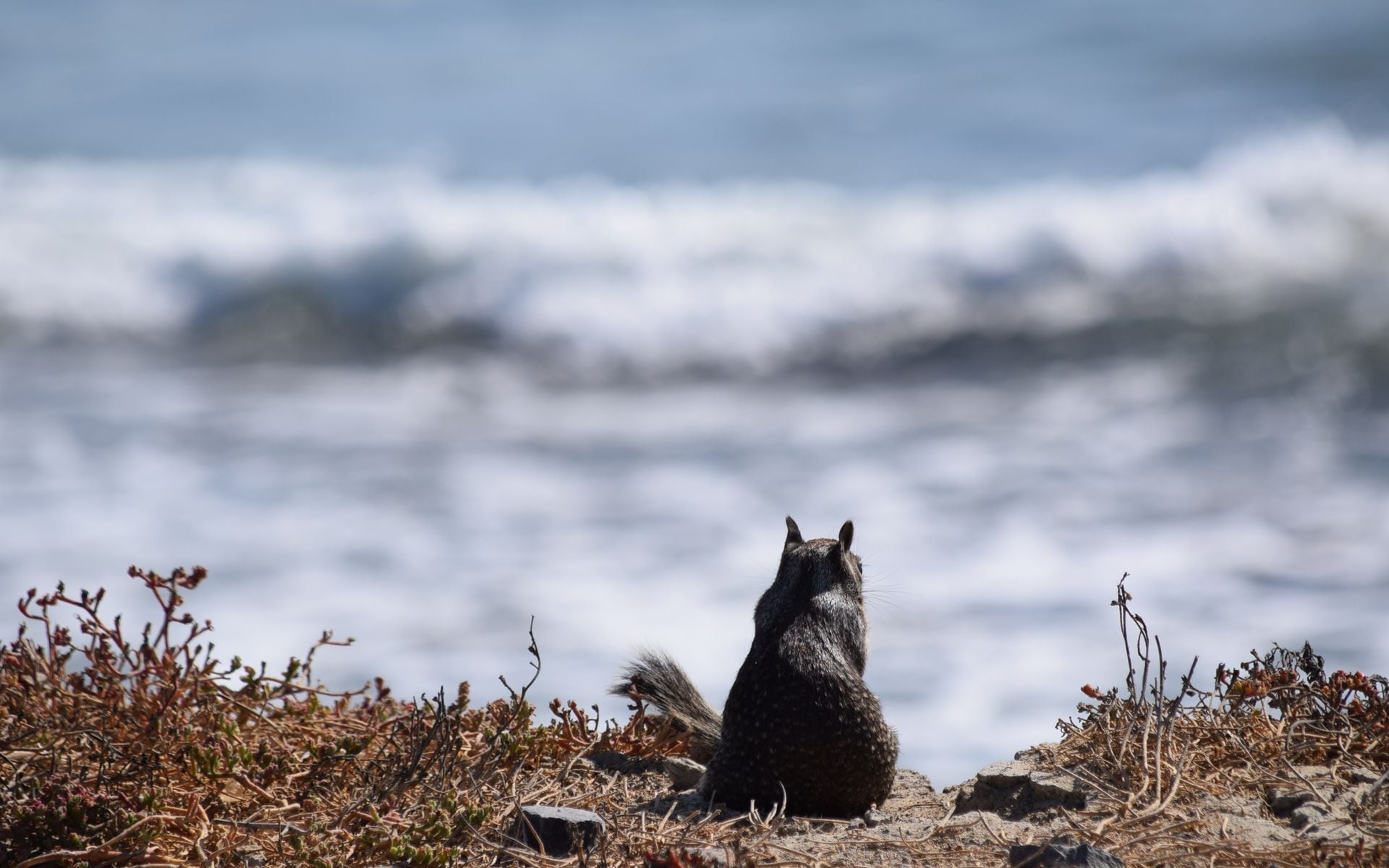
What You Can See and Where
California's wildlife concentrates along the coast, and the Central Coast between Monterey and San Simeon is the richest stretch. In one road trip you can watch sea otters in the Monterey kelp, gray whales offshore, elephant seals hauled out on the beach at Piedras Blancas, and California condors riding the thermals above Big Sur. The Central Coast is the single best base for a wildlife-focused trip.
The ocean is the main stage. Gray whales migrate past the entire coast twice a year, humpbacks and blue whales feed off Monterey and the Channel Islands in summer, and pods of common and bottlenose dolphins numbering in the hundreds are routine off Southern California. Sea lions and harbor seals haul out on rocks and docks up and down the state. Boat-based whale watching is covered in depth on the dedicated whale watching page.
On land, California delivers too. Tule elk bugle at Point Reyes in fall, thousands of elephant seals breed and molt on Central Coast beaches, monarch butterflies cluster in coastal groves in winter, and bald eagles and sandhill cranes fill the Central Valley wetlands. Many of these sites are free and roadside, so wildlife watching pairs cheaply with the best beaches in California and the Pacific Coast Highway road trip.
Whales, Dolphins, and Marine Life
Southern California is dense with reputable whale-watching operators. Out of Newport Beach, Newport Landing Whale Watching and Davey's Locker Whale Watching and Sportfishing run daily boats, and Newport Coastal Adventure uses smaller, faster inflatables for a closer, wetter ride. Down the coast at Dana Point, which brands itself the Dolphin and Whale Watching Capital, Dana Wharf Sportfishing and Whale Watching and Capt. Dave's Dana Point Dolphin and Whale Watching Safari are the long-running names. Farther south, San Diego Whale Watch runs out of Mission Bay.
Monterey Bay is the northern hub, where a deep undersea canyon brings feeding whales unusually close to shore. Discovery Whale Watch and the other Fisherman's Wharf operators run year-round trips, and the bay's mix of otters, sea lions, and seabirds makes even a slow whale day worthwhile. Base in Monterey and Carmel, and walk the trails at Point Lobos State Natural Reserve just south for shore-based sightings of seals, otters, and passing whales.
For the biggest animals, summer trips out of Santa Barbara and Ventura into the Santa Barbara Channel target blue whales, the largest animals that have ever lived, which feed there from roughly June through September. The Channel Islands National Park waters are the destination. To compare operators and combo trips, browse the tour operators and guides directory.
Elephant Seals, Sea Otters, and Land Mammals
The elephant seals at Piedras Blancas, just north of San Simeon on Highway 1, are one of the easiest wildlife spectacles in the state. Thousands of them haul out on the beach a few steps from a free roadside boardwalk, and there is no boat, fee, or hike required. Peak drama is the December-to-March breeding season, when three-ton bulls fight and pups are born, but there are seals on the beach most of the year. Año Nuevo State Park south of San Francisco protects another major colony and runs guided walks in breeding season.
Sea otters, once hunted nearly to extinction, are now a reliable sight in the kelp from Monterey south through Big Sur, often floating on their backs cracking shellfish. Tule elk, a species found only in California, graze the headlands at Point Reyes National Seashore and Tomales Point, and the fall rut in September and October is the time to hear the bulls bugle.
Inland, the Central Valley wetlands host one of the great bird spectacles in North America each winter, when hundreds of thousands of snow geese, sandhill cranes, and waterfowl fill refuges like the Sacramento and San Luis complexes. Many of these viewing areas sit beside campgrounds, so pair a dawn wildlife session with camping and RV stays to be on-site at first light.
A Season-by-Season Calendar
Gray whales run the coast southbound from about December through February and northbound, often with calves, from March into April, making winter and early spring the classic California whale-watching window. Humpbacks and blue whales feed off Monterey and the Channel Islands from roughly June through October. If whales are your priority, aim for the December-to-April migration or the summer feeding season depending on which species you want.
Elephant seals peak at Piedras Blancas from December through March for breeding and pupping, with a second molting crowd in spring and summer. Monarch butterflies gather in coastal groves like Pismo Beach and Pacific Grove from November through February. Tule elk rut in September and October. The Central Valley bird spectacle runs November through February.
The California condor, North America's largest land bird with a wingspan close to ten feet, can be seen year round soaring above Big Sur and at Pinnacles National Park, with the best viewing on warm afternoons when thermals build. Because so many of these events cluster in fall and winter, the cooler months are prime time for a wildlife trip, which is also when a soak in a Sierra or Central Coast hot spring feels earned after a cold morning of watching.
How to Watch Wildlife Well
Bring binoculars and patience. A decent pair of binoculars transforms every sighting, from a distant whale spout to an elephant seal's face, and a spotting scope helps at the seal and bird sites. Dress in warm layers even in summer, especially on boats, where the wind and spray make it far colder than shore. Mornings are generally calmer on the water and more active for land animals.
Keep your distance and let the animals set the terms. Federal law requires staying well back from marine mammals, and good operators know and follow the rules. On land, use the boardwalks and turnouts, never approach elephant seals or elk, and keep dogs leashed and away from wildlife areas. A quiet, still watcher sees far more than one who pushes for a closer look.
For boat trips, book with an established operator, take motion-sickness precautions if you are prone to it, and treat a trip as a good chance rather than a guarantee, since these are wild animals. Wildlife watching slots easily into almost any California route, so build it around the coast drives and park stops already on your plan. The full regional overview is on the California travel guide.
Frequently asked questions
When is the best time for whale watching in California?
Gray whales migrate south past the coast from about December through February and back north, often with calves, from March into April, making winter and early spring the classic window. Humpbacks and blue whales feed off Monterey and the Channel Islands from roughly June through October, so summer is best for the largest species.
Where can I see elephant seals in California?
Piedras Blancas, just north of San Simeon on Highway 1, is the easiest spot: thousands haul out on the beach beside a free roadside boardwalk with no boat or hike required. The December-to-March breeding season is the most dramatic. Año Nuevo State Park south of San Francisco protects another large colony with guided walks in breeding season.
How much does a whale-watching tour cost?
Most Southern California and Monterey whale-watching trips run roughly $45 to $70 per adult for a two-to-three-hour tour, with smaller high-speed inflatable trips at the higher end. Operators like Newport Landing, Dana Wharf, Davey's Locker, and San Diego Whale Watch run daily boats. Many offer a sighting guarantee that gives you a free return trip if no whales appear.
Can I watch wildlife without a boat or a tour?
Absolutely. The elephant seals at Piedras Blancas, sea otters along Big Sur, tule elk at Point Reyes, monarch butterflies at Pismo and Pacific Grove, and condors above Big Sur and Pinnacles are all viewable for free from roadside turnouts, boardwalks, and trails. Bring binoculars, keep your distance, and go early for the most activity.