What to Expect
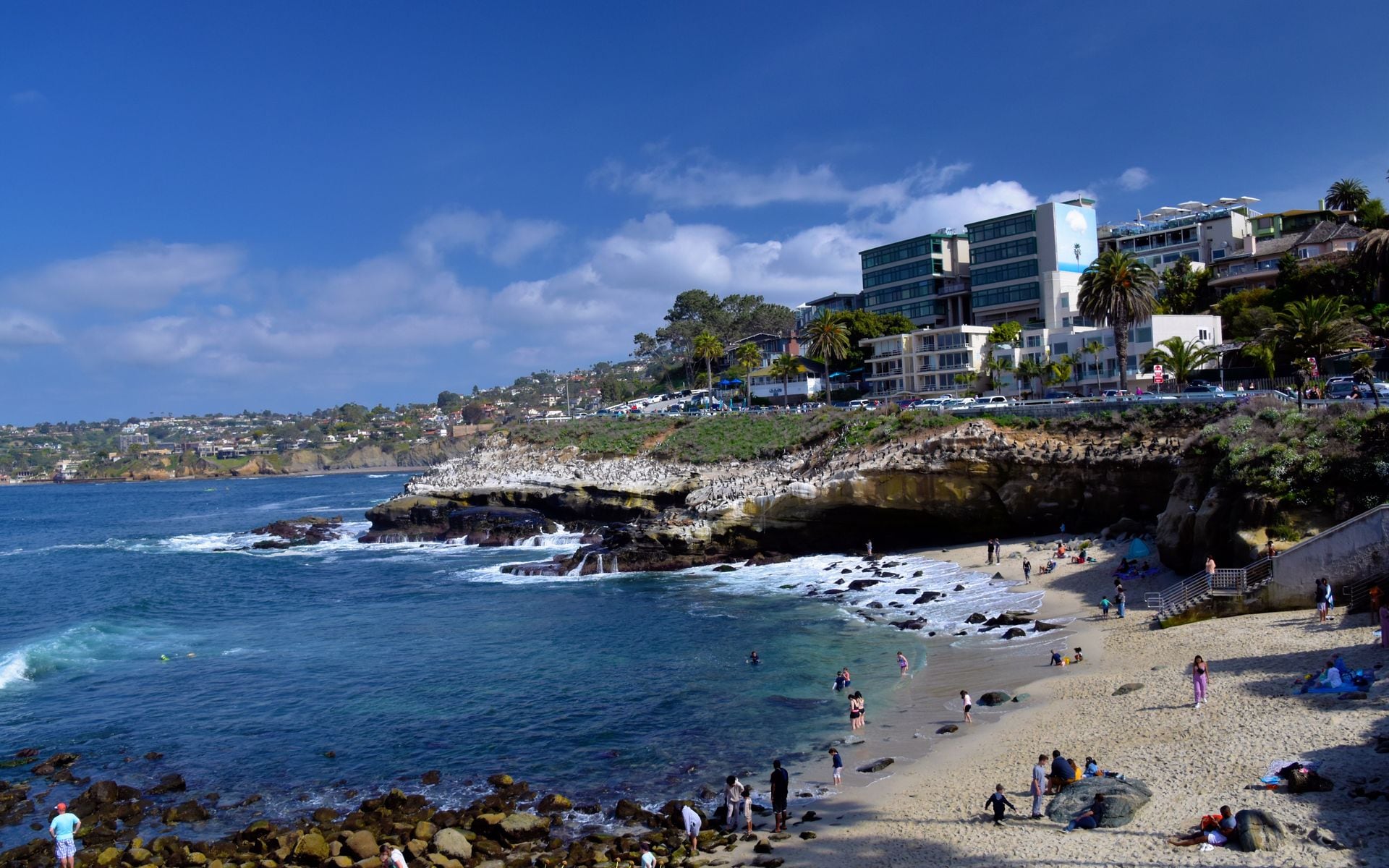
La Jolla is a seaside neighborhood of San Diego, about 20 minutes north of downtown, built along a curving stretch of cliffs and coves. The name is pronounced la-HOY-a. It has an upscale village core of galleries, boutiques, and restaurants set just above the water, and a coastline that packs a lot into a short distance: a wildlife-filled cove, sandstone sea caves, tide pools, a long sandy beach, and a bluff-top marine reserve. It is one of the most scenic and family-friendly stretches of the Southern California coast.
The weather is San Diego mild all year, with warm, dry summers and cool, comfortable winters, plus the late-spring and early-summer marine layer known as May Gray and June Gloom that leaves gray mornings clearing to sunny afternoons. The ocean is swimmable in summer and early fall and cool the rest of the year. The village is walkable, but the coastal sights spread out enough that a car helps.
La Jolla is the coastal highlight of the San Diego region and one of the state's best coastal towns. If you are planning a first trip to the state, it is one of the easiest, most rewarding coastal stops to build a day around, and our California travel guide can help you fit it into a wider Southern California itinerary.
What to Do
La Jolla Cove is the heart of it, a small protected inlet where sea lions and harbor seals haul out on the sandstone rocks, often within a few feet of visitors. The cove sits inside the San Diego-La Jolla Underwater Park Ecological Reserve, which makes it one of the best easy snorkeling and free-diving spots in California, with garibaldi, leopard sharks in the warmer months, and kelp forest just offshore. Nearby, the Children's Pool is a small beach where harbor seals gather and pup in winter, viewable from the seawall.
The La Jolla sea caves are the other signature outing. Seven caves cut into the cliffs below the village, and the most popular way to see them is by kayak or on a guided tour that paddles into the reserve; you can also reach the largest, Sunny Jim Cave, by a staircase through a cliffside shop. La Jolla Shores, a long sandy beach a few minutes north, is the calmer, family-friendly beach and the main launch point for kayak and stand-up-paddle tours.
Above the coast, walk the bluff-top path at Ellen Browning Scripps Park for the cove views, visit the Birch Aquarium at Scripps overlooking the ocean, or head a few miles north to Torrey Pines State Natural Reserve, a bluff-top preserve of rare pines with trails down to the beach. For surf lessons, the gentle beach breaks at La Jolla Shores are ideal for beginners, and several San Diego surf schools run lessons there.
Getting There and Parking
La Jolla is about 20 minutes north of downtown San Diego and roughly 20 to 25 minutes from San Diego International Airport (SAN), the closest major airport. From Los Angeles it is about two hours south on Interstate 5 without traffic, though the drive through Orange County and into San Diego County can slow considerably at peak times. A car is the practical way to get around, since the coastal sights spread out along the bluffs.
Parking is the main hassle. The village and cove area rely on free but limited street parking that fills early on weekends and all summer, so arrive before mid-morning or be ready to circle and walk. La Jolla Shores has a paid lot plus street parking that also fills fast on warm days. Weekday visits are far easier, and coming early rewards you with the calmest water and the best light for the cove wildlife.
If you are booking a kayak or snorkel tour, the operators are based at La Jolla Shores, so plan your parking around that beach for those outings rather than the village cove.
Best Time to Go
Late summer through early fall, roughly August through October, is the best window: the water is at its warmest for snorkeling and swimming, the marine layer has cleared, and the days are warm and dry. September and October in particular give you summer conditions with lighter crowds once the school-break rush ends.
Spring and early summer bring the May Gray and June Gloom pattern, gray mornings that usually clear to sunny afternoons, so plan water time and photography for later in the day in those months. Winter is cool but mild and quiet, good for walking the bluffs and watching the harbor seals pup at the Children's Pool from roughly December into spring, when part of the beach closes to protect them.
Whenever you come, mornings are calmest for kayaking and snorkeling before the afternoon wind picks up, and weekdays spare you the worst of the parking crunch. The cove wildlife is around year round, so there is no wrong season to see the sea lions.
Where to Stay and Eat
La Jolla has upscale inns and boutique hotels in and around the village, and the wider San Diego area gives you far more range a short drive away. Across the bay on Coronado, the historic Hotel del Coronado is the landmark beach resort, and the Loews Coronado Bay Resort and the Bahia Resort Hotel on Mission Bay are solid family options within 20 to 30 minutes. Staying in San Diego proper and day-tripping to La Jolla is a common and cost-effective plan.
For food, the village has a dense cluster of restaurants with ocean views, from casual cafes to serious dinner spots. In the nearby Point Loma and Little Italy areas of San Diego, Ironside Fish and Oyster is a standout for seafood and a raw bar. La Jolla Shores has beachfront casual eating within a walk of the sand for a lunch between paddles.
For an active add-on, book a kayak or snorkel tour out of La Jolla Shores or a beginner surf lesson with one of the San Diego surf schools that run there, then reward yourself with an early dinner in the village before the sunset light over the cove.
Frequently asked questions
What is there to do in La Jolla?
Watch sea lions and seals at La Jolla Cove, snorkel or free-dive the underwater ecological reserve, kayak into the sea caves from La Jolla Shores, walk the bluff-top park path, and visit the Birch Aquarium at Scripps. A few miles north, Torrey Pines State Natural Reserve has bluff trails down to the beach. The village core adds galleries, shops, and ocean-view restaurants.
How do you see the La Jolla sea caves?
The most popular way is by kayak or on a guided paddle tour that launches from La Jolla Shores and enters the ecological reserve. You can also reach the largest cave, Sunny Jim Cave, on foot by descending a staircase through a cliffside shop for a small fee. Book kayak and snorkel tours ahead in summer, and go in the morning before the afternoon wind.
Is parking hard in La Jolla?
Yes, parking is the main hassle. The village and cove rely on limited free street parking that fills early on weekends and all summer, and La Jolla Shores has a paid lot plus street parking that also fills fast. Arrive before mid-morning, visit on a weekday if you can, and plan your parking around La Jolla Shores if you are doing a kayak or snorkel tour.
How far is La Jolla from San Diego airport and Los Angeles?
La Jolla is about 20 to 25 minutes from San Diego International Airport (SAN) and roughly 20 minutes north of downtown San Diego. From Los Angeles it is about two hours south on Interstate 5 without traffic, though the drive can slow considerably through Orange County and into San Diego at peak times. A rental car is the practical way to get around.
When is the water warmest in La Jolla?
August through October, when the ocean reaches its warmest of the year for snorkeling and swimming and the marine layer has cleared. September and October give you those summer conditions with lighter crowds. Spring and early summer bring gray mornings that clear by afternoon, and winter water is cool but the cove wildlife is around year round.