What to Expect
The Monterey Peninsula is a compact triangle of coast about 120 miles south of San Francisco, and it packs three distinct towns into a short drive. Monterey is the largest, an old fishing and cannery town wrapped around a wharf and Cannery Row, John Steinbeck's old sardine district, now the home of one of the best aquariums in the world. Pacific Grove is the quiet residential neighbor with the Victorian houses and the monarch butterflies. Carmel-by-the-Sea is the fairy-tale village to the south, a square mile of storybook cottages, art galleries, and no street numbers.
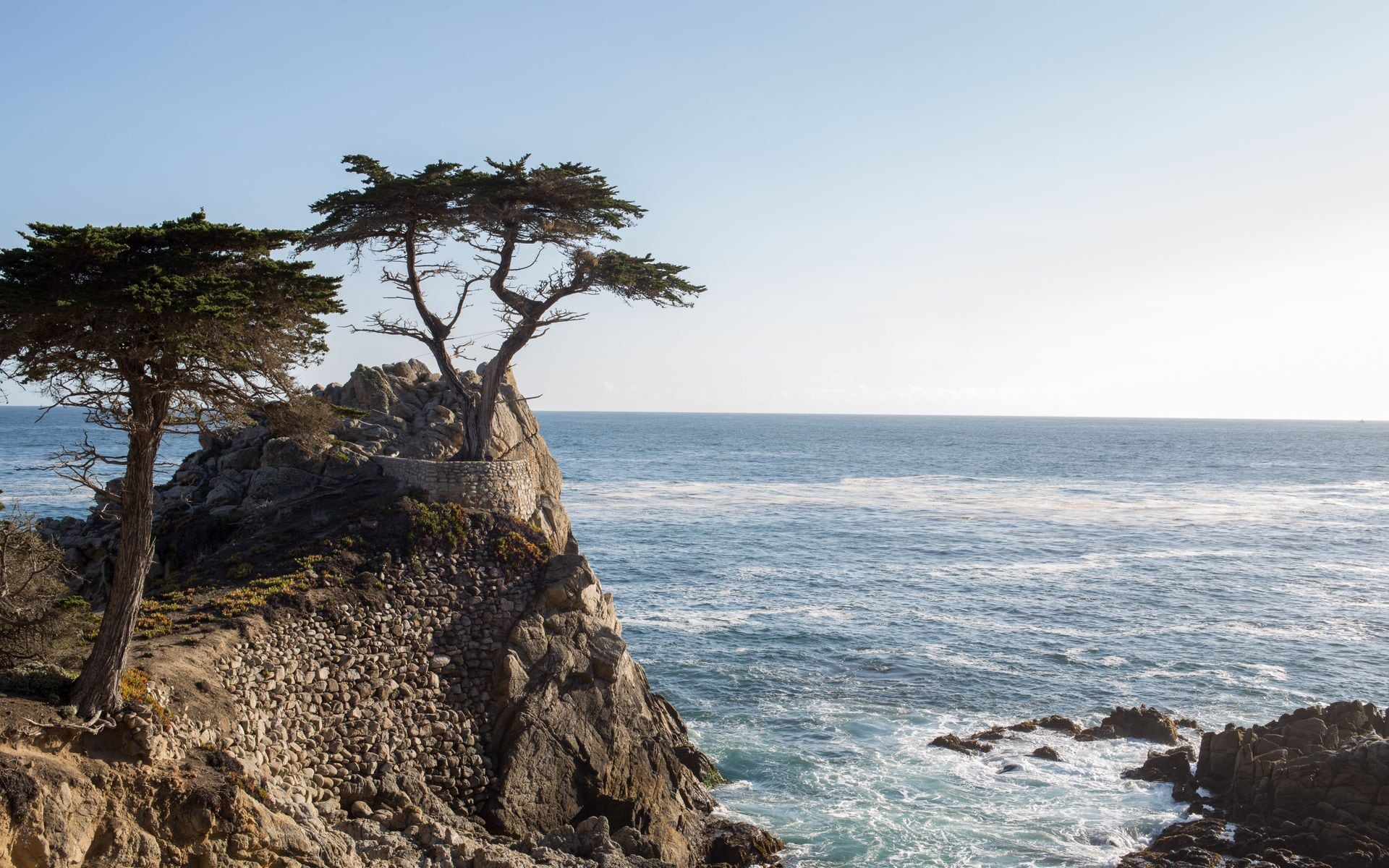
The peninsula's signature is the meeting of pine forest, cypress trees, and rocky Pacific coast. This is where the classic California coastline shots come from: gnarled Monterey cypress leaning over surf-battered granite, sea otters floating in the kelp, cormorants on the rocks. The water here is cold and the mornings are often gray with marine fog that burns off by midday, so pack layers even in summer.
Plan on two days to do the pair properly, one for Monterey and the aquarium, one for Carmel and the 17-Mile Drive. The peninsula anchors the northern end of the Central Coast and sits right at the start of the Big Sur drive, so it slots naturally into any Highway 1 road trip. It ranks high on our list of the state's best coastal towns in California.
What to Do
The Monterey Bay Aquarium is the reason most people come, and it earns it. Built into an old cannery on Cannery Row, it is famous for its two-story kelp forest tank, the sea otters, and a jellyfish gallery that stops everyone in their tracks. Buy timed tickets online ahead of your visit, especially in summer and on weekends, when it sells out. Right outside, Cannery Row and Old Fisherman's Wharf give you clam chowder, sea lions barking off the pilings, and the departure docks for the boats.
Monterey Bay is one of the best whale-watching spots on the West Coast, because a deep underwater canyon brings the animals close to shore. Gray whales pass on their migration in winter and early spring, and humpbacks and even blue whales feed here in summer and fall. Boats leave from Old Fisherman's Wharf year-round. The bay is also prime kayaking and diving water thanks to that same protected kelp forest.
South of Monterey, the 17-Mile Drive winds through Pebble Beach and its cypress-lined coast for a toll of around $12 per car, refundable if you dine at the resort. Carmel-by-the-Sea rewards slow wandering: white-sand Carmel Beach at the foot of Ocean Avenue, the galleries and courtyards of the village, and the 1797 Carmel Mission on the edge of town. Just south, Point Lobos State Natural Reserve in Carmel-by-the-Sea has some of the best short coastal hikes anywhere, with sea otters, harbor seals, and hidden coves; go early because parking fills.
Getting There and Around
Monterey is about 120 miles south of San Francisco, a drive of roughly two hours down Highway 101 and then west, or a slower, prettier run down Highway 1 through Santa Cruz. From San Jose it is about an hour and 15 minutes. The closest airport is small Monterey Regional (MRY), with limited flights; most visitors fly into San Jose (SJC), about 75 minutes away, or San Francisco (SFO), about two hours out, and drive.
You need a car here. The three towns are close, five to 15 minutes apart, but they are not walkable to each other, and the 17-Mile Drive, Point Lobos, and the Big Sur coast all require driving. Within Carmel-by-the-Sea itself, park once and explore the village on foot, since it is only a square mile and parking is tight.
The peninsula sits right at the start of the Big Sur coast, so many people arrive as part of a Highway 1 trip. If you are heading south, fuel up and stock snacks in Monterey or Carmel, because services thin out fast once you cross Bixby Bridge. To the north, the beach town of Santa Cruz is about 45 minutes up the coast and makes an easy add-on.
Best Time to Go
Fall, roughly September through early November, is the best coastal weather on the peninsula: the summer fog thins, the days are mild and clear, and the crowds ease after Labor Day. It is the sweet spot if you want blue skies over the cypress instead of gray marine layer.
Summer is peak season for visitors but not for weather. July and August bring heavy morning fog, cool temperatures in the 60s, and the biggest crowds and highest hotel rates of the year. It is still a fine time to visit, just do not expect beach heat; the water stays cold year-round and a wetsuit is standard for surfers. Spring is green and pleasant with fewer people, and winter is quiet, cool, and often rainy, but it is prime gray-whale season and the village feels calm.
For specific activities, time it to what you want: winter and early spring for gray whales, summer and fall for humpbacks and blue whales, and October for the clearest skies. The monarch butterflies cluster in Pacific Grove roughly November through February if that is on your list.
Where to Stay and Eat
For location, the Monterey Plaza Hotel and Spa sits right on the water on Cannery Row, walking distance to the aquarium, and is the easy choice if you want to be in the middle of things. Up the coast in Pebble Beach, The Inn at Spanish Bay is the splurge, a resort set on the 17-Mile Drive with the cypress coast at its doorstep. Carmel-by-the-Sea is full of small inns and boutique hotels within walking distance of the galleries and the beach, which is the move if you prefer the village to the wharf.
Seafood is the local currency. Old Fisherman's Grotto on Monterey's wharf is a long-running spot for cioppino and clam chowder in a sourdough bowl, right over the water. Cannery Row and downtown Monterey have plenty of casual options, and Carmel-by-the-Sea packs an outsized number of good restaurants and wine-tasting rooms into its square mile, from bistros to bakeries.
Book ahead for the popular Carmel dinners on weekends, since the village is small and fills up. For a quick, cheap meal, the wharf and Cannery Row have chowder counters and taquerias, and Carmel's bakeries and delis make easy picnic material for a Point Lobos or beach afternoon.
Good to Know
Buy your Monterey Bay Aquarium tickets online in advance. It uses timed entry and regularly sells out on summer and holiday weekends, and walking up hoping for same-day tickets can leave you stuck. The same early-arrival logic applies to Point Lobos, where the small lots fill by mid-morning and the reserve sometimes closes its gate until spaces open.
Dress for fog and cold water regardless of the calendar. Summer mornings here are gray and cool, the Pacific stays in the 50s year-round, and layers plus a windbreaker will serve you better than shorts and a t-shirt. If you are surfing or kayaking, plan on a wetsuit.
Give yourself the full two days if you can. Trying to see the aquarium, drive 17-Mile Drive, walk Carmel, and hike Point Lobos in a single day means rushing all of it. Split it across two, use Monterey as your base one night and consider Carmel the next, and leave the drive south to Big Sur and Santa Barbara for a fresh morning.
Frequently asked questions
How many days do you need in Monterey and Carmel?
Two days is ideal: one for Monterey, the aquarium, Cannery Row, and the wharf, and one for Carmel-by-the-Sea, the 17-Mile Drive, and Point Lobos. You can hit the highlights in a single long day if you start early, but two days lets you enjoy it rather than rush.
Do I need to buy aquarium tickets in advance?
Yes. The Monterey Bay Aquarium uses timed-entry tickets and regularly sells out on summer and holiday weekends. Buy online before your visit rather than risking a same-day walk-up, which may not be available.
How far is Monterey from San Francisco?
About 120 miles, or roughly two hours by car via Highway 101, and longer if you take the scenic Highway 1 route through Santa Cruz. The nearest large airport is San Jose (SJC), about 75 minutes away.
When can you see whales in Monterey Bay?
Year-round, thanks to a deep offshore canyon that brings whales close to shore. Gray whales pass in winter and early spring on their migration, and humpbacks and blue whales feed in the bay in summer and fall. Boats leave from Old Fisherman's Wharf.
Is the 17-Mile Drive worth it?
Yes, if you enjoy scenic coastal driving. It winds through Pebble Beach past the Lone Cypress and cypress-lined shore for a toll of around $12 per car, which is refundable if you dine at one of the Pebble Beach resorts. Allow an hour or two with photo stops.