Yosemite is the trip a lot of people build a whole California vacation around, and for good reason. Granite walls a mile high, waterfalls that thunder in spring, giant sequoias older than most countries, all packed into a valley you can see in a couple of days. But it is also big, busy, and easy to get wrong on a first visit: people burn half a day in traffic, park in the wrong lot, or arrive in a season when the waterfalls have already dried up. This guide lays out what a first-timer needs to know so your first Yosemite trip lands the way you pictured it. For the deeper reference, keep our full Yosemite National Park page open, and use the California travel guide to slot the park into your route.
Getting There and Getting Around
Yosemite sits in the central Sierra Nevada, about 3.5 to 4 hours from San Francisco and roughly 5 to 6 hours from Los Angeles by car. The closest airport is Fresno Yosemite International (FAT), about 2.5 hours from the valley by the south entrance, which is worth considering if you want to skip the long drive from the coast. There are four main entrances, and the one you use depends on where you are coming from: Arch Rock (Highway 140) from Merced and the west, Big Oak Flat (Highway 120) from the Bay Area, the South Entrance (Highway 41) from Fresno and the sequoias, and Tioga Pass (Highway 120 east) from the Eastern Sierra when it is open in summer. Of the four, Highway 140 through the Merced River canyon is the lowest, gentlest, and most weather-proof approach, which matters if you visit in shoulder season when the higher roads can hold snow.
Once you are inside, the smartest move is to park once and use the free Yosemite Valley shuttle, which loops the eastern valley and stops at the major trailheads, Curry Village, and Yosemite Village. The valley roads clog in summer and parking near the trailheads fills by mid-morning, so leave the car at your lodge or at the Yosemite Village day-use lots and ride the shuttle to the sights. The park entrance fee is $35 per vehicle and covers seven days. If you are visiting in the busy season, sort out entry ahead of time by reading how to get Yosemite reservations, because a peak-hours reservation can be required to drive in.
The Valley Highlights You Came For
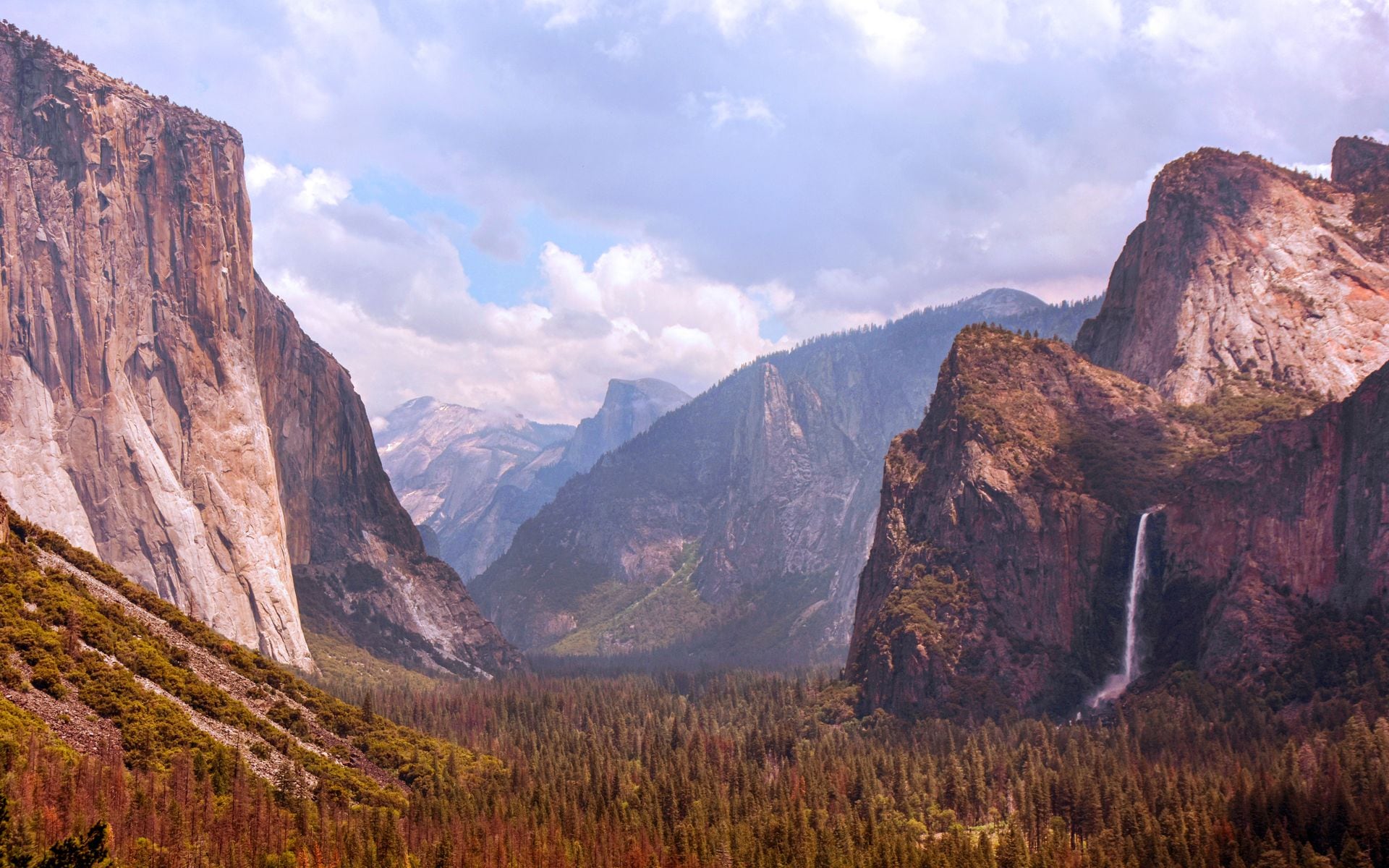
Almost everything a first-timer wants is inside Yosemite Valley, a seven-mile stretch of flat ground under the big walls. Start at Tunnel View, the pullout on Highway 41 that frames El Capitan, Bridalveil Fall, and Half Dome in one look. It is the classic first stop and takes ten minutes. From there, Bridalveil Fall is a short paved walk, and Yosemite Falls, the tallest in North America at 2,425 feet, has an easy loop to the base of the lower fall.
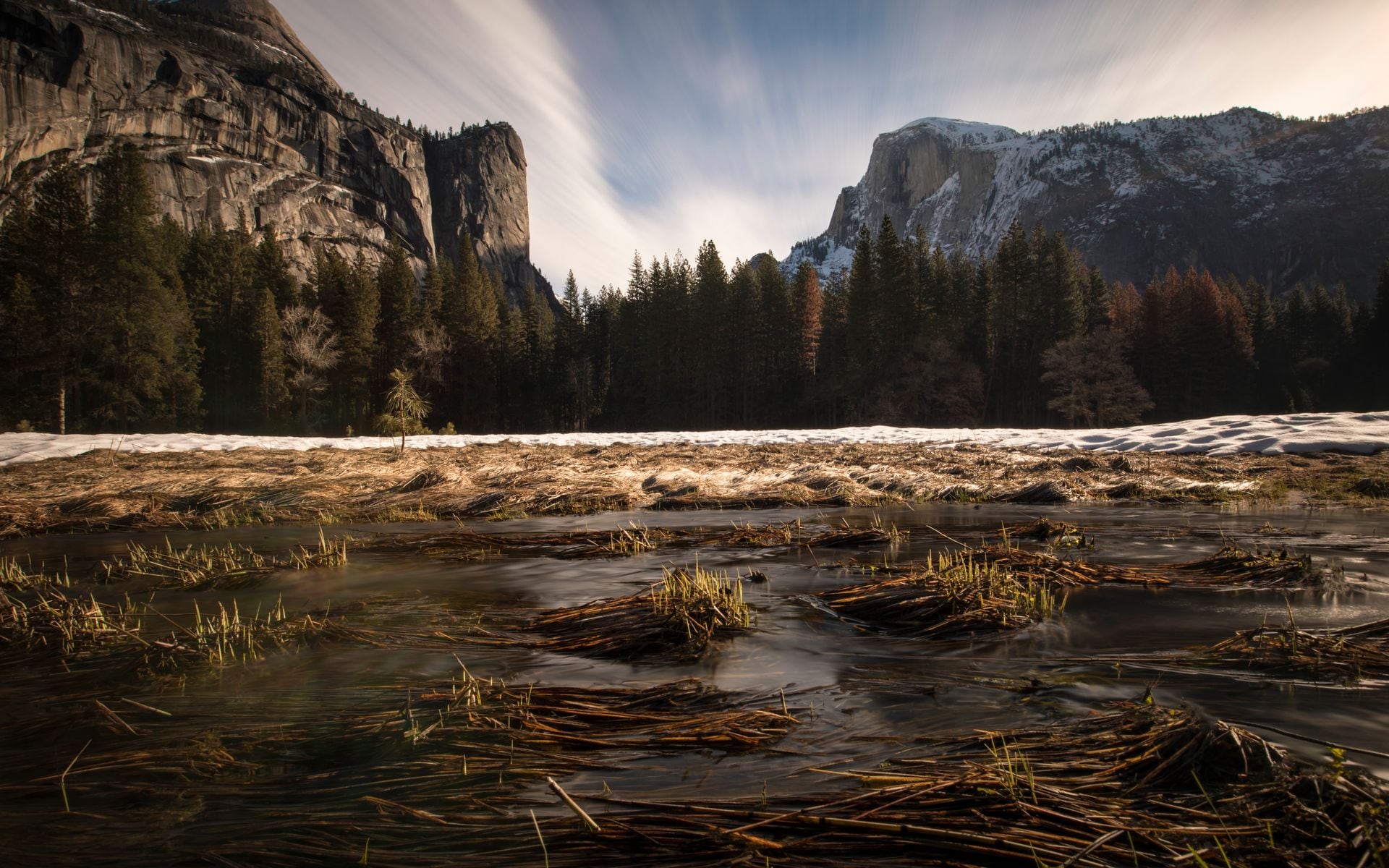
El Capitan draws climbers you can spot as specks on the wall with binoculars from the meadow below, and El Capitan Meadow is the best place to watch them work the 3,000-foot face. Half Dome is the granite dome that anchors every photo of the valley; you do not have to climb it to appreciate it from the valley floor or from Sentinel Bridge over the Merced River at sunset. Mirror Lake, an easy walk on the valley’s east end, reflects Half Dome when the water is high in spring, then dries to a meadow by late summer. Cook’s Meadow and the loop boardwalk near Sentinel Bridge give you an open, uncrowded view of the whole valley skyline in about half an hour. In February, if you time a clear late afternoon, the setting sun can light up Horsetail Fall on the east side of El Capitan like a ribbon of orange, a natural event that draws photographers from around the world. Give the valley a full day at minimum, two if you want to slow down.
The Best Hikes for a First Visit
You do not need to be a mountaineer to get the best of Yosemite on foot. For an easy day, the Lower Yosemite Fall loop (about one mile, flat) and the Bridalveil Fall walk deliver big scenery for little effort. Step it up with the Mist Trail to Vernal Fall, one of the best short hikes in the country: about 2.5 to 3 miles round trip to the top of Vernal Fall, with a granite staircase that gets soaked by spray in spring, so wear grippy shoes. Push on to Nevada Fall and it becomes a strenuous 5.5-to-7-mile day. The neighboring John Muir Trail offers a drier, gentler alternative back down if the Mist Trail steps are too slick or too crowded on the way out.
For a bigger payoff without the valley crowds, drive up to Glacier Point, which looks straight down on the valley and across to Half Dome from 3,200 feet above the floor. The drive from the valley takes about an hour each way, so plan a half day for it, and the sunset light on Half Dome from the railing is worth staying for. If you have the legs, the Four Mile Trail and the Panorama Trail both connect Glacier Point back down to the valley on foot for a one-way descent using a shuttle or a second car. The Glacier Point Road typically opens late spring through fall. If you visit in summer when Tioga Road is open, the high country around Tuolumne Meadows and Tenaya Lake offers gentler, alpine hiking at 8,000-plus feet, and the short walk up Lembert Dome or the stroll to Soda Springs are easy wins at altitude. Near the South Entrance, the Mariposa Grove holds hundreds of giant sequoias, including the Grizzly Giant and the walk-through California Tunnel Tree, on a walkable set of trails served by a seasonal shuttle from the welcome plaza.
Where to Stay and Eat
In-park lodging is the prize for a first visit because it puts you inside the valley at dawn and dusk and exempts your car from the entry reservation. The Ahwahnee is the grand hotel, all stone and timber under the Royal Arches, and it prices accordingly, often north of $500 a night in summer. Yosemite Valley Lodge sits near the base of Yosemite Falls and is the practical mid-range pick. Curry Village (also called Half Dome Village) offers canvas tent cabins that are the closest thing to camping with a bed. Wawona Hotel, a Victorian-era property near the South Entrance, is the quieter option away from the valley bustle. All of them book out months ahead for summer, so reserve as early as you can through the park concessioner.
If the in-park options are full or over budget, base in a nearby town outside the park. Mariposa and El Portal sit close to the Arch Rock entrance on the west; Oakhurst and Fish Camp are near the South Entrance and the sequoias (Fish Camp’s Tenaya Lodge is the big full-service resort there); Groveland is on the Big Oak Flat road from the Bay Area. For food, casual spots and delis in these towns fill the gap, and inside the park the Yosemite Valley Lodge food court, the Base Camp Eatery, the Village Store deli, and the Ahwahnee dining room handle most needs. Pack a cooler either way; groceries inside the park are limited and pricey. Because a night inside the gate skips the reservation hassle entirely, weigh the splurge against the cost of a stressful entry morning. Our how to get Yosemite reservations guide explains exactly how that exemption works.
When to Go and How Long to Stay
Timing changes what you see. May and early June are the waterfall window, with the falls at full roar from snowmelt and everything green, though it is also the busiest stretch and peak for entry reservations. July and August bring warm, dry weather and the open high country over Tioga Pass, but thinner waterfalls and the heaviest crowds. September and October quiet down and often drop the reservation requirement on weekdays, with crisp air and early fall color in the meadows, though the big falls slow to a trickle. Winter turns the valley snowy and calm, with the Badger Pass (Yosemite Ski & Snowboard Area) running and Tioga and Glacier Point roads closed; snow chains can be required on the approach roads, so carry a set from roughly November through April.
Plan on two to three days for a first trip: one for the valley floor, one for a bigger hike like the Mist Trail or Glacier Point, and a third to reach the sequoias or the high country. If you only have a single day, do Tunnel View at first light, the Mist Trail before it fills, and Glacier Point in the late afternoon, and you will have hit the highlights. Set your dates with the best time to visit California guide, and if you are worried about the total, our is California expensive to visit breakdown covers the park and lodging costs. Traveling with kids or pairing Yosemite with the coast? Our California with kids tips and best beaches in Southern California roundup make natural companions to a Sierra trip. Get there early, park once, and let the valley do the rest.