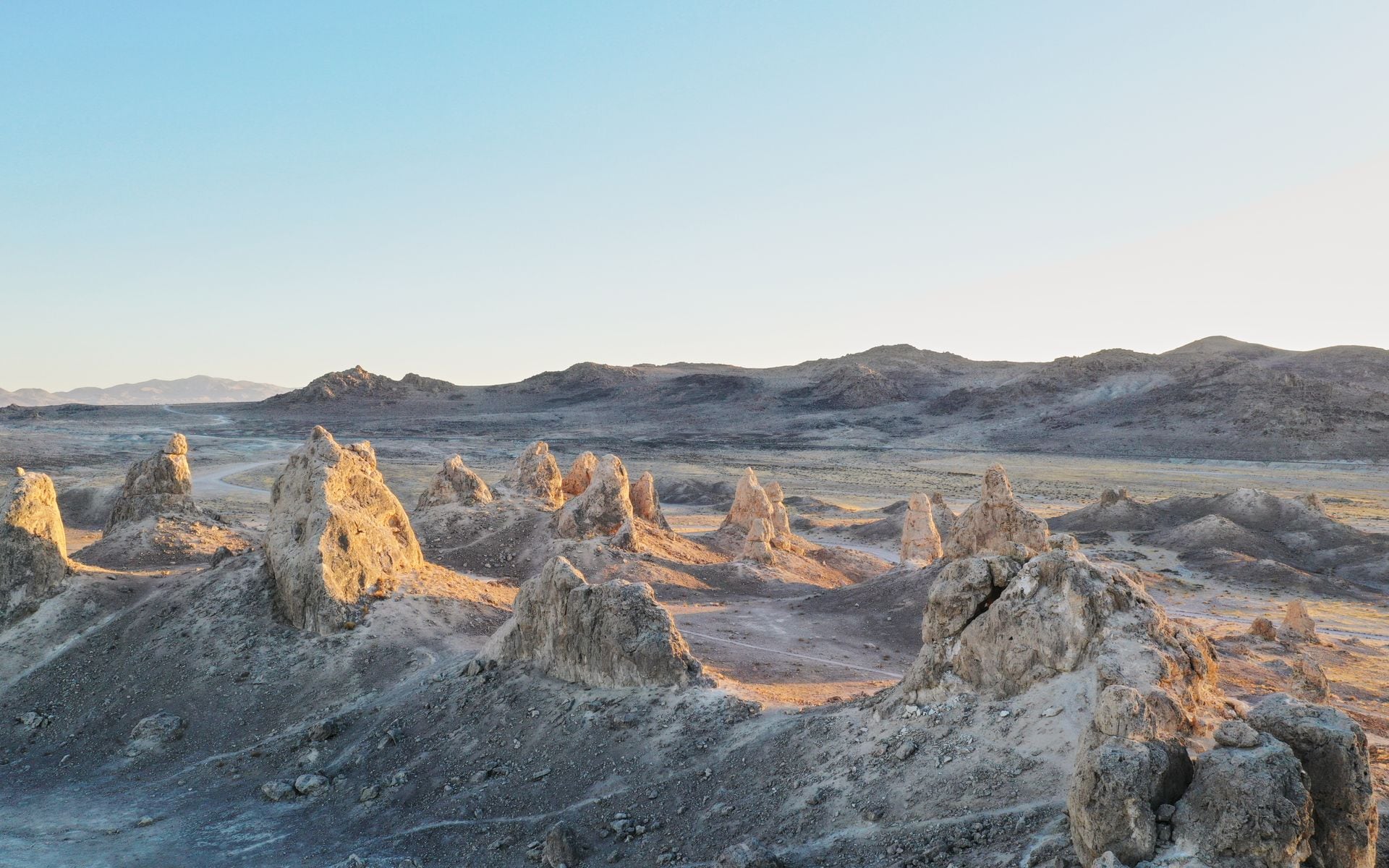
What Defines the Desert Region
The Deserts cover the southeastern quarter of California, and they run on the opposite calendar from the rest of the state. While the coast and mountains fill up in summer, the desert empties out because the heat becomes genuinely dangerous. Come in the cool months and you get warm days, clear skies, and the state's best stargazing. This is a fall-through-spring region, and treating it like a summer trip is the single biggest mistake visitors make. If you are still mapping the wider trip, our California travel guide lays out how the regions fit together.
Three destinations anchor it. Palm Springs and the wider Coachella Valley are the resort core: mid-century architecture, golf, pools, and spa hotels a couple of hours east of Los Angeles. Joshua Tree National Park sits just to the north and east, where the Mojave and Colorado deserts meet in a landscape of twisted trees and giant boulders. And out on the Nevada border, Death Valley National Park holds Badwater Basin at 282 feet below sea level, the lowest point in North America and the site of the hottest air temperature ever reliably recorded on earth.
The distances out here are bigger than they look on a map. Palm Springs and Joshua Tree are close and easily combined, but Death Valley is a world apart, hours of open desert driving from anywhere, with long gaps between gas stations. Plan fuel and water accordingly.
Main Bases and Towns
Palm Springs is the obvious base and the most comfortable one. It has the widest range of hotels, the best restaurants, and easy day-trip range to Joshua Tree. Downtown is walkable, the pools are the point, and you can eat well without trying hard: Billy Reed's is a longtime local breakfast-and-lunch standby, and Farm serves French country cooking in a small courtyard off the main drag. The Palm Springs Aerial Tramway hauls you from the desert floor up to 8,500 feet on Mount San Jacinto, where it can be 30 to 40 degrees cooler and, in winter, snowy.
For Joshua Tree, the town of Joshua Tree and neighboring Twentynine Palms sit right at the park's edge with high-desert homestays, small motels, and a growing food scene. Staying up here puts you at the entrances for sunrise and keeps you out of the day-trip traffic.
Death Valley is the outlier. Because it is so far from everything, you either stay inside the park at Furnace Creek or The Ranch, or you base in Las Vegas about two hours east and day-trip in. There is very little in between, so book the in-park lodging early or plan the Vegas approach. For the wider lodging picture across the state, see where to stay in California.
Top Places to Prioritize
If you have a long weekend, pair Palm Springs and Joshua Tree. Base in Palm Springs, spend a day by the pool and riding the tramway, then drive up to Joshua Tree for a full day of short hikes and boulder scrambles. The west entrance near the town of Joshua Tree is about an hour from Palm Springs; Keys View, Hidden Valley, and Skull Rock are the greatest hits, all easy stops off the main park road. National park entry runs $30 per vehicle for seven days.
Death Valley deserves its own trip or a dedicated two days built around it. The must-do loop takes in Badwater Basin's salt flats, the sculpted mud of Zabriskie Point at sunrise, the Mesquite Flat sand dunes, and Dantes View 5,000 feet up for the big overlook. It is a park of driving between showstoppers, so expect long distances and carry more water than you think you need.
For a curated shortlist of desert getaways across the state, see the best beaches in California when you want to trade the dry heat for the coast, or plan the desert loop on its own. The three parks and Palm Springs do not have to be one trip; the desert rewards a focused visit over a rushed circuit.
When to Go and How Long
The window is October through April. In those months, desert days are warm and comfortable, nights are cool, and the parks are safe to hike. Spring, especially March and April in a good year, can bring wildflower blooms across the desert floor. This is also festival season in the Coachella Valley in April, which packs Palm Springs and spikes hotel prices.
From May through September, the desert turns hostile. Death Valley routinely tops 120 degrees Fahrenheit in summer and has recorded 134, and Palm Springs and Joshua Tree sit well over 100 for weeks. Hiking in that heat is a real safety risk, and the park service closes some trails to protect visitors. If you must come in summer, treat it as a pool-and-early-morning trip only.
For length, a Palm Springs and Joshua Tree combo works as a two-to-three-day long weekend. Add Death Valley and you want at least four or five days, because the driving distances between the parks are long. A common mistake is trying to hit all three deserts in a weekend; the geography does not allow it without spending the whole trip in the car.
Getting There and Around
Palm Springs has its own airport (PSP) with direct flights from many cities, and it is the easiest entry to the desert. Otherwise, Los Angeles (LAX) is about two hours west of Palm Springs on I-10, and Las Vegas is the practical gateway for Death Valley, roughly two hours from the park. You need a rental car for all of it; there is no useful transit once you leave Palm Springs proper.
Two safety rules matter more here than anywhere else in California. First, carry water, and plenty of it, on every desert outing, and avoid midday summer hiking entirely. Second, watch your fuel range, especially in Death Valley, where gas stations are far apart and expensive and cell service disappears for long stretches. Fill up before you enter, tell someone your route, and don't rely on your phone for navigation once you are deep in the park.
The desert pairs naturally with a Southern California trip. From Palm Springs you are two hours back to Los Angeles and its beaches, or you can push east to the parks. Whatever you build, respect the season: get the timing right and California's deserts are one of the most rewarding regions in the state; get it wrong and the heat will run your trip.
Frequently asked questions
When is the best time to visit California's deserts?
October through April. Those months bring warm days, cool nights, and safe hiking, with wildflower blooms possible in March and April. From May through September the desert is dangerously hot: Death Valley routinely tops 120 degrees Fahrenheit, so summer trips should be pool-and-early-morning only.
Can you visit Palm Springs, Joshua Tree, and Death Valley in one trip?
Palm Springs and Joshua Tree pair easily, about an hour apart, as a two-to-three-day long weekend. Death Valley is hours away from both and really needs its own dedicated visit. Combining all three in one trip takes at least four or five days because of the long driving distances between the parks.
How far is Palm Springs from Los Angeles?
About two hours east of Los Angeles on I-10 in normal traffic. Palm Springs also has its own airport (PSP) with direct flights, which is the easiest way in. For Death Valley, Las Vegas is the practical gateway, roughly two hours from the park.
What should I know about desert safety?
Carry plenty of water on every outing and avoid midday summer hiking. Watch your fuel range, especially in Death Valley, where gas stations are far apart and cell service disappears for long stretches. Fill up before entering, share your route, and don't rely on your phone for navigation deep in the parks.
How much does it cost to enter the desert national parks?
Both Joshua Tree and Death Valley charge $30 per vehicle for a seven-day pass. Neither requires timed-entry reservations, unlike Yosemite in peak season, but in-park lodging at Death Valley's Furnace Creek books out early, so reserve well ahead if you want to sleep inside the park.