What to Expect
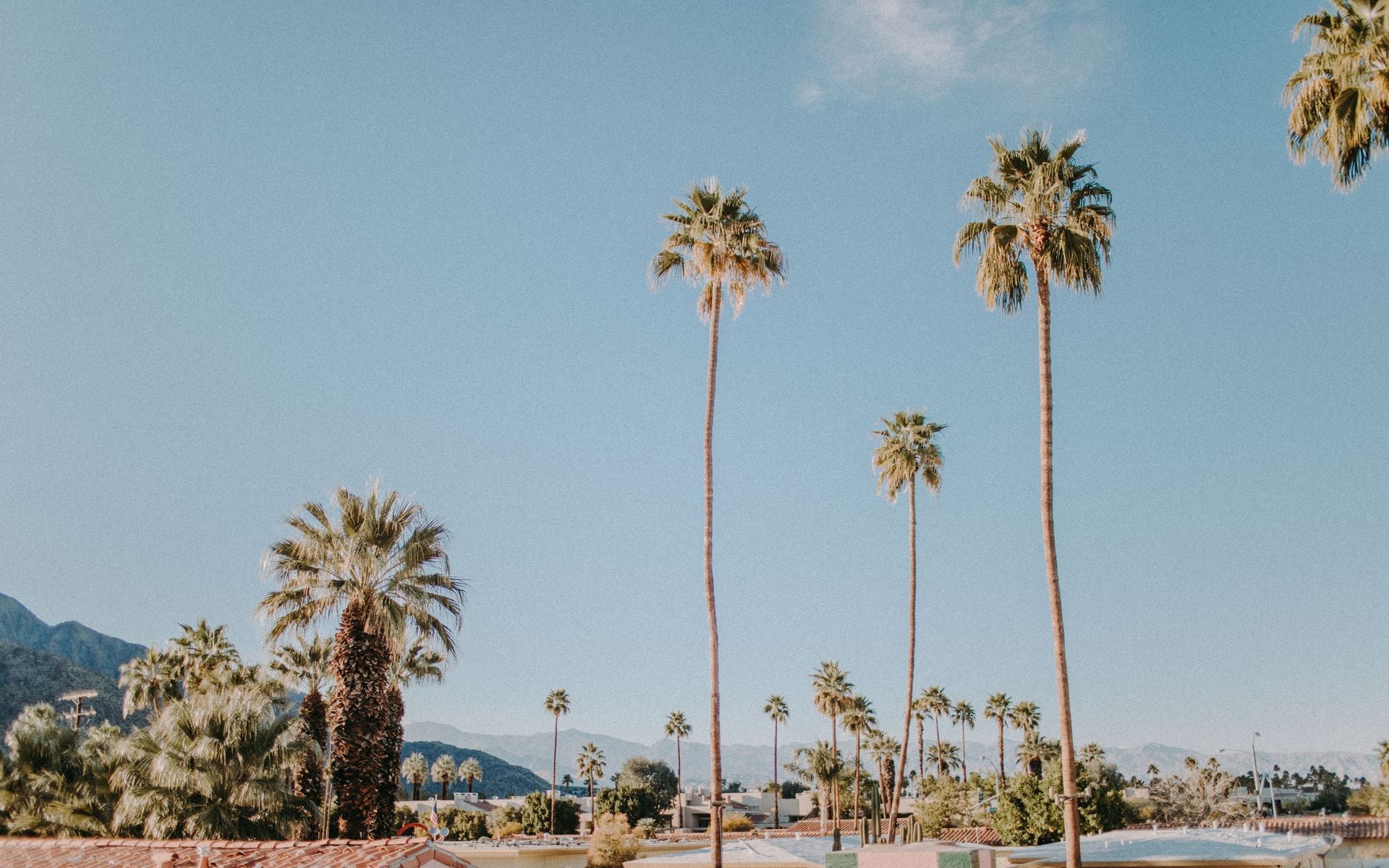
Palm Springs sits in the Coachella Valley, a wide desert basin ringed by the steep San Jacinto and Santa Rosa Mountains about 110 miles east of Los Angeles. The town made its name in the 1950s and 1960s as the weekend escape for Hollywood, and that history still defines it: low-slung glass-and-steel houses, kidney-shaped pools, neon motel signs, and a downtown built for strolling. It is compact, flat, and walkable at the core, which makes it a relaxed base compared with the big-mileage desert parks nearby.
The weather runs the calendar here. From October through April the days are warm and dry and the nights are cool, which is exactly why people come. From May through September the valley bakes, with highs routinely between 105 and 115 degrees, so summer is pool-and-air-conditioning season and little else. The upside of that heat is that summer room rates drop hard, so a July stay can be a bargain if you plan your day around early mornings and the pool.
Palm Springs anchors California's desert region and pairs naturally with the parks around it. It is the most comfortable launch point for a desert trip and lands on our list of the best desert escapes in California. Joshua Tree is under an hour away, and the long haul north to Death Valley National Park makes Palm Springs a logical warm-up before the more extreme country up there.
What to Do
The signature ride is the Palm Springs Aerial Tramway, which climbs from the desert floor near 2,600 feet up to Mountain Station at 8,516 feet on rotating cars that spin slowly for the full view. At the top you step out into pine forest and Mount San Jacinto State Park, often 30 to 40 degrees cooler than the valley, with hiking trails in summer and snow on the ground in winter. Adult fares run around $30, and the tram is the one attraction worth reserving a time slot for on a busy weekend.
Downtown centers on Palm Canyon Drive, lined with restaurants, design shops, and galleries. On Thursday evenings the street closes for VillageFest, an open-air market of food, art, and produce vendors. For the desert itself, drive a few minutes south to the Indian Canyons on the Agua Caliente reservation, where Palm Canyon and Andreas Canyon hold real fan-palm oases fed by year-round streams, some of the best short desert hikes in the state. Tahquitz Canyon, closer to town, leads to a seasonal waterfall.
Palm Springs is also a design pilgrimage. Modernism Week each February fills the town with architecture tours of the 1950s and 1960s houses, and self-guided driving maps let you find the famous ones any time of year. If you want to taste local wine, Miramonte Winery up in the hills near Temecula-style country and Total Wine & More in town cover the bases, and the town's spa hotels lean hard into the desert-relaxation angle.
Getting There and Parking
Palm Springs International (PSP) sits right in town, minutes from downtown hotels, and it takes direct flights from cities across the country in the winter season. Most visitors, though, drive in from Los Angeles: it is about two hours and 110 miles east on Interstate 10 without traffic, though the stretch out of LA can add 30 to 45 minutes on a Friday afternoon. From San Diego plan on roughly two and a half hours, and from Las Vegas about four.
Once you are here you can get by on foot in the downtown core, but a car makes the canyons, the tram, and day trips to Joshua Tree far easier. Parking downtown is a mix of free street parking, a few public garages, and hotel lots, and it is rarely a problem except during Modernism Week, the film festival in January, and the Coachella and Stagecoach festival weekends in April, when the whole valley fills up and rates spike.
For the wider desert loop, Joshua Tree's south and west entrances are about 45 minutes to an hour away, and the town works well as a comfortable overnight before or after a park day so you are not sleeping in the heat with no air conditioning.
Best Time to Go
October through April is the season, full stop. Daytime highs in those months run from the 70s to the 90s, the nights are cool enough for a jacket, and every pool deck and patio in town is comfortable. Midwinter, December through February, is the coolest stretch and can be genuinely chilly after dark, so pack a layer even though the days are sunny.
Spring is the busiest and priciest window because of the events calendar: the film festival in January, Modernism Week in February, and the back-to-back Coachella and Stagecoach music festivals in April, which book out hotels for weeks and push rates to their peak. If you want the good weather without the crowds, aim for November, early December, or March.
May through September is the hot season, with highs regularly past 110. Rooms are cheap and pools are the main event, but plan any hiking or canyon walking for the first hour after sunrise and treat the midday heat seriously. The tram is a genuine escape in summer, since the top of the mountain can be 30 to 40 degrees cooler than the valley floor.
Where to Stay and Eat
Palm Springs is a hotel town, heavy on boutique and design-forward properties with pools, plus a strong roster of mid-century motels reborn as adults-only retreats. The valley stretches east through Rancho Mirage, Palm Desert, and La Quinta, where the bigger golf-and-spa resorts sit, so pick downtown Palm Springs if you want to walk to dinner and the valley towns if you want a resort campus. Summer is the value season across all of them.
For food, Farm is a small French country spot tucked into a courtyard off Palm Canyon Drive and one of the most sought-after breakfast and brunch tables in town, so reserve ahead. Billy Reed's is a long-running Palm Springs institution for classic American diner fare and pie, easy for families and no fuss. Downtown is thick with patios for tacos, pizza, and date shakes, the local specialty made from Coachella Valley dates.
For a taste of local drinking, Miramonte Winery and the town's Total Wine & More cover wine, and the craft cocktail bars along Palm Canyon lean into the retro Rat Pack theme. Wherever you land, book a room with a real pool: in Palm Springs the pool is not an amenity, it is the point.
Frequently asked questions
When is the best time to visit Palm Springs?
October through April, when daytime highs run from the 70s to the 90s and the nights are cool. That is the whole reason the town exists. Avoid May through September, when highs regularly top 110 degrees and outdoor time is limited to early mornings and the pool. November, early December, and March give you the good weather without the spring festival crowds.
How far is Palm Springs from Los Angeles?
About two hours and 110 miles east on Interstate 10 without traffic, though leaving LA on a Friday afternoon can add 30 to 45 minutes. San Diego is roughly two and a half hours and Las Vegas about four. Palm Springs International (PSP) is right in town if you would rather fly.
Is the Palm Springs Aerial Tramway worth it?
Yes. It climbs from about 2,600 feet to 8,516 feet on rotating cars and drops you into pine forest and Mount San Jacinto State Park, often 30 to 40 degrees cooler than the valley. Adult fares run around $30. It is the one attraction worth reserving a time slot for on a busy weekend, and it is a real escape from summer heat.
Can I do Joshua Tree as a day trip from Palm Springs?
Easily. The park's south and west entrances are about 45 minutes to an hour from Palm Springs, which makes the town the most comfortable base for a Joshua Tree visit since you sleep with air conditioning and a pool instead of camping in the desert. Go early to beat the midday heat, especially spring through fall.
How many days do you need in Palm Springs?
Two to three days is a good stay: one for the tram and the Indian Canyons, one for downtown, the pool, and a spa or design tour, and a third if you want a Joshua Tree day trip. It also works as a one-night stop to bookend a wider desert trip through Joshua Tree and Death Valley.