What to Expect
Death Valley is enormous, about 3.4 million acres, and the distances inside it are real. It holds the lowest point in North America at Badwater Basin, 282 feet below sea level, and the highest recorded air temperature on Earth, 134 degrees, set at Furnace Creek in 1913. Summer here is genuinely dangerous, with shade temperatures over 120 degrees for weeks at a stretch. This is a cool-season park, best from October through April.
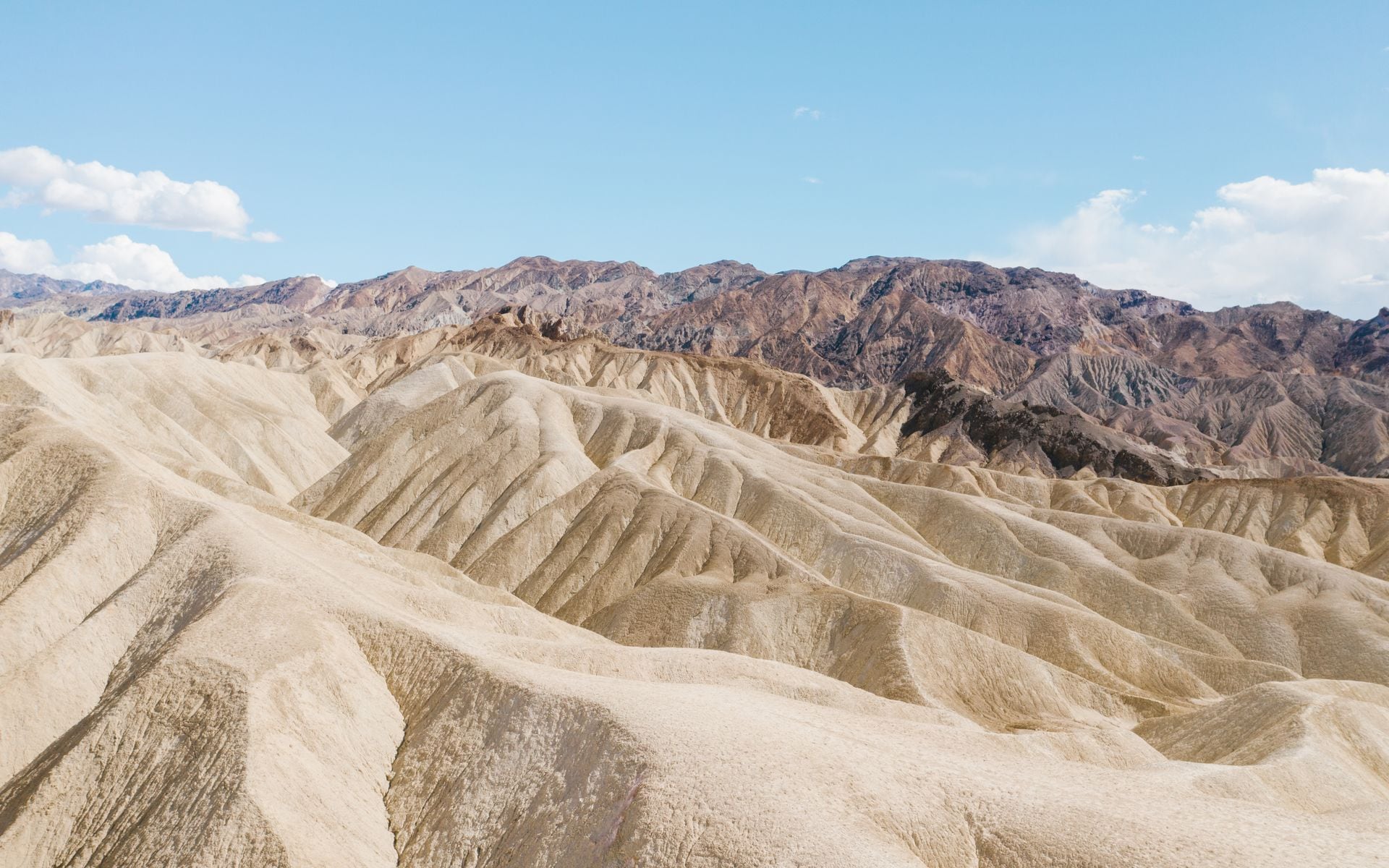
The landscape shifts constantly as you drive. You get blinding white salt flats, the eroded golden badlands around Zabriskie Point, the color-streaked hills of Artist's Palette, sand dunes near Stovepipe Wells, and, high above it all, snow-capped Telescope Peak at 11,049 feet. Because everything is spread out, you cover a lot of miles between stops, and services are minimal. Fuel is expensive and available at only a few spots, so top off whenever you can and never let the tank run low.
Death Valley sits in California's desert country alongside Joshua Tree National Park and the resort town of Palm Springs, and it is a headline stop on any tour of the state's national parks. It also earns its place on our roundup of the best national parks in California.
What to Do
The greatest hits cluster along the central corridor near Furnace Creek. Walk out onto the salt at Badwater Basin, the lowest point in the park, then drive the one-way Artist's Drive loop through hills stained pink, green, and gold by mineral deposits, stopping at Artist's Palette. Nearby, the Devil's Golf Course is a field of jagged rock-salt spires you can walk up to. Golden Canyon is a good short hike, about 3 miles round trip if you loop up to the Red Cathedral.
For the classic light, be at Zabriskie Point for sunrise, when the badlands glow, and Dante's View for sunset, a 5,475-foot overlook straight down onto Badwater with the whole valley laid out below. The Mesquite Flat Sand Dunes near Stovepipe Wells are easy to reach and best in early morning or late afternoon. Ubehebe Crater, a half-mile-wide volcanic crater in the park's north, rewards the longer drive.
Some of the park's most talked-about sights need a high-clearance, four-wheel-drive vehicle and preparation: the Racetrack Playa with its mysterious moving rocks sits at the end of a rough 27-mile dirt road, and it is not a trip for a rental sedan. Titus Canyon is another popular but rugged backcountry drive. Death Valley is a top stop on any California desert road trip; see how it fits with the rest of the state's parks under national parks.
Getting There and Parking
The closest major airport is Las Vegas (LAS), about two hours and 120 miles to Furnace Creek, which makes Vegas the practical launch point for most visitors. From Los Angeles it is a longer haul, around four to four and a half hours. From the Palm Springs area, plan on roughly three to three and a half hours. There is no way to see the park without a vehicle, and given the distances and the heat, your car's condition matters more here than almost anywhere else in California.
Death Valley does not use a timed-entry or reservation system, so you can arrive any time. Entrance is $30 per vehicle, valid for seven days, and there is no staffed booth at most entrances, so pay at a self-serve kiosk or an automated machine, or buy the pass online in advance. Parking at the major stops like Badwater and Zabriskie Point is free and usually easy outside peak holiday weekends.
Fuel up before you enter and refill inside at Furnace Creek or Stovepipe Wells even though it costs more, because the gaps between stations are long. Carry far more water than you think you need, at least a gallon per person per day, and check the park website for road conditions, since flash floods periodically wash out sections of road and close backcountry routes for months.
Best Time to Go
October through April is the season. Daytime highs in the valley are comfortable, running from the 60s and 70s in midwinter up to the 90s in spring and fall, and the nights are cool. This is when the hiking is safe, the light is good, and the park is set up for visitors. December through February are the coolest and can even be chilly at night, so pack layers.
Spring, roughly late February into April, is the most popular time because of the chance of a wildflower bloom on the valley floor and the alluvial fans. Big blooms depend on well-timed winter rain and do not happen every year, but even an average spring adds color. Expect the most company around Presidents' Day and spring break.
May through September is when Death Valley lives up to its name. Highs routinely pass 110 and often exceed 120 degrees, hiking below sea level becomes genuinely hazardous, and the Park Service warns visitors to stay near their air-conditioned vehicles and hike only at high elevation. If summer is your only option, limit yourself to short stops, drive the scenic overlooks, and save real walking for Dante's View or Telescope Peak country.
Where to Stay and Eat
Lodging inside the park centers on Furnace Creek. The Inn at Death Valley is the historic 1927 resort with a spring-fed pool and the park's finest dining, a AAA Four Diamond property with rates to match. The Ranch at Death Valley, on the same grounds, is the more family-friendly and affordable option, with a general store, restaurants, and the world's lowest-elevation golf course. Stovepipe Wells Village to the northwest and Panamint Springs Resort on the western edge offer simpler, cheaper rooms and are handy for the dunes and the west side.
Because in-park rooms are limited and book out for the cool season, many visitors base in the gateway town of Beatty, Nevada, about 40 minutes northeast, or use Las Vegas as a springboard for a long day trip. If you are touring the wider desert, the resorts around Palm Springs make a comfortable base for the southern parks before or after Death Valley.
Dining inside the park is limited to the Furnace Creek and Stovepipe Wells restaurants and their general stores, all pricier than what you would pay outside, so stock a cooler with water, snacks, and lunch before you arrive. Death Valley anchors California's desert region, which is worth reading to plan a loop that ties the park together with Joshua Tree and Palm Springs.
Frequently asked questions
When should I visit Death Valley?
October through April. That is when daytime highs are comfortable, hiking is safe, and the park is geared for visitors. Spring can bring a wildflower bloom in years with good winter rain. Avoid May through September, when highs routinely exceed 110 and often top 120 degrees and hiking below sea level becomes dangerous.
Do I need a reservation to enter Death Valley?
No. Death Valley does not use a timed-entry or reservation system, so you can arrive any time. You pay a $30-per-vehicle entrance fee, good for seven days, at a self-serve kiosk or online. The planning that matters here is fuel, water, and heat, not reservations.
What is the closest airport to Death Valley?
Las Vegas (LAS) is closest and easiest, about two hours and 120 miles to Furnace Creek. Los Angeles is around four to four and a half hours by road, and the Palm Springs area is roughly three to three and a half. A rental car is essential given the distances inside the park.
Is Death Valley safe to visit?
Yes, in the cool season and with basic preparation. Carry at least a gallon of water per person per day, keep your fuel topped off since stations are far apart, and do not hike below sea level in summer heat. Some sights like Racetrack Playa require a high-clearance four-wheel-drive vehicle, so do not attempt those roads in a standard rental car.
How many days do you need in Death Valley?
One full day covers the central highlights: Badwater Basin, Artist's Drive, Zabriskie Point, Dante's View, and the Mesquite Flat dunes. Add a second day if you want to reach the northern sights like Ubehebe Crater or attempt a rugged backcountry drive with the right vehicle.