The Living Desert Zoo and Gardens sits in Palm Desert, four miles east of downtown Palm Springs along Highway 111. It covers 1,200 acres of the Sonoran Desert, though most visitors see the main 50-acre developed loop in a half day. That half day is enough to take in animals from five desert regions across three continents, walk through multiple botanical garden sections, and get a grounded sense of why the Coachella Valley’s desert ecosystem looks the way it does. If you’re planning a living desert palm springs stop, this guide covers what you’ll see, the best time of year to come, tickets and hours, and how it fits into a broader desert trip.
What the Living Desert Is (and Isn’t)
The Living Desert opened in 1970 as a wildlife and botanical garden focused on conservation of desert species. It started with a regional Sonoran Desert focus and expanded over decades to include animals from deserts on four continents. Today it holds more than 500 animals from around 150 species, supported by active breeding and research programs for species like Arabian oryx and Peninsular bighorn sheep.
It’s not a standard zoo in the traditional sense. The park is built into actual desert terrain, and many enclosures use the same rock, sand, and native vegetation you walk through between them. The paths are not all paved. Some sections involve walking on decomposed granite in the open desert, which is intentional. The experience is closer to a naturalist walk through working desert than to a conventional park loop with concrete habitats.
Families with small children and visitors who don’t plan for the terrain are sometimes caught off guard. Bring supportive footwear, not flip-flops, and carry water even in cooler months. The sun is direct in the desert regardless of temperature.
The park address is 47900 Portola Ave, Palm Desert, which is about 15 minutes by car from the main Palm Springs resort corridor. It’s not within Palm Springs city limits, though “living desert palm springs” is how most people search for it.
Living Desert Animals and Exhibits
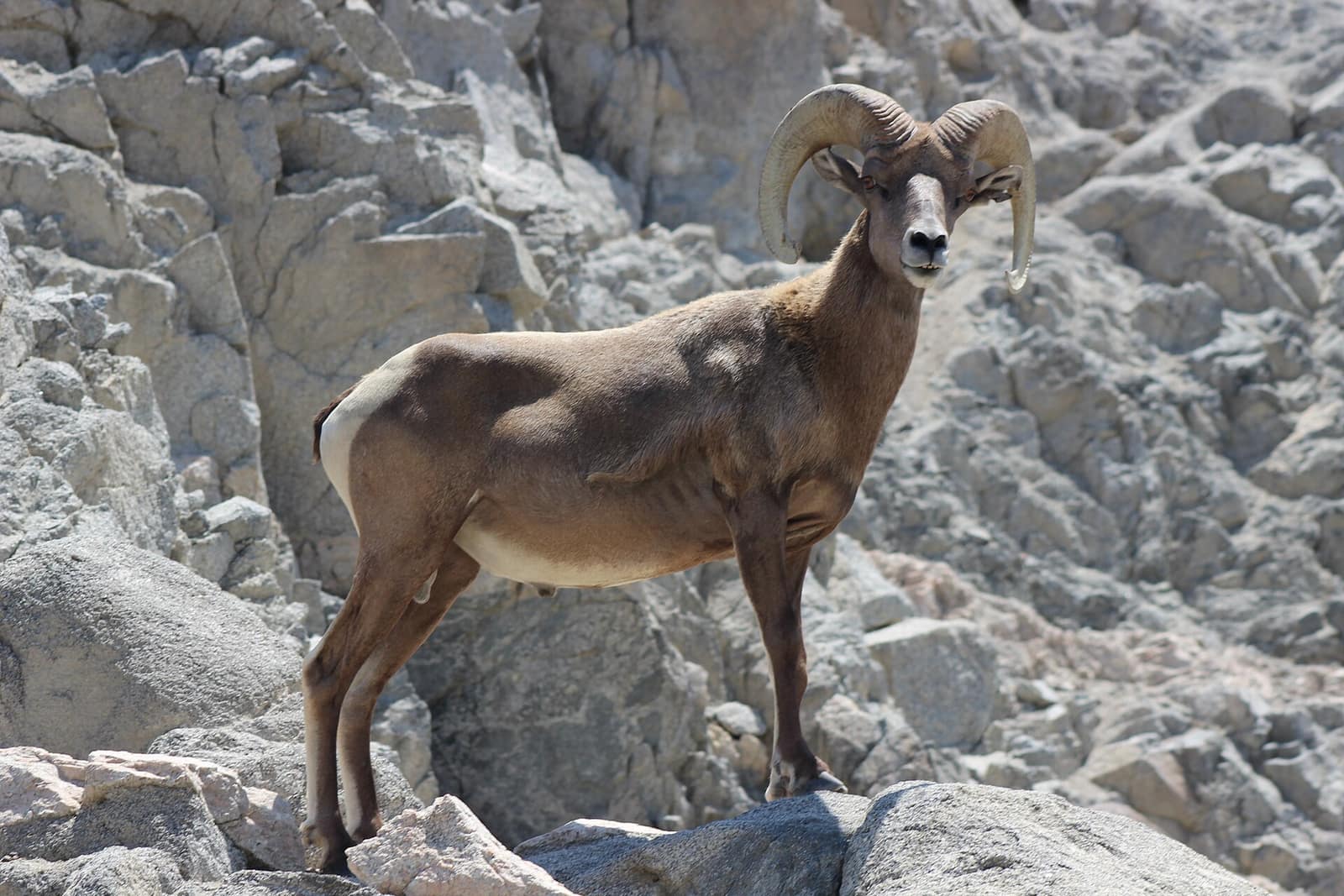
The North American desert section near the park entrance holds the collection most visitors come to see. Peninsular bighorn sheep, the subspecies native to the Santa Rosa and San Jacinto Mountains surrounding the Coachella Valley, live in a large rocky enclosure that replicates the boulder terrain of the real mountain slopes visible from the valley floor. They’re active in the early morning and easy to observe from elevated walkways alongside their enclosure.
Mountain lions, Mexican wolves, roadrunners, and Gila monsters are in the same zone. The mountain lion enclosure is one of the few in Southern California with viewing angles that let you see the animals at eye level through large glass panels, a different setup than most zoo layouts.
The African Savanna section takes up the largest portion of the park. The giraffe encounter is the signature experience: purchase feed at the encounter station and giraffes eat from your hand at close range. Lines form by 10 a.m. on busy days, so arrive at opening or plan to wait. Cheetahs, Arabian oryx, meerkats, and a loop through a simulated Kenyan landscape fill the rest of the African section.
WaTuTu is the children’s village in the center of the park. It has a carousel, a camel ride (seasonal), and a splash pad that opens in warmer months. For families with kids under 8, it’s where attention lasts the longest, and a good halfway reset before tackling the second half of the loop.
The Botanical Garden Sections
The plant collection covers desert flora from the American Southwest, Baja California, East Africa, the Arabian Peninsula, and Madagascar. Most visitors treat the botanical sections as scenery between animal enclosures and walk past genuinely unusual plants without slowing down. The signage is thorough if you take the time.
The cactus and succulent collection in the main California section includes specimens of saguaro, barrel cactus, and numerous agave varieties, some of them thirty to fifty years old and substantial in size. The older saguaros have the multi-arm branching structure you don’t see on younger plants, and a few have owl nest holes hollowed out by Gila woodpeckers over the years.
The East Africa and Madagascar sections near the savanna loop have drought-adapted species that parallel American desert plants in form but aren’t closely related, which makes for an interesting side-by-side comparison if plant biology holds your interest.
In years with strong winter rainfall, the desert floor sections of the park can show wildflowers from March through early May. The park doesn’t formally track or advertise bloom conditions, but in a good year the California poppy and desert gold sections near the entrance are worth the visit on their own.
Best Time to Visit
The Coachella Valley runs hot in summer. Palm Desert records temperatures above 110°F regularly from June through September, and the park adjusts by shifting to early-morning-only hours. Last admission drops to 1:30 p.m. in summer so visitors are off the grounds before the worst afternoon heat. Animal activity is also reduced as most species go into shade rest by mid-morning.
October through April is when the park runs best. October and November bring comfortable temperatures in the 70s and 80s, full operating hours, and more active animals throughout the day. December through February is the coolest stretch, with highs in the 60s and occasional rain, but still far more pleasant than summer for walking in the open desert.
March through April is wildflower season across the Coachella Valley, which can make the botanical sections particularly rewarding. It’s also when spring break crowds arrive, so weekday visits are easier than weekends.
For planning around the broader Palm Springs calendar, the Desert region guide covers the full Coachella Valley season. For month-by-month California weather across all regions, best time to visit California has the full breakdown.
Tickets, Hours, and Getting There
Current admission prices and hours are listed at livingdesert.org. Historically the park has priced adult tickets in the low-to-mid $30 range, with children’s tickets slightly lower and members admitted free. A few add-on experiences, including the giraffe feeding and seasonal animal encounters, cost extra and are purchased on-site. Parking is free.
Summer hours (roughly June through mid-September) open at 7 a.m. with last admission at 1:30 p.m. Fall through spring hours typically run 9 a.m. to 5 p.m. Arrive within the first hour of opening in any season for the best animal activity before the day heats up.
Getting there from Palm Springs: head east on Highway 111 toward Palm Desert and turn left on Portola Ave. The park entrance is about a mile north. No practical transit serves the route. From Los Angeles, it’s roughly two hours east on I-10; exit at Monterey Ave or Washington St into Palm Desert and continue to Highway 111 east.
Where to Stay and What Else Is Nearby
Palm Springs is the natural base. The resort strip along Palm Canyon Drive is 15 minutes from the park, with accommodations ranging from large resort hotels to small boutique properties to vacation rentals. Prices run highest on weekends from October through May; midweek stays typically cost less. Restaurants are concentrated along Palm Canyon Drive and in the Uptown Design District about a mile north.
The Palm Springs Aerial Tramway climbs from the valley floor to 8,516 feet in the San Jacinto Wilderness in about 10 minutes. The temperature at the top is typically 30 to 40 degrees cooler than the valley, a useful reset after a few days in the desert. The Palm Springs page covers the Aerial Tramway and the rest of the city’s main draws.
Joshua Tree National Park is about 45 minutes north of Palm Springs. Combining a morning at the Living Desert with an afternoon at Joshua Tree is logistically doable but rushed in practice. The drive into the park’s interior from the south entrance eats time, and Joshua Tree rewards a slower pace. The Joshua Tree weekend guide maps out a two-day plan for the park. With three or four days in the area, give each its own day.
For a broader look at California’s desert parks, including Death Valley, Anza-Borrego, and how the desert season compares to other regions of the state, the California deserts page has the full picture. And for wildlife watching in California beyond the desert parks, that page covers whale watching, condors, and the state’s other top wildlife areas.