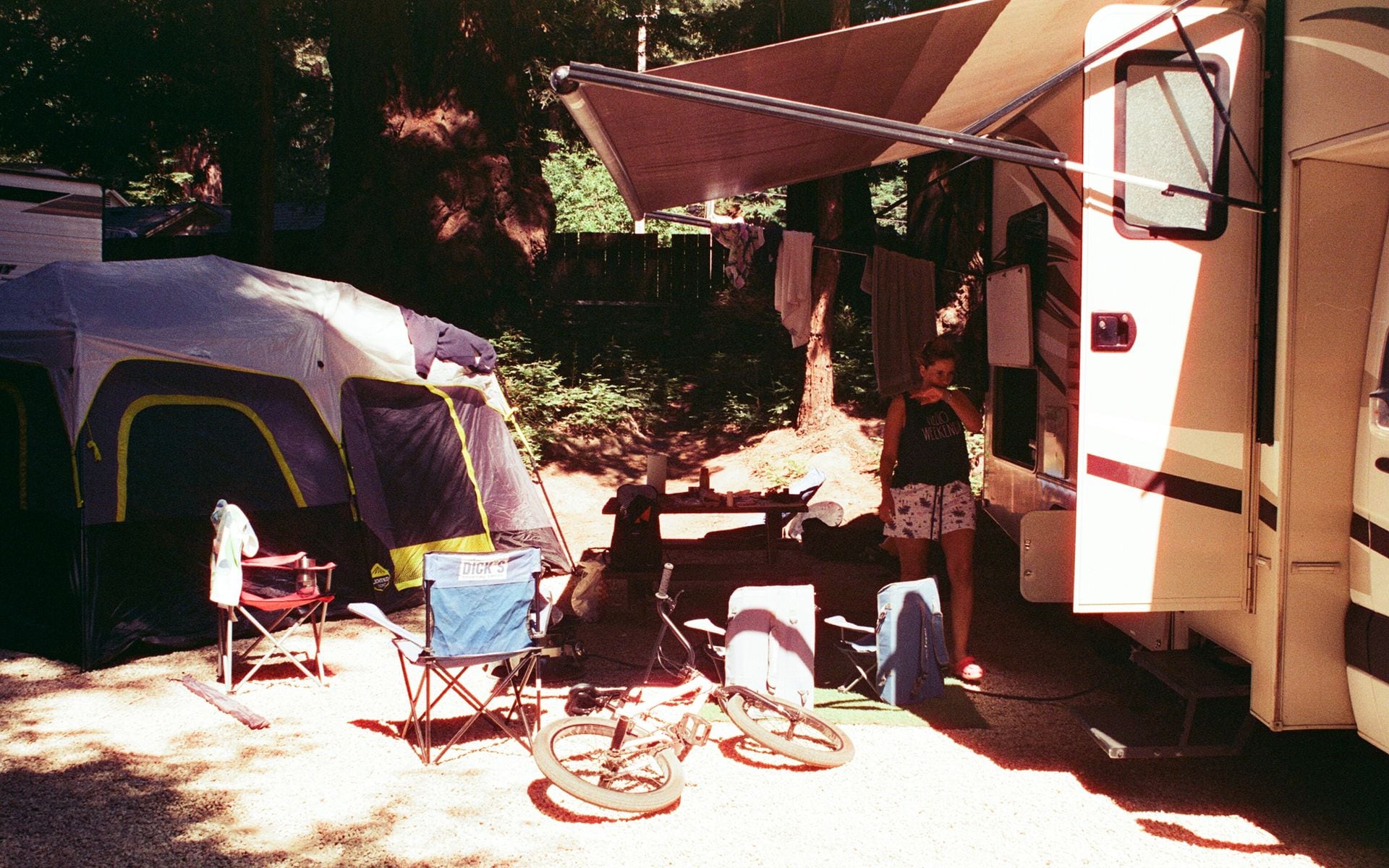
Where and How to Camp in California
California camping falls into a few systems, and knowing which one runs a campground tells you how to book it. The national parks (Yosemite, Sequoia and Kings Canyon, Joshua Tree, Death Valley, and the rest) reserve through Recreation.gov. The state parks, which include most of the best coastal and redwood camping, reserve through ReserveCalifornia. On top of that sit national forest campgrounds, private RV parks and KOAs, and dispersed free camping on national forest and BLM land.
The range of settings is the real draw. You can camp among 2,000-year-old sequoias, wake up to surf behind a beach campground, sleep under the boulders of Joshua Tree, or park an RV steps from Lake Tahoe. Because campgrounds sit inside so many of the marquee destinations, camping is often the cheapest and most immersive way to visit the national parks and the coast. Read it alongside the best beaches in California for the shoreline options.
Decide early whether you are tent camping, car camping, or bringing an RV, because it shapes where you can go. Some spectacular campgrounds have length limits or no hookups that rule out big rigs, while others are RV-focused with full services. If you are renting a camper van or RV, factor that into which campgrounds you target. The full state overview is on the California travel guide.
Camping in the National Parks
Yosemite is the hardest ticket. The valley campgrounds, especially Upper, Lower, and North Pines, release reservations on Recreation.gov about five months out and sell out within minutes for summer dates. If you want to camp in Yosemite Valley in July, you treat the release date like a concert ticket. Higher and quieter options like Tuolumne Meadows and the Tioga Road campgrounds open only in summer once the pass clears of snow. The Yosemite National Park page covers the timing.
Sequoia and Kings Canyon are easier to get into and let you camp beneath the biggest trees on earth, with Lodgepole and Dorst Creek as the main developed grounds. In the desert, Joshua Tree's Jumbo Rocks and Hidden Valley put you among the boulders, and Death Valley's Furnace Creek sits below sea level. The desert parks flip the season: they are pleasant camping October through April and dangerously hot May through September, the reverse of the Sierra.
National park campgrounds are basic by design: a site, a fire ring, a picnic table, and usually a bear-proof food locker, with few or no hookups. That simplicity is the point. Bring everything you need, store all food and scented items in the locker in bear country, and expect no cell service. For guided camping trips and outfitters who handle the logistics, see the tour operators and guides directory.
Coastal and State Park Camping
California's state parks hold the best coastal camping in the country, and they are the reason so many road-trippers camp their way down the coast. Along Big Sur, Pfeiffer Big Sur State Park sits in a redwood canyon just off Highway 1, a classic base for the Big Sur stretch. In Southern California, Leo Carrillo near Malibu, Crystal Cove between Laguna and Newport, and Refugio and El Capitán near Santa Barbara let you camp right by the sand, which makes them ideal for a beach trip.
The redwood parks of the North Coast are a different kind of magic. Humboldt Redwoods State Park along the Avenue of the Giants and Jedediah Smith Redwoods near the Oregon border put your tent among the tallest trees on the planet. These are quieter and easier to book than the coastal Southern California sites, and they anchor a north-coast drive.
At Lake Tahoe, Emerald Bay and D.L. Bliss State Parks offer some of the most sought-after lakeside sites in the Sierra, and they book out fast for summer. The Lake Tahoe page covers the basin. Wherever you camp on the coast, these state park sites weave directly into the Pacific Coast Highway road trip, letting you sleep beside the ocean between driving days.
Reservations, Seasons, and Cost
Book early and know the release windows. ReserveCalifornia opens state park reservations on a rolling six-month window, so the most popular coastal and Tahoe sites are claimed the moment they release for peak summer dates. Recreation.gov handles the national parks, with Yosemite Valley campgrounds releasing roughly five months ahead and going almost instantly. Set a reminder for the exact release date and time and be logged in and ready.
Standard developed campsites run roughly $35 to $45 a night at California state parks and about $30 to $36 at the national parks, with premium beachfront and lakeside sites at the higher end. Private RV parks and KOAs with hookups cost more, often $60 to $100-plus a night, but give you power, water, showers, and dump stations. Even at the top end, camping undercuts hotels in these regions by a wide margin.
Season shapes where you go. Summer is prime for the Sierra and the coast but peak for crowds and prices. The desert parks are a cool-season activity, best October through April. Spring and fall are the sweet spot on the coast, with fewer people and better odds of a last-minute site. Many campgrounds hold a handful of first-come, first-served sites, so arriving early on a weekday can still land you a spot when reservations are gone.
RV Travel, Gear, and Safety
If you are renting an RV or camper van, confirm the length limits and hookup situation at every campground you plan to use, because many national and state park grounds cap rig length and have no hookups. Private parks fill the gap with full services near the major destinations. Plan your fuel and dump-station stops in advance in remote country, especially in Death Valley and the Eastern Sierra where services are sparse.
Pack for California's range. A single trip can swing from a 100-degree desert afternoon to a 35-degree Sierra night, so bring layers and a proper sleeping bag even in summer. In bear country, which covers most of the Sierra and the North Coast, use the provided food lockers and never leave food or scented items in your tent or car. Check for fire restrictions before you go, since campfires are often banned during wildfire season, and honor them.
Respect the basics: pack out your trash, keep to established sites and roads, mind quiet hours, and keep a safe, legal distance from wildlife. On the coast, watch tides and rip currents at beach campgrounds. Camping is the thread that ties a big California trip together, letting you wake up inside the parks and along the coast instead of driving in each morning.
Frequently asked questions
How do I reserve a campsite in California?
It depends on who runs the campground. State parks, including most coastal and redwood sites, book through ReserveCalifornia on a rolling six-month window. National parks like Yosemite and Joshua Tree book through Recreation.gov, with Yosemite Valley releasing about five months ahead. For popular summer dates, be logged in and ready the moment reservations release.
How much does camping cost in California?
Standard developed sites run roughly $35 to $45 a night at state parks and about $30 to $36 at national parks, with premium beachfront and lakeside sites at the top of that range. Private RV parks and KOAs with full hookups cost more, often $60 to $100-plus a night. Camping still undercuts hotels in these regions by a wide margin.
What are the best coastal campgrounds in California?
Pfeiffer Big Sur State Park sits in a redwood canyon off Highway 1, while Leo Carrillo near Malibu, Crystal Cove near Laguna, and Refugio and El Capitán near Santa Barbara put you right by the sand in Southern California. Up north, Humboldt Redwoods and Jedediah Smith let you camp among the tallest trees. All book through ReserveCalifornia.
Can I camp without a reservation?
Sometimes. Many California campgrounds hold a handful of first-come, first-served sites, so arriving early on a weekday can land a spot even when reservations are gone. National forest and BLM dispersed camping is often free and needs no booking. But for the marquee summer campgrounds in Yosemite, Big Sur, and Tahoe, plan on reserving well ahead.