What to Expect
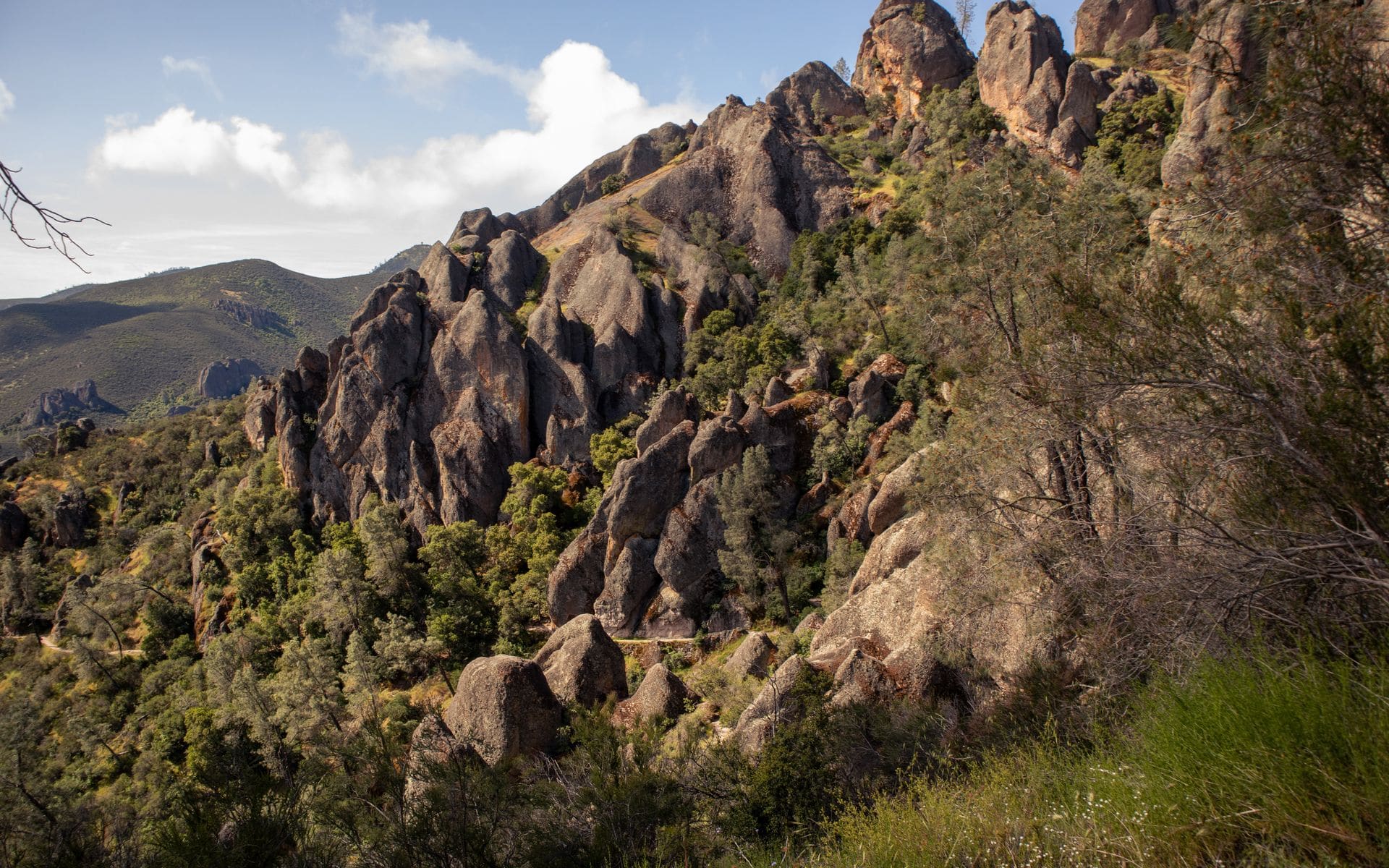
Pinnacles protects the leftovers of a volcano that erupted some 23 million years ago, since split and hauled north along the San Andreas Fault. What is left is a compact landscape of rock spires, sheer walls, and two sets of talus caves, which are caves formed where huge boulders wedged into narrow canyons and roofed them over. The park is a magnet for rock climbers, and it is one of the few places in the world where you have a real chance of seeing wild California condors, the largest land bird in North America, back from the edge of extinction.
This is a small park by California standards, and it is best walked rather than driven. The two halves of the park are not connected by any road, which is the single most important thing to understand before you go: you pick the east side or the west side and stay on that side for the day. The east has the visitor center, campground, and most services; the west is quieter with a smaller ranger station.
Pinnacles sits inland on the Central Coast, an easy add-on to the coast at Monterey and Carmel or a stop on the way to Big Sur. It is the quiet member of California's national parks and still earns a place among the best national parks in California for its geology and its condors.
What to Do
The talus caves are the highlight. From the east side, the Bear Gulch Cave Trail leads through a boulder-roofed cave to the small Bear Gulch Reservoir above it, a loop of a few miles that is one of the best short hikes in the park. From the west side, the Balconies Cave Trail runs through a longer, darker cave that requires a flashlight and some scrambling. Both caves close seasonally to protect the resident colonies of Townsend's big-eared bats, so always check which caves are open before you drive out.
For the big views and the condors, the High Peaks Trail climbs into the heart of the spires on a steep, narrow route with sections cut into the rock and railings to hang onto. It is strenuous but delivers the park's best scenery, and the High Peaks are the most reliable place to spot condors soaring on the afternoon thermals. A shorter option, the Condor Gulch Trail, climbs to an overlook and can be linked with the High Peaks for a longer loop.
Rock climbing is a serious draw here, with hundreds of established routes on the volcanic spires, best in the cooler months. If you are not climbing, the mix of cave, spire, and ridge hikes packs a lot into a small area, and the spring wildflower show on the chaparral hillsides is a bonus. Bring a headlamp or flashlight for the caves and plenty of water, since there is no shade on the exposed climbs.
Getting There and Parking
Remember that the two entrances are not linked by road inside the park. The east entrance, off Highway 25 near Hollister, has the visitor center, the Pinnacles Campground, and the shuttle to the Bear Gulch area, and it is the busier, better-equipped side. The west entrance, off Highway 146 from Soledad, is a narrow, winding road with no through access and fewer facilities. Decide which side you want before you set out.
The nearest airport is San Jose (SJC), about 1.5 hours to the east entrance, and Monterey (MRY) is a similar distance to the west side. From Monterey or Carmel it is roughly an hour's drive, and from San Jose about 1.5 hours. The entrance fee is $30 per vehicle, valid for seven days, and Pinnacles does not use a timed-entry reservation system.
Parking is the real bottleneck on the busy east side. On spring weekends the lots at the Bear Gulch and campground areas fill by mid-morning, and the park runs a shuttle to ease the crush; arrive early or plan to use it. The west side rarely has parking problems but the access road is slow. Fuel up in Hollister or Soledad before you enter, since there are no services inside the park.
Best Time to Go
Spring, from March into May, is the standout season. The hills turn green, the wildflowers bloom across the chaparral, temperatures are comfortable for the exposed climbs, and the caves and condors are both active. It is also the most popular time, so the east-side parking fills early and weekends are busiest.
Fall, from October into November, is the other sweet spot, with cooler air returning after the summer heat and far thinner crowds. Winter is mild and quiet, good for climbing and hiking on clear days, though rain can close the talus caves when water rises inside them.
Summer is the season to avoid or plan carefully around. Inland from the coast, Pinnacles bakes, with highs regularly topping 100 degrees from June through September and almost no shade on the High Peaks. If summer is your only option, start at dawn, carry far more water than you think you need, and be off the exposed trails by midday. Whenever you go, check the park website for current cave status, since seasonal bat closures shift the openings.
Where to Stay and Eat
The only lodging inside the park is the Pinnacles Campground on the east side, reserved through Recreation.gov, with tent and RV sites, a seasonal swimming pool, and a small camp store. It books out for spring weekends, so reserve ahead. There are no hotels or lodges within the park.
For a roof and a wider choice of restaurants, most visitors base in the nearby towns. Hollister and Soledad have basic motels close to each entrance, while the coast at Monterey and Carmel, about an hour from the west side, offers a fuller range of hotels and dining if you are pairing Pinnacles with the coast. The Monterey Plaza Hotel & Spa on Cannery Row is a comfortable coastal base, and Old Fisherman's Grotto on the wharf is a longtime spot for seafood and chowder after a day in the park.
Dining inside Pinnacles is limited to the east-side camp store, so pack a cooler with lunch, snacks, and plenty of water before you arrive, especially in the warmer months. To build a wider trip, our Central Coast guide connects Pinnacles with Monterey, Carmel, and the drive south along the coast.
Frequently asked questions
Are the two entrances to Pinnacles connected?
No. The east entrance (off Highway 25 near Hollister) and the west entrance (off Highway 146 from Soledad) are not linked by any road inside the park. You choose one side and stay on it for the day. The east side has the visitor center, campground, and shuttle; the west is quieter with fewer facilities.
Can you go inside the caves at Pinnacles?
Yes, when they are open. Bear Gulch Cave on the east side and Balconies Cave on the west side are talus caves you can walk through with a flashlight, but both close seasonally to protect resident bat colonies, and rain can flood them. Always check the current cave status on the park website before you go.
When is the best time to visit Pinnacles?
Spring (March to May) is best, with green hills, wildflowers, comfortable temperatures, and active condors. Fall (October to November) is a quieter runner-up. Avoid midday in summer, when inland highs regularly top 100 degrees and there is little shade on the exposed High Peaks Trail.
Will I see a California condor at Pinnacles?
There is a real chance. Pinnacles is one of the few places these giant birds have been reintroduced, and the High Peaks are the most reliable spot to see them soaring on afternoon thermals. Bring binoculars, hike the High Peaks in the afternoon, and you have a solid shot, though sightings are never guaranteed.
How much does it cost to enter Pinnacles National Park?
The entrance fee is $30 per vehicle, valid for seven days. Pinnacles does not use a timed-entry reservation system, but the east-side parking fills by mid-morning on spring weekends, so arrive early or use the park shuttle.