The Palm Springs Aerial Tramway climbs 5,873 vertical feet in about 10 minutes, carrying you from the Coachella Valley desert floor to the pine forests and granite slopes of the San Jacinto Mountains. It is one of the steepest aerial trams in the country, and for visitors who picture California as beaches and freeways, arriving at 8,516 feet to find a wilderness with snow on the ground in October tends to reset expectations. This guide covers how the palm springs aerial tramway works, what is at the top, which hikes fit a day visit, and when conditions favor the trip to Palm Springs.
The Ride Up
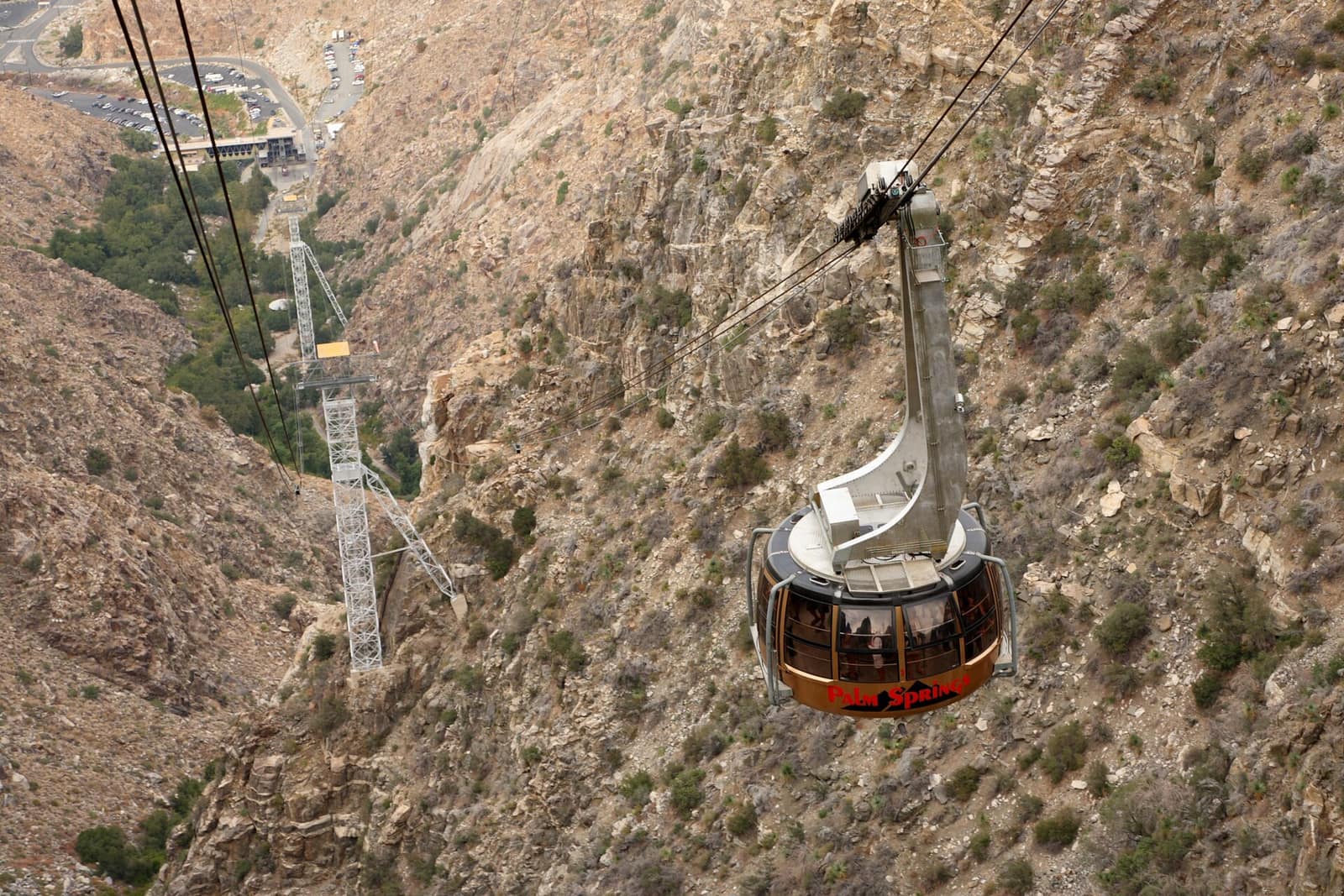
The tram runs from the Valley Station at 2,643 feet to the Mountain Station at 8,516 feet, a vertical rise of 5,873 feet over roughly 2.5 miles of cable. The cars rotate during the climb, completing a slow full rotation every few minutes so every passenger cycles through views in all directions. Looking down into Chino Canyon while the cable towers pass above and below you is disorienting in the best way. Most people find the rotation dramatic rather than uncomfortable, though if you are sensitive to heights, face toward the mountain rather than the valley and the effect is more manageable.
The ascent takes about 10 minutes. Vegetation shifts visibly on the way up: desert scrub gives way to chaparral, then pinyon pine, then white fir at the highest elevations. Temperature swings 30 to 40 degrees between the valley floor and the summit. On a July afternoon when downtown Palm Springs sits at 108 degrees, the Mountain Station holds around 70. In January, you may step off into mid-30s with fresh snow underfoot. That temperature difference is the entire premise of the tramway and the reason people make the trip even in summer.
Two cars run simultaneously, one ascending while the other descends, and each holds around 80 passengers. Departures leave every 10 minutes during operating hours. On peak weekends, walk-up wait times can stretch 45 minutes to an hour, so advance booking is worth it on any Saturday or Sunday between March and September.
What You Find at the Top
The Mountain Station is not just a viewing deck. It holds two restaurants, a bar, observation decks on both sides of the building, and trailhead access into 54 miles of backcountry within Mount San Jacinto State Park. Trail access is included with your tram ticket, managed by California State Parks separately from the tramway operator.
The observation decks look out over the full spread of the Coachella Valley. On clear days you can pick out the Salton Sea shimmer to the southeast and the Santa Rosa Mountains to the south. The air at 8,500 feet is noticeably thinner if you have been at sea level; slow down for the first 30 minutes if you feel a headache starting, and drink water. Altitude adjustment is real at this elevation, especially for visitors arriving from below 1,000 feet.
The Peaks Restaurant provides table service with valley views for lunch and dinner. The more casual Lookout Lounge handles drinks and lighter food. The tramway’s Ride-n-Dine packages bundle a meal credit with your tram ticket and typically save a few dollars over buying separately. Check current packages and pricing directly at pstramway.com, as they vary by season and are updated periodically. The gift shop stocks jackets and layers if you underestimate the cold, though prices reflect the captive audience.
Hikes from the Mountain Station
Long Valley sits just below the Mountain Station at around 8,400 feet, a flat open meadow ringed by pine and white fir with a ranger station near its edge. A paved nature trail loops the valley floor for about a mile with almost no elevation change. This is the right walk for families with young kids, anyone feeling the altitude, or anyone who wants to spend 45 minutes outside before heading back down. The meadow holds green through July and turns amber-gold by late September. The ranger station at Long Valley is also where you pick up the free wilderness permits required for longer hikes.
The Wellman Divide Trail is the most popular full day hike from the tram. It runs about 5 miles round-trip with 1,500 feet of gain, climbing through forest and rocky switchbacks to a saddle at 9,700 feet. From the divide, you look down into the San Jacinto wilderness on one side and across toward the peak on the other. Give yourself three to four hours, not counting tram wait time. The trail can hold snow well into May and sometimes into early June; check conditions with Mount San Jacinto State Park before planning a spring trip.
San Jacinto Peak, at 10,804 feet, is an 11-mile round-trip from the Mountain Station with 2,600 feet of additional gain. This is a full-day commitment: six to eight hours of hiking, starting as early as the first tram of the morning. A free wilderness permit is required even for day use; pick it up from the ranger station at Long Valley before you set out. The summit delivers views over the Coachella Valley, the Salton Sea, the San Bernardino Mountains, and on clear winter days far toward the San Gabriel peaks above Los Angeles. Bring food, at least two liters of water per person, and real trail footwear. The descent is steep enough that worn soles will feel it on the way back.
For hiking in California at high elevation across the state, the conditions and permit requirements vary significantly by park. On the San Jacinto trails, free permits keep crowds manageable and the trailheads workable even on busy weekends.
When to Visit
The tramway runs year-round, and the experience changes meaningfully depending on the season.
Spring (March through May) brings the sharpest contrast. The valley floor is in the 80s to low 90s while the Mountain Station holds 45 to 60 degrees with snow lingering at the upper elevations into April. This is also the season for wildflowers across the California desert, and combining a tramway visit with time in Joshua Tree National Park, about 50 miles northeast of Palm Springs, makes a full and varied day.
Summer (June through September) is high season at the tramway precisely because it offers relief from the valley heat. Triple-digit afternoons in Palm Springs make the 70-degree Mountain Station genuinely appealing rather than just scenic. Weekends in July and August fill up early; book tickets online in advance and arrive at the Valley Station before 10 a.m. if you are going on a Saturday.
Fall (October and November) is the most relaxed time to visit. Desert temperatures drop into the 80s, the mountain trails lose their summer crowds, and the afternoon light over the valley goes warm gold. Walk-up tickets are generally available on weekdays, and parking at the Valley Station is easier. October is usually the last month before early-season storms begin closing the upper trails.
Winter (December through February) turns the mountain white and draws snowshoers and cross-country skiers who take the tram up specifically for the snow. Service can be delayed by weather holds when sustained winds exceed the operating threshold at the upper towers. Days are short, so a morning departure gives you more time at the top. The snowscapes at 8,500 feet are unlike anything you encounter in the desert below, and the Mountain Station feels almost like a different state. For a month-by-month breakdown of California’s regional conditions, the best time to visit California page covers the deserts alongside the coast and the mountains.
Tickets and Planning
Tickets are sold at the Valley Station and online at pstramway.com. Advance purchase is the right move for weekends and any school vacation period. The online system assigns a departure window, which removes the walk-up wait. Adult prices are in the $30 to $35 range; check the site for current rates as they adjust periodically. Children and seniors ride at lower prices. The Ride-n-Dine package adds a meal credit and often comes out ahead of buying the tram and dinner separately if you plan to eat at the top.
The tram closes for maintenance on certain days, most commonly Mondays during shoulder season, but the schedule varies by month. Verify the operating calendar before you plan travel around the tramway. Weather holds can delay or suspend service on short notice, particularly during high-wind events in winter and spring.
Bring layers regardless of season. The most common complaint among visitors is underestimating how cold the Mountain Station feels after a 108-degree afternoon in the valley. A packable jacket, long sleeves, and closed shoes handle most conditions from spring through fall. In winter, dress as you would for a cold mountain day.
Getting There
The Valley Station sits at the end of Tramway Road, which turns north off State Route 111 (Palm Canyon Drive) about three miles from downtown Palm Springs. The drive from central Palm Springs takes five to ten minutes. Parking at the Valley Station is free and the lot is large, though it can fill by midmorning on busy weekends.
From Los Angeles, Palm Springs is about 100 miles east on I-10, roughly two hours without traffic. A morning departure avoids the eastbound I-10 backup that builds after 10 a.m. on weekends. From San Diego, drive north on I-15 to I-10 east, about 140 miles and two hours in normal conditions. Fly into Palm Springs International Airport (PSP) for the closest option, about 10 minutes from the Valley Station. There is no public transit from Palm Springs to the tramway; a rental car or rideshare is required.
For the full Palm Springs and Coachella Valley picture, including where to stay and what else to do in the region, that page covers the area’s other attractions alongside the tramway. The California desert region guide puts Palm Springs in context relative to Joshua Tree and the broader southern desert if you are planning a multi-stop trip.