Balboa Park might be the most underestimated full-day destination in San Diego, which is saying something in a city that competes with the weather for your attention. The park covers 1,200 acres north of downtown, holds the San Diego Zoo, more than fifteen museums, a working theater district, and enough garden space to fill a morning on its own. First-time visitors to San Diego often treat it as a quick zoo stop and move on. That sells it short. This guide covers what Balboa Park San Diego holds and how to plan the day so you come away with more than the entrance gate.
What Balboa Park Is
The park was laid out in 1868 as City Park and renamed Balboa Park in 1910 after the Spanish explorer Vasco Núñez de Balboa. Its current character comes from two world’s fairs: the 1915 Panama-California Exposition and the 1935 California Pacific International Exposition, both of which left behind the Spanish Colonial Revival buildings that now line El Prado, the park’s main pedestrian mall. Those buildings house the museums.
Balboa Park sits about two miles north of San Diego’s Gaslamp Quarter, on a mesa above I-5. It is large enough that visitors who arrive without a plan often spend the morning wandering between parking lots and see a fraction of what’s here. The zoo occupies the north end, the museums cluster along El Prado in the center, the gardens spread south and west, and the Cabrillo Bridge at the west entrance is the scene in most photos. Get oriented on that geography first and the day goes much better.
The San Diego Zoo
The San Diego Zoo is one of the most respected zoos in the world and sits entirely within the park’s footprint. It is run by the San Diego Zoo Wildlife Alliance as a separate ticketed attraction, not included in any museum pass. General admission is $69 for adults and $59 for children (ages 3 to 11) as of 2025. Give the zoo a full day on its own if you want to do it properly, or a half-day if you plan to cover the museums too.
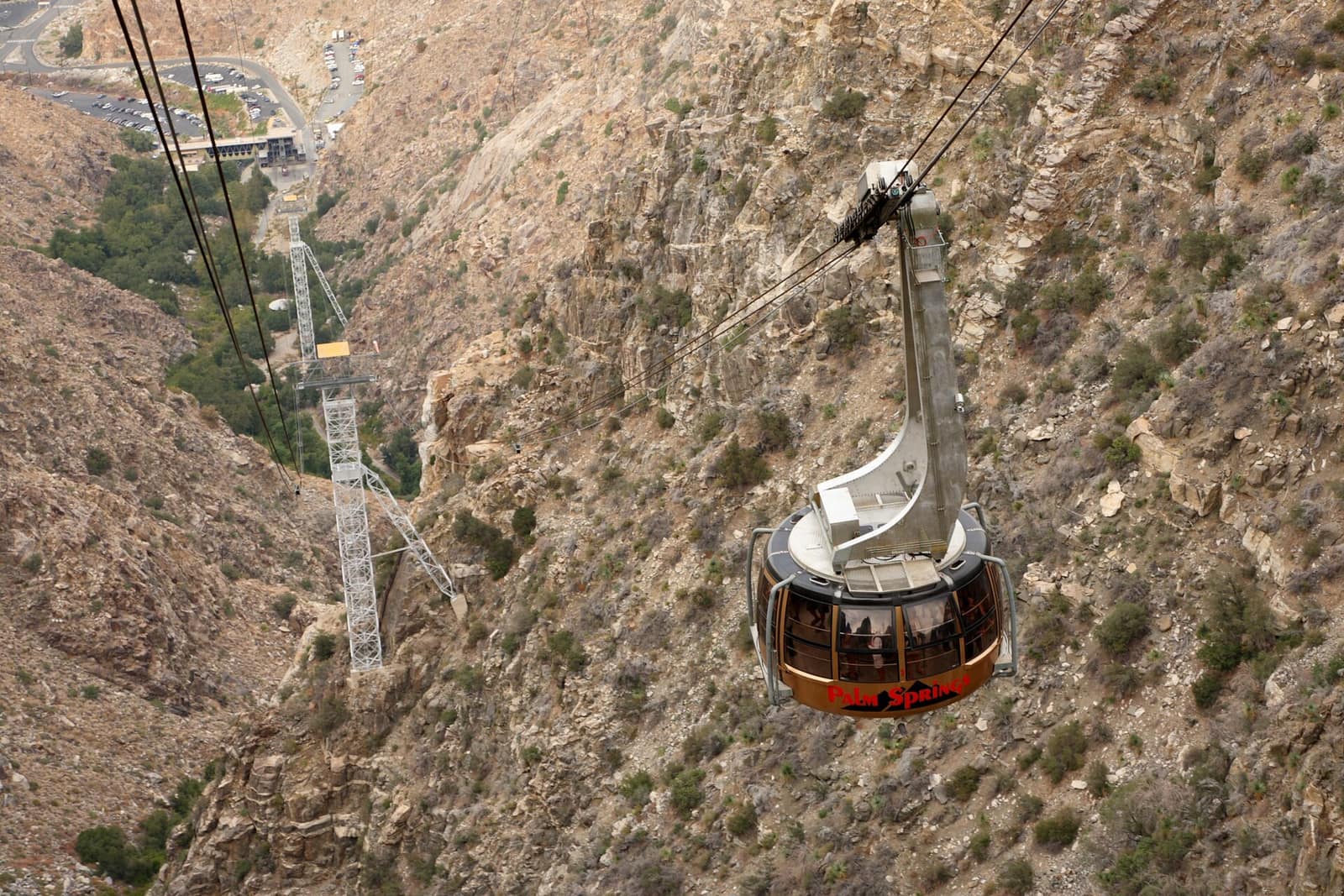
The zoo keeps about 12,000 animals representing more than 650 species. The giant panda program, the African Elephant Valley, and the Africa Rocks savanna habitat draw the biggest crowds. The Skyfari aerial tram crosses the whole complex from east to west and gives you a useful overview before you start walking. If wildlife watching is a priority on your California trip, the San Diego Zoo is one of very few places in the state where you can see African and Asian megafauna under rigorous professional care. The San Diego Zoo Safari Park in Escondido, about 30 miles north, runs larger open-habitat enclosures if a second animal day makes sense.
Arrive before 9 a.m. on weekdays. Summer weekends fill up by midmorning, and waits at the panda and elephant areas get long. Tickets are available in advance at the San Diego Zoo’s website, and buying ahead saves you the entry line.
The Best Museums in Balboa Park
The fifteen or so museums range from natural history to contemporary art to aviation, and they cluster along El Prado, so you can walk between several without moving your car. The Balboa Park Explorer Pass bundles entry to multiple museums for less than individual tickets. A one-day pass runs around $60 for adults and covers five museums; a seven-day pass covers fifteen. If you are only going to one or two, buy at the door.
The San Diego Museum of Art holds one of the strongest collections in the American West: Old Masters, American modernists, and a solid South and East Asian wing. The San Diego Natural History Museum is strong on California geology and fossil history, and runs deep coverage of the Sonoran Desert and Baja California ecosystems right across the border. The Fleet Science Center (the former Reuben H. Fleet Science Center) handles hands-on science exhibits and an IMAX dome, and is the most accessible of the group for kids. The San Diego Air and Space Museum covers aviation history from the Wright Brothers through the space race with a good selection of actual aircraft. The Museum of Us (formerly the Museum of Man) focuses on human cultures and consistently runs well-reviewed rotating exhibitions.
Most museums open at 10 a.m. and close at 5 p.m. Many close on Mondays or Tuesdays, so check hours before you arrive, particularly if you are visiting midweek.
The Architecture and El Prado
The Spanish Colonial Revival buildings along El Prado are worth a slow walk on their own. The California Tower, rising above the Museum of Us, was completed in 1915 and became the park’s signature silhouette. The Alcazar Garden below it was modeled on the gardens of the Alcázar in Seville: geometrically clipped hedges, tiled fountains, and a precise formality that looks imported rather than transplanted. The House of Charm, the House of Hospitality, and the Fine Arts Gallery all line the pedestrian mall, their carved stone facades and red-tile roofs reading as genuinely Spanish rather than theme-park pastiche.
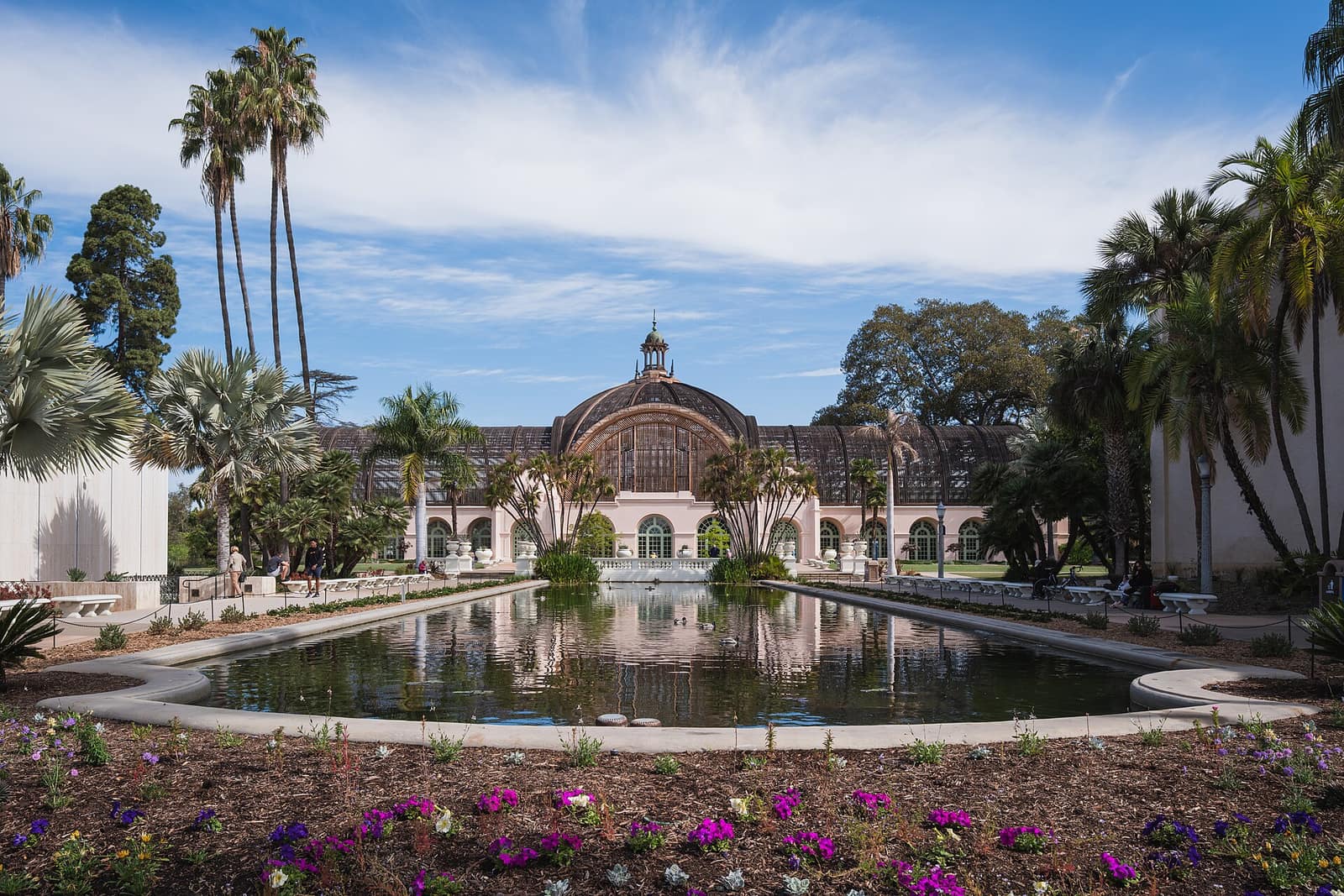
The Botanical Building, a wood-latticed greenhouse holding more than 2,000 tropical and subtropical plants, opens onto the Lily Pond, the long reflection pool that appears in most photographs of the park. There is no admission charge for the Botanical Building or the lily pond area. This stretch of El Prado from the Cabrillo Bridge through the Plaza de Panama to the Botanical Building is the architectural core of Balboa Park and one of the more quietly composed public spaces in California.
Gardens and Open Space
Beyond El Prado, the park holds more than a dozen distinct gardens and a trail network running through the natural canyons on the mesa’s edges. The Japanese Friendship Garden charges a small admission ($12 for adults, $8 for children) and is a quiet, well-maintained Japanese-style garden with a koi pond, tea pavilion, and bonsai collection. The Inez Grant Parker Memorial Rose Garden is free and peaks in April and May when several thousand rose plants are in bloom. The Palm Canyon trail drops into one of the park’s natural canyons and passes through a grove of more than 450 palms, a five-minute walk from the main museum strip that almost always feels uncrowded on weekday mornings.
If you want to combine the park with a coastal afternoon, La Jolla is about eight miles north and offers sea caves, snorkeling, and the cliff-side tide pools that San Diego’s coast does well. For a full southern California beach day, the best beaches in Southern California guide covers the options from Coronado to Malibu with clear rankings by what you want from the water.
Parking, the Tram, and Getting Around
The park has several free parking lots. The main lot off Presidents Way near the zoo fills fastest on busy days. The south parking area near the Prado restaurant tends to hold space longer on weekends. From January through October, the park runs a free tram circuit connecting El Prado and the zoo parking area, so you can park once and move between zones without walking the full length of the mesa.
The park is walkable but larger than it looks on a map. Budget at least three hours to cover El Prado, one or two museums, and the main gardens without feeling rushed. A full day is more realistic if you are adding the zoo or sitting down for lunch. The Prado Restaurant at the House of Hospitality is the sit-down option inside the park and tends to book up on weekends. Food vendors near the Fleet Science Center handle faster lunches.
If you are building a larger trip, the Southern California beaches itinerary puts Balboa Park in context with the coast, and the northern vs. southern California guide helps if you are still deciding which half of the state to base yourself in.
When to Go and What to Expect
San Diego’s climate is mild enough that Balboa Park works in any month. Summer is the busiest, and weekend crowds at the zoo and main museums get heavy from 11 a.m. to 3 p.m. Weekday mornings in summer are manageable. Fall and spring are the easiest for both weather and crowds: September and October bring warm, clear afternoons, and April and May are when the rose garden peaks. Winter is the quietest time, with daytime temperatures typically in the low to mid 60s Fahrenheit. The gardens are never closed for weather.
A few things to sort out before you arrive: decide whether the zoo is your main event or one stop among several, check museum hours for any institution that’s high on your list, and download the Balboa Park app or grab a paper map at the Visitors Center near the Cabrillo Bridge. The park is free to enter. What you pay for is the zoo and the museums, so knowing in advance which two or three you actually want to see focuses the day considerably.