How California waterfalls work
Almost every big waterfall in California is fed by snowmelt, which means the show has a season. The Sierra falls run hardest from April into June as the snowpack melts, and many are dry or nearly dry by August. Time your trip to the melt and you get thundering water; show up in September and you may find bare rock. A handful of falls run year-round from springs or steady creeks, and those are noted below.
The list spans the whole state, so pick by where your trip lands. The heavy hitters are in the Sierra, but there are coastal and northern falls worth a detour too. From the San Francisco Bay Area, a couple are within a two-hour drive. Start planning at the California travel guide. Waterfalls rank among the best places to visit in California in spring, and one of the entries below drops straight onto one of the best beaches in California.
The Yosemite waterfalls
**Region: High Sierra · Height: 2,425 ft · Peak: May, dry by late summer** Yosemite Falls is the tallest waterfall in North America and the one you see from all over Yosemite Valley. The lower fall is a flat, easy walk; the upper fall trail is a hard all-day climb. Come in May for full flow. See the Yosemite guide for logistics.
**Region: High Sierra · Height: 617 ft · Peak: spring, runs longer than most** Bridalveil Fall is the first waterfall you see driving into Yosemite Valley, a short paved walk from the parking area, and it holds water later into the year than Yosemite Falls. It is the easiest big fall in the park to reach.
**Region: High Sierra · Height: 317 ft and 594 ft · Peak: May to June** Vernal and Nevada Falls, climbed on the Mist Trail, are the best waterfall hike in the state, a steep granite staircase that soaks you in spray in spring. Round trip to Vernal is about 3 miles, to Nevada about 7. Wear grippy shoes; the wet granite is slick.
**Region: High Sierra · Height: 1,000-plus ft · Peak: mid-to-late February only** Horsetail Fall is the famous firefall: for about two weeks in February, if the water is flowing and the sky is clear, the setting sun lights it up to look like molten lava. It is a bucket-list photo but needs perfect conditions and now requires a reservation to view.
**Region: Eastern Sierra · Height: 101 ft · Peak: July and August** Rainbow Falls, below Devils Postpile near Mammoth Lakes, throws its namesake rainbow across the spray on sunny afternoons and runs strong deep into summer on Middle Fork snowmelt. It is a moderate 5-mile round trip from the Reds Meadow shuttle stop, one of the few big Sierra falls at its best in July and August when the Yosemite giants have gone quiet.
The coastal and Bay Area waterfalls
**Region: Central Coast · Height: 80 ft · Peak: year-round** McWay Falls in Julia Pfeiffer Burns State Park drops straight onto a Big Sur beach cove, one of the very few tidefalls in the world. It runs all year and the overlook is a short, flat walk from Highway 1, making it the easiest photo on this list. Pair it with the Big Sur coast.
**Region: San Francisco Bay Area · Height: about 40 ft · Peak: winter and spring** Alamere Falls in Point Reyes National Seashore, north of San Francisco, is another rare tidefall that spills onto the beach. Reaching it is an 8-plus-mile round-trip hike, so it is a half-day commitment, but it is the closest beach waterfall to the city.
These coastal falls are the ones to chase when the Sierra is snowed in or bone dry. McWay runs steady all year regardless of snowpack, which makes it a reliable stop on any Highway 1 drive no matter the season.
The northern and Shasta Cascade waterfalls
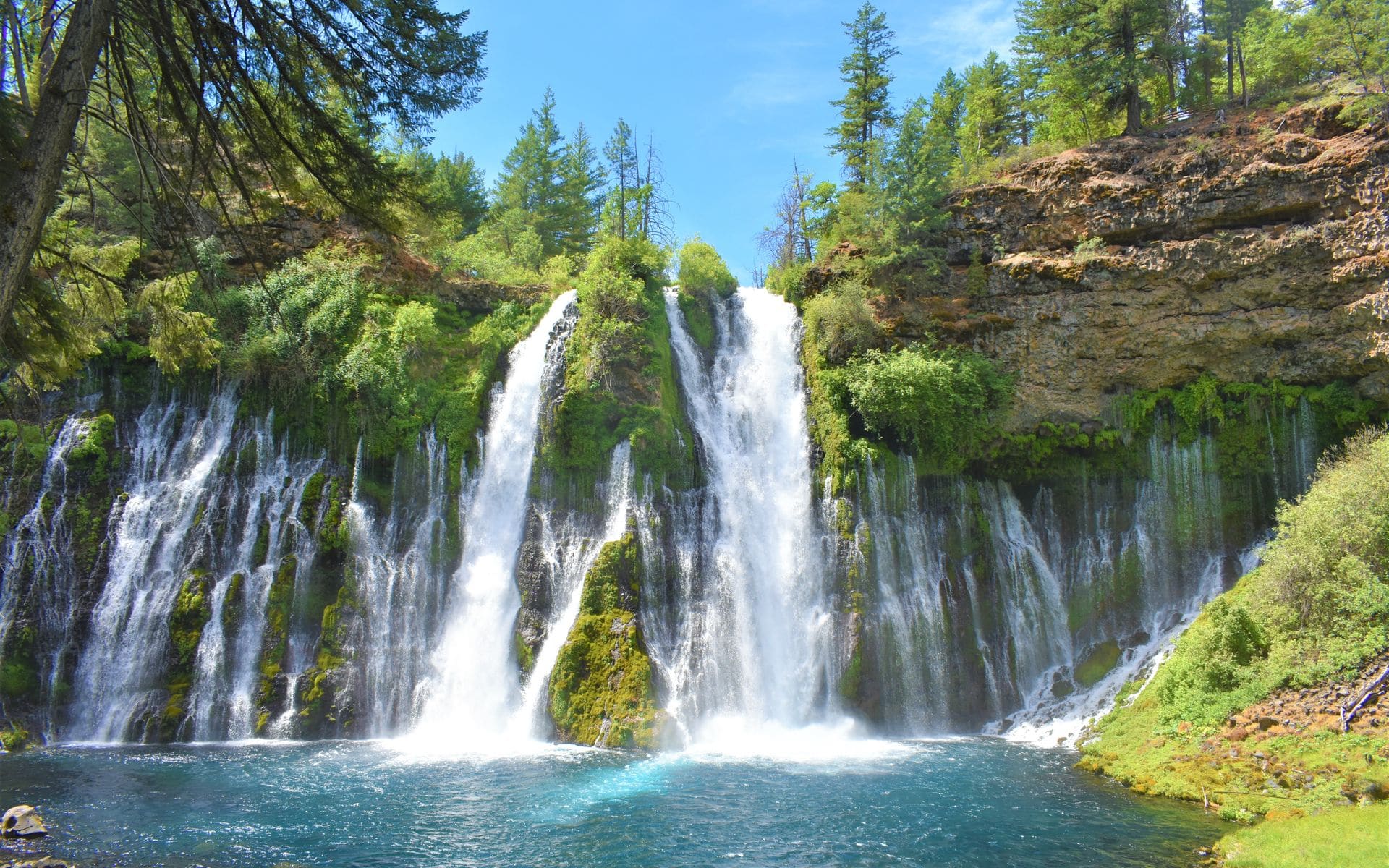
**Region: Shasta Cascade · Height: 129 ft · Peak: year-round** Burney Falls in McArthur-Burney Falls Memorial State Park, northeast of Redding, runs 100 million gallons a day every day of the year, fed by underground springs rather than snowmelt. Theodore Roosevelt reportedly called it the eighth wonder of the world. The overlook is a short walk from the lot. See the Mount Shasta area guide.
**Region: Shasta Cascade · Height: 640 ft over multiple tiers · Peak: spring** Feather Falls in the Plumas National Forest near Oroville is one of the tallest waterfalls in the state, reached by a moderate 9-mile loop through the forest. It runs hardest in spring with the snowmelt and rain.
**Region: Shasta Cascade · Height: 220 ft · Peak: spring** Whiskeytown Falls, in Whiskeytown National Recreation Area west of Redding, was rediscovered by the public only in the early 2000s and reached by a moderate 3.4-mile round-trip hike. It is a good pick when you want a waterfall with far fewer people than Yosemite.
Where to stay and how to time your visit
For the Yosemite falls, stay in the valley if you can book it, or in the park-entrance towns along Highways 140 and 120. For McWay, base on the Monterey Peninsula at the Monterey Plaza Hotel & Spa or The Inn at Spanish Bay and drive down Highway 1. For the Shasta Cascade falls, Redding is the practical hub. For Alamere, day-trip from San Francisco, where the Argonaut Hotel or Fairmont San Francisco put you close to the Point Reyes road. Compare rates in the hotels and resorts directory.
Timing is everything with California waterfalls. For the Sierra giants, plan for May and early June, when the snowmelt peaks and the falls run hardest. Go too early and the trails are still snowed in; go in late summer and Yosemite Falls can be dry. If your trip lands in summer or fall, chase the year-round falls instead: McWay in Big Sur and Burney Falls up north run steady no matter the season.
Frequently asked questions
When do California waterfalls peak?
The big Sierra falls, including Yosemite Falls and the Mist Trail falls, peak in May and early June with the snowmelt and can be dry by late summer. A wet winter extends the season; a dry one shortens it. If you are visiting in summer or fall, go for the year-round falls like McWay in Big Sur and Burney Falls in the Shasta Cascade instead.
What is the best waterfall in California?
Yosemite Falls is the tallest in North America at 2,425 feet and the most impressive at spring peak. For an easy, year-round option, McWay Falls in Big Sur drops onto a beach and takes a five-minute walk. For the best waterfall hike, the Mist Trail to Vernal and Nevada Falls in Yosemite is hard to beat.
Which California waterfalls run year-round?
McWay Falls in Big Sur and Burney Falls in the Shasta Cascade both run all year, since they are fed by steady sources rather than snowmelt. Burney pushes 100 million gallons a day every day. Bridalveil Fall in Yosemite holds water longer than most Sierra falls but still slows in late summer.
Do I need a reservation to see Yosemite's waterfalls?
Yosemite has used a peak-season day-use reservation system in recent summers, so check the current-year rules before you go. The February Horsetail Fall firefall event has its own separate reservation requirement during its two-week window. Bridalveil, Yosemite Falls, and the Mist Trail falls are all within the valley once you are inside the park.