What to Expect
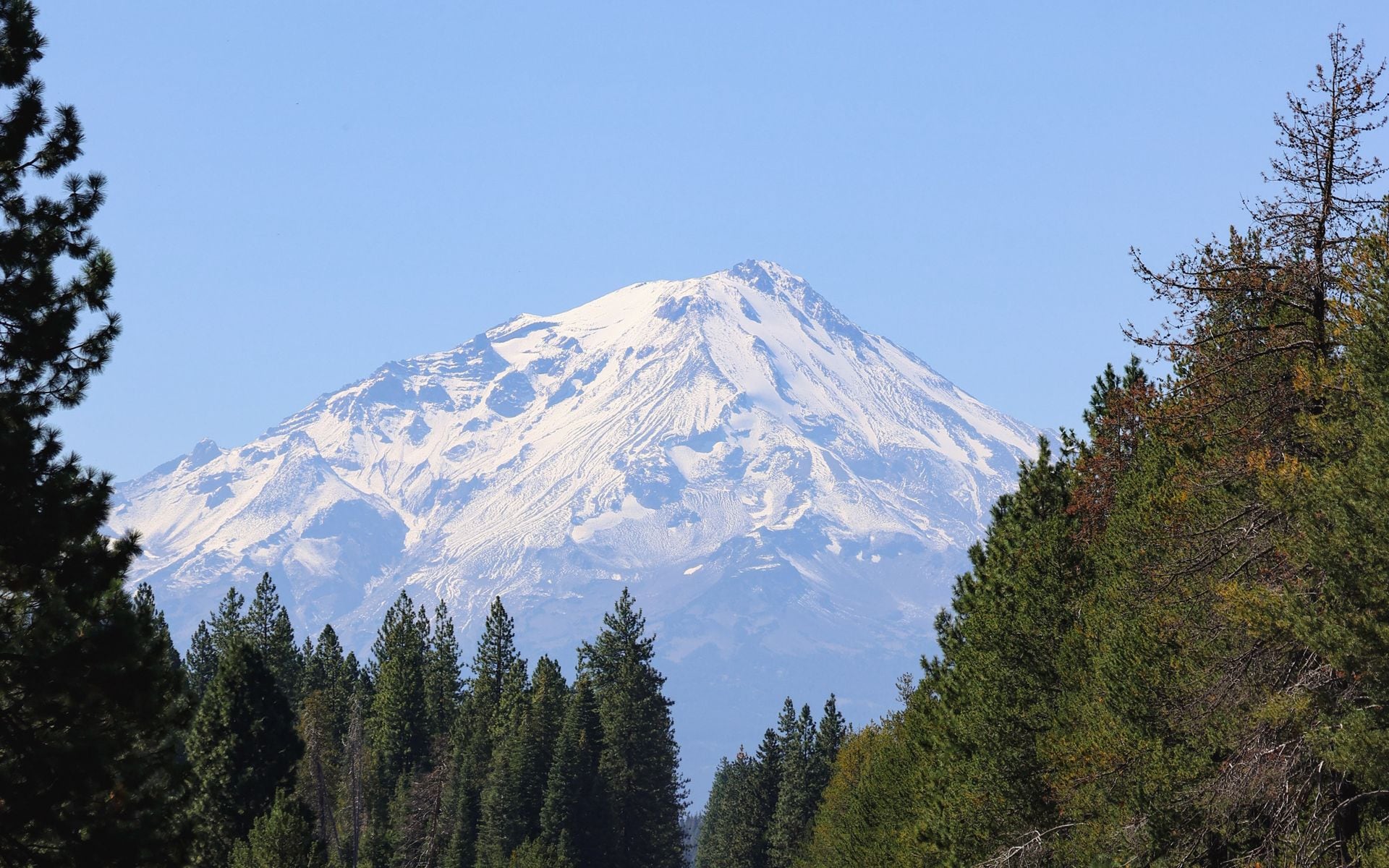
Mount Shasta is the high point of the Shasta Cascade, the mountainous northeast corner of California where the Sierra gives way to volcanic Cascade country. The peak is a stratovolcano carrying several active glaciers, and its sheer isolation is what makes it striking: it stands almost alone above the surrounding forest, more than 10,000 feet above the valley floor. The town of Mount Shasta, right off I-5 at about 3,600 feet, is a walkable few blocks of cafes, outfitters, and inns that functions as the launch pad for everything on the mountain.
This is an outdoors-first destination, not a resort scene. People come to climb the peak, fish the upper Sacramento River, paddle alpine lakes, chase waterfalls, and ski a small family mountain in winter. The town has a distinct mellow, spiritual streak, with crystal shops and retreat centers alongside the gear stores, but you do not need any of that to enjoy a straightforward mountain trip.
Because it is genuinely far north, about 60 miles from Redding and a long way from the coast or the Bay, Mount Shasta stays quieter and cheaper than California's marquee mountain towns. If your California trip also has a coastal leg, the contrast is total: swap the volcano for the sand on our roundup of the best beaches in California. Here, the draw is altitude, cold rivers, and big volcanic country.
What to Do
Climbing Mount Shasta is the headline. The standard route, Avalanche Gulch from the Bunny Flat trailhead, is a non-technical but serious mountaineering objective that requires an ice axe, crampons, and the skill to use them, plus a summit pass and a wilderness permit. Most climbers go with a guide service out of town, and the climbing season runs roughly May through July when the snow is firm enough. You do not have to summit to enjoy the mountain: the hike from Bunny Flat up to Horse Camp and the tree line is a rewarding day on its own, and Panther Meadows near the end of Everitt Memorial Highway offers easy alpine walking through wildflowers in summer.
Water is the other draw. Lake Siskiyou, just west of town, is a swimmable reservoir with a beach, boat rentals, and a full loop trail. Castle Lake, higher up, is a cold glacial lake ringed by granite with trails to a ridge overlook. The McCloud River, about 20 minutes east, drops through three waterfalls, Lower, Middle, and Upper McCloud Falls, linked by an easy riverside trail that is one of the best short hikes in the region. In town, the City Park protects the headwaters of the Sacramento River, where the spring pours cold and clear straight out of the ground.
Nearby, Castle Crags State Park adds granite spires and forest trails just south on I-5, and the Pacific Crest Trail threads through the whole area. In winter, the Mount Shasta Ski Park is a small, affordable mountain aimed at families and beginners rather than destination skiers. For a bigger volcanic day trip, pair Shasta with Lassen Volcanic National Park, about two hours southeast, which adds boiling mud pots and fumaroles to the itinerary.
Getting There
Mount Shasta sits directly on Interstate 5, which makes it one of the easier remote mountain towns in California to reach. From Sacramento it is about 220 miles and 3.5 hours straight up I-5. From Redding, the nearest small city, it is roughly 60 miles and about an hour north. From the San Francisco Bay Area, plan on about 4.5 to 5 hours via I-505 and I-5.
Coming from Oregon, the town is about 75 miles south of the border and an easy hour from Medford. Being on the interstate means the main approach stays open and plowed year-round, unlike the high Sierra passes, though winter storms can still bring chain controls over the higher stretches of I-5 near the Siskiyou Summit and Mount Shasta City. Always check Caltrans conditions in winter.
The closest commercial airport is Redding (RDD), about an hour south, with limited regional flights. Most visitors fly into Sacramento (SMF) or San Francisco (SFO) and drive up I-5. Whichever way you come, you need a car: the trailheads, lakes, and waterfalls are spread across the mountain and there is no transit to reach them.
Best Time to Go
Summer, from July through September, is the prime season for hiking, swimming, waterfalls, and general exploring. The high-elevation snow has cleared the main trails, the lakes are warm enough to swim, and Everitt Memorial Highway is open to the upper trailheads. This is also the busiest stretch, though busy here is mild compared with the Sierra hotspots.
For climbing the peak, the window is narrower, roughly May into July, when there is still enough firm snow to travel safely and before the summer melt turns the upper mountain to loose rock and ice. Serious climbers watch conditions closely and often go earlier in that window. Fall brings cool, clear days and thinner crowds, a good time for the McCloud Falls trail and Castle Crags.
Winter, December through March, is for skiing at the Mount Shasta Ski Park and snow play, with the peak itself off-limits to all but experienced mountaineers. The town stays open and accessible off I-5 year-round, but carry chains and expect short winter days. Spring is muddy and variable, with snow lingering high while the valleys green up.
Where to Stay and Eat
Lodging in Mount Shasta is modest and reasonably priced. The Mount Shasta Resort, on Lake Siskiyou just outside town, has chalets among the pines and a golf course with mountain views, and is the closest thing the area has to a full resort. In town, dependable options like the Best Western Plus Tree House Inn put you within walking distance of Main Street, and a scattering of motels, cabins, and vacation rentals fill out the range for tighter budgets.
For food, Lily's is a longtime town favorite in a converted house, good for a proper sit-down dinner. The Black Bear Diner chain started here in Mount Shasta in 1995, so the original location is a fitting stop for a hearty breakfast. Seven Suns Coffee and Cafe covers morning coffee and pastries before a trailhead start, and Main Street has a handful of casual spots for lunch and pizza.
Book ahead for summer weekends and the climbing season, when the limited lodging fills up, but outside those peaks you can usually find a room without much trouble. Stock up on trail food and supplies in town before heading up the mountain, because there is nothing at the trailheads.
Good to Know
Respect the mountain. Climbing Mount Shasta is real mountaineering, not a walk-up, and every year unprepared people get into trouble on snow and ice. If you intend to summit, go with a guide or bring the skills and gear, get the required summit pass and wilderness permit, and check the current conditions. Weather on the peak can change fast even when the valley is clear.
Altitude, sun, and cold water all matter here. The trailheads start high, the alpine sun is strong, and the lakes and rivers run cold enough to be a hazard, so ease into the elevation and know the water temperature before you jump in. In late summer and fall, check for wildfire and air-quality alerts, which can affect this part of the state.
Mount Shasta pairs naturally with Lassen Volcanic National Park and the wider volcanic north for a longer loop, or works as a break on the long I-5 drive between California and Oregon. For how the region connects and what else is worth the detour, see our Shasta Cascade guide.
Frequently asked questions
How do you get to Mount Shasta from Sacramento?
Drive straight up Interstate 5. It is about 220 miles and roughly 3.5 hours north. Because Mount Shasta sits right on I-5, the route stays open and plowed year-round, unlike the high Sierra passes, though winter storms can bring chain controls.
Can beginners climb Mount Shasta?
Not without preparation. The standard Avalanche Gulch route is non-technical but is genuine mountaineering that requires an ice axe, crampons, and the skill to use them, plus a summit pass and wilderness permit. Beginners should go with a guide service. The climbing season runs roughly May through July.
What is the best time to visit Mount Shasta?
July through September is best for hiking, swimming, and waterfalls, when the trails are clear and the lakes are warm. For climbing the peak, aim for May into July. Winter is for skiing at the small Mount Shasta Ski Park, with the summit reserved for experienced mountaineers.
Is Mount Shasta worth visiting without climbing the peak?
Yes. Lake Siskiyou, Castle Lake, the three McCloud waterfalls, Panther Meadows, Castle Crags State Park, and the Sacramento River headwaters all reward a visit without ever roping up. It is an easy, low-key mountain base with plenty for hikers and families.
How far is Mount Shasta from Lassen Volcanic National Park?
About two hours southeast by car. The two pair well as a Shasta Cascade volcanic loop, with Lassen adding boiling mud pots, fumaroles, and its own hydrothermal basins to a Mount Shasta trip.