What to Expect
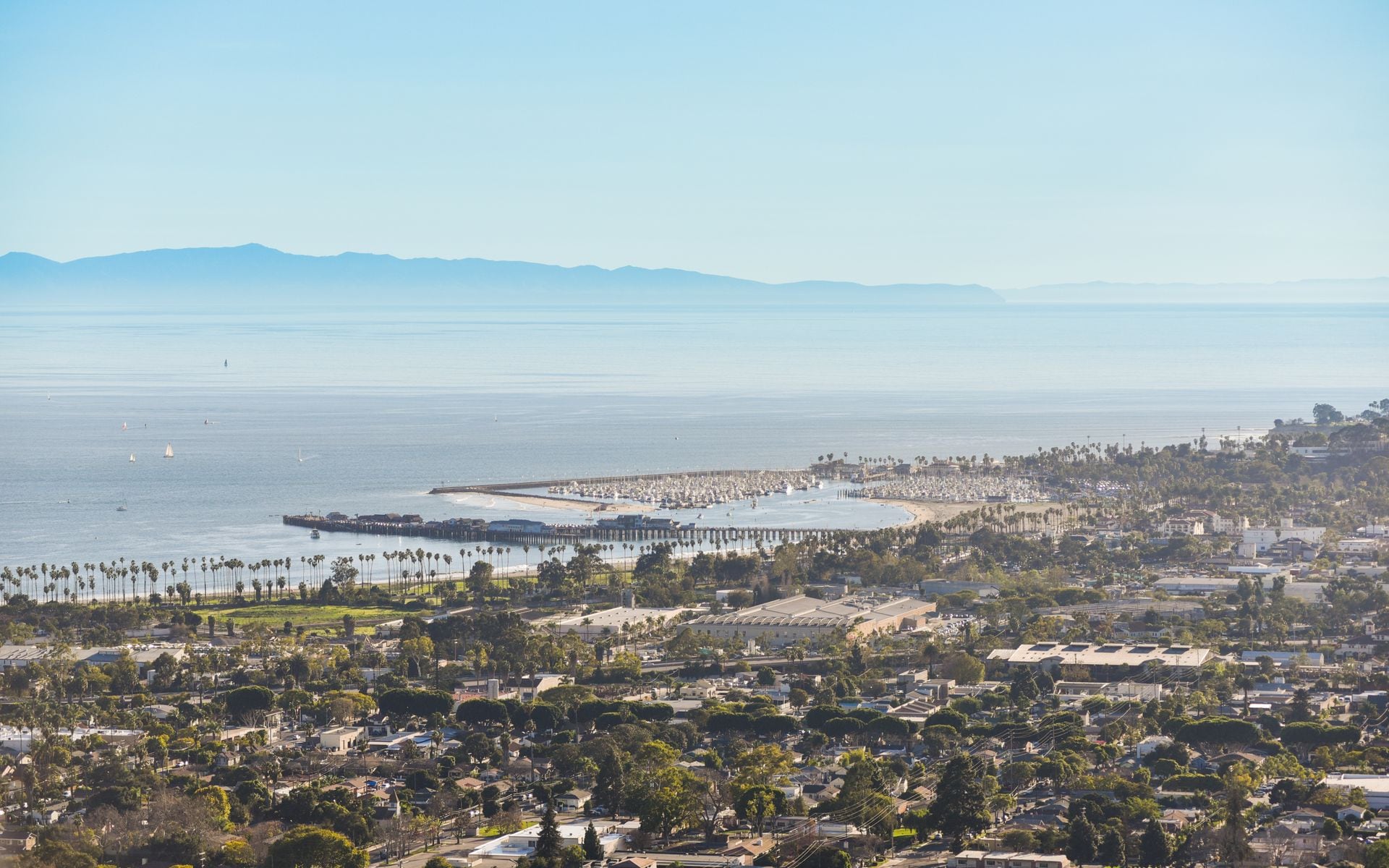
Santa Barbara sits on a rare south-facing stretch of the California coast, tucked between the Santa Ynez Mountains and the Pacific about 95 miles northwest of Los Angeles. That geography gives it warm, calm beaches, mild weather most of the year, and the nickname the American Riviera. The city has kept a consistent look since a 1925 earthquake rebuild: whitewashed walls, red tile roofs, and Spanish-Mediterranean lines all the way down State Street to the water.
It is an unusually walkable California city. State Street runs from downtown straight to Stearns Wharf, lined with shops, restaurants, and tasting rooms, and the harbor, the beaches, and the wharf all connect along the waterfront. The 1786 Santa Barbara Mission, called the Queen of the Missions for its twin bell towers, sits up the hill with the mountains behind it. You do not have to drive much once you are in town, which is part of the appeal.
Santa Barbara pulls double duty as a beach town and a wine base. The city itself has the Funk Zone urban wine trail, and the Santa Ynez Valley wine country is a 45-minute drive north over the pass. Plan on two days for the city, more if you fold in the wine valleys. It sits at the southern end of the Central Coast and ranks among the state's best coastal towns in California.
What to Do
Start with the waterfront. Stearns Wharf is the oldest working wooden wharf in California and juts out from the foot of State Street with seafood spots and views back at the mountains. East Beach and West Beach flank it, and the harbor next door is the launch point for whale watching, sailing, and sportfishing. Because the coast faces south here, the water is calmer and a touch warmer than most of California, which makes it good beginner surf and paddle territory.
For the sights, the Santa Barbara Mission is the landmark, and the 1929 Santa Barbara County Courthouse downtown is a genuine surprise: a Spanish-Moorish building with a free clock-tower viewpoint that gives you the best red-tile-roof panorama in the city. Wander the mission rose garden, the botanic garden in the foothills, or the small but strong Santa Barbara Museum of Art on State Street.
Then there is the wine tasting, which Santa Barbara makes easy. The Funk Zone, a few blocks of old warehouses near the beach, holds a walkable urban wine trail of tasting rooms so you can sample Santa Barbara County wine without driving. For the full vineyard experience, the Santa Ynez Valley over the pass is Pinot Noir and Syrah country, the setting for the film Sideways. Outfits like Sustainable Wine Tours in Santa Barbara run guided trips out to the valley so no one has to be the designated driver. On the water side, Cal Coast Adventures and the Santa Barbara Surf School both run lessons and rentals from the city beaches if you want to get in the surf or on a kayak.
Getting There and Around
Santa Barbara is about 95 miles from Los Angeles, roughly a two-hour drive up Highway 101 in normal traffic, longer during LA rush hours. It has its own small airport, Santa Barbara (SBA), with regional flights, and it is one of the rare California destinations you can reach car-free: Amtrak's Pacific Surfliner stops downtown, a few blocks from the beach, on the run between San Diego, LA, and San Luis Obispo.
In town, you can get by largely on foot, with the waterfront electric shuttle and State Street covering the core. A car helps if you want to reach the mission, the foothill gardens, or the Santa Ynez Valley wine country, but for a beach-and-downtown weekend you can park the car and leave it. Ride-hailing is reliable within the city.
As a road-trip stop, Santa Barbara is the natural southern anchor of a Central Coast run up Highway 1. North of town, the Danish-themed village of Solvang and the Santa Ynez wineries are about 45 minutes over San Marcos Pass, and the beach town of Santa Cruz is a longer haul up the coast if you are continuing north.
Best Time to Go
Santa Barbara is a year-round destination, but the shoulder seasons are best. September and October bring the warmest, clearest coastal weather, warm ocean, blue skies, and thinner crowds after the summer rush. Spring, from March into June, is green and mild, though late spring can hit the coastal gray that Southern Californians call May Gray and June Gloom, when mornings start overcast before burning off.
Summer is peak season with the biggest crowds and highest hotel rates, plus that frequent morning marine layer, though afternoons usually clear to warm and pleasant. Winter is the quiet, cheaper season: mild days in the 60s, occasional rain, and calm beaches, with gray-whale migration offshore from December into spring.
For wine, any season works, since the Funk Zone tasting rooms and the Santa Ynez Valley are open year-round, though fall harvest adds energy in the vineyards. If beach weather is your priority, aim for August through October, when the south-facing water is at its warmest.
Where to Stay and Eat
Lodging splits between the waterfront and downtown. Beachfront hotels along Cabrillo Boulevard put you across from the sand and the wharf, at a premium. Downtown and State Street hotels cost less and keep you walking distance from restaurants and the wine trail. Up in the foothills, the historic El Encanto and the Belmond El Encanto-style estates are the splurge, with city-and-ocean views. Book well ahead for summer weekends, when the city fills.
Seafood is the local strength. Brophy Bros. Santa Barbara, up on the harbor, is a long-running favorite for clam chowder, oysters, and fish with a working-marina view, and it draws a wait at peak times for good reason. Down on Stearns Wharf and along the harbor you will find more seafood counters, and State Street packs in everything from taquerias to farm-to-table dinners, plus the Santa Barbara Public Market food hall.
The Funk Zone doubles as a food-and-drink district: tasting rooms alongside breweries, coffee, and casual restaurants, all walkable from the beach. Book the popular waterfront dinners ahead on summer weekends, and for a cheap, excellent meal, work the taco and sandwich spots on lower State Street.
Good to Know
Santa Barbara is one of the easier California trips to do without renting a car. The Pacific Surfliner train drops you downtown near the beach, the waterfront and State Street are walkable, and a local shuttle links them. If your whole plan is beach, downtown, and the Funk Zone wine trail, you may not need a car at all, which is rare in California.
You will want wheels only for the outlying pieces: the mission and foothill gardens, and the Santa Ynez Valley wine country over the pass. If wine touring the valley is the goal, a guided tour van solves both the driving distance and the designated-driver problem in one move.
Pack for the marine layer even in summer. Mornings here often start gray and cool before clearing to warm afternoons, so bring a light layer for the a.m. and beach clothes for later. And book lodging and popular dinners early for summer and holiday weekends, because this is a compact city that fills up fast.
Frequently asked questions
How far is Santa Barbara from Los Angeles?
About 95 miles, or roughly a two-hour drive up Highway 101 in normal traffic and longer during LA rush hours. You can also take Amtrak's Pacific Surfliner, which runs from LA to downtown Santa Barbara and lets you skip the drive entirely.
Can you visit Santa Barbara without a car?
Yes, more easily than most California cities. The Pacific Surfliner train stops downtown near the beach, State Street and the waterfront are walkable, and a shuttle connects them. You only really need a car for the mission, the foothill gardens, or day trips to the Santa Ynez Valley wineries.
Where can you taste wine in Santa Barbara?
Right downtown in the Funk Zone, a few walkable blocks of tasting rooms near the beach, so you can sample Santa Barbara County wine without driving. For full vineyards, the Santa Ynez Valley is about 45 minutes north, and guided outfits run tours out so no one has to drive.
When is the best time to visit Santa Barbara?
September and October are the sweet spot, with the warmest, clearest coastal weather and thinner crowds. Spring is green and mild but can be overcast in the mornings, summer is busy and pricey, and winter is quiet, cheaper, and good for whale watching.
Are Santa Barbara beaches good for swimming?
Better than most of California. Because the coast faces south here, the water is calmer and slightly warmer, and East and West Beach near the wharf are good for families and beginner surfers. It is warmest August through October, though the Pacific is never truly warm.