What to Expect
Santa Cruz sits at the northern tip of Monterey Bay, where the redwood-covered Santa Cruz Mountains meet a curving stretch of coast. It is a college town, home to UC Santa Cruz, and a surf town with a laid-back, slightly bohemian feel that sets it apart from the more polished Monterey and Carmel across the bay. The main draws are the beachfront boardwalk, the wharf, the surf spots along West Cliff Drive, and easy access to old-growth redwoods just inland.
The weather is classic Northern California coast: mild all year, with cool, foggy summer mornings that often burn off by midday and clear, warm afternoons in early fall. The ocean is cold year round, so surfers and swimmers wear wetsuits. It is a compact town where you can walk the beachfront and wharf, though you will want a car for the state beaches and the redwood parks up in the hills.
Santa Cruz is one of the northern anchors of California's Central Coast and earns a spot among the state's best coastal towns. It makes an easy pairing with the rest of the Central Coast if you are working your way south toward the Danish-themed wine town of Solvang and the Santa Barbara area.
What to Do
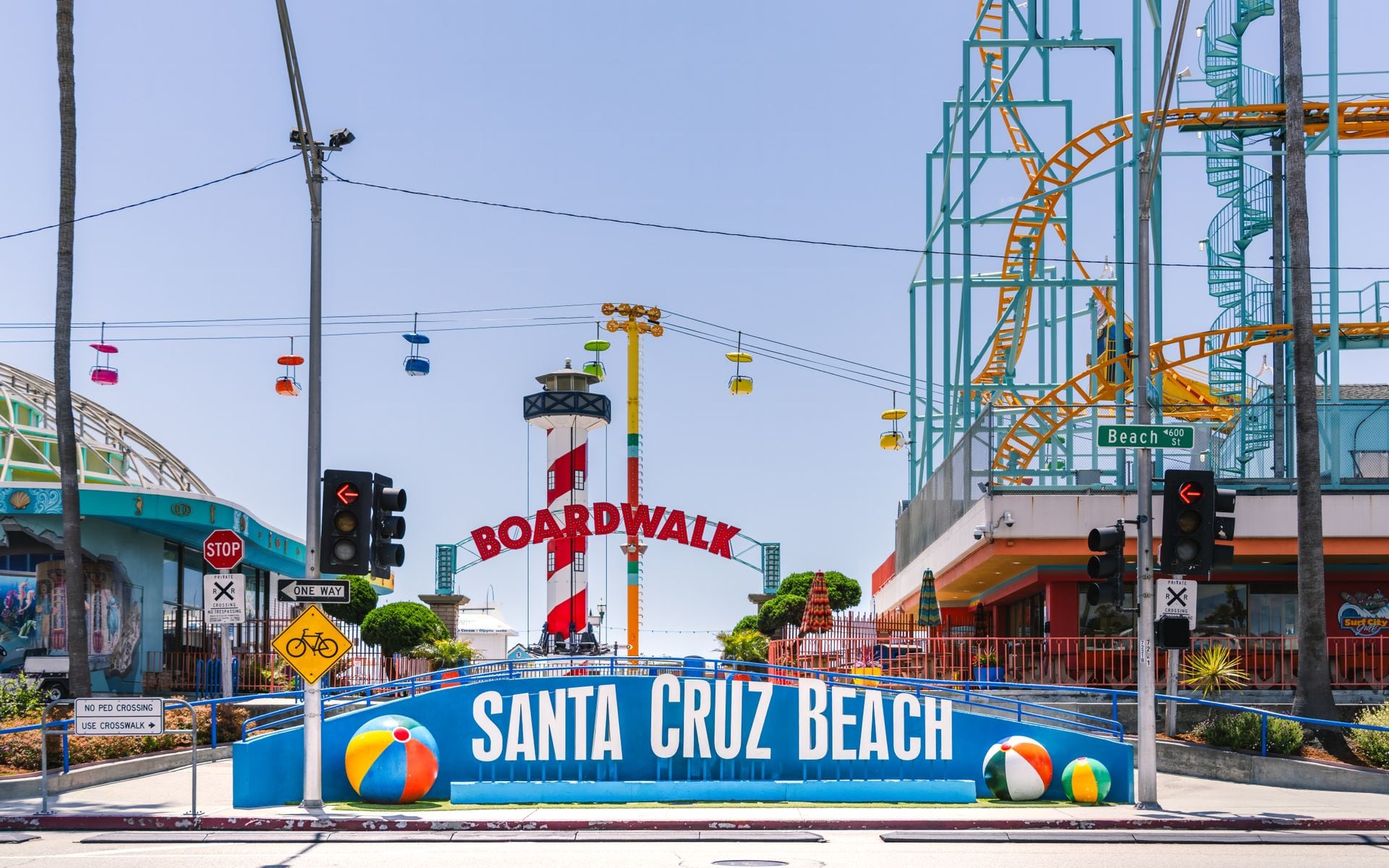
The Santa Cruz Beach Boardwalk is the centerpiece, a seaside amusement park on the sand that has run since 1907 and is one of the last of its kind on the West Coast. Admission to walk in is free; you pay per ride or buy a wristband. The two landmarks are the Giant Dipper, a wooden roller coaster from 1924, and the 1911 Looff Carousel, both still running. It is a genuinely fun, old-fashioned afternoon, best on a warm day.
For surf and coastline, drive or walk West Cliff Drive, the clifftop road west of the wharf, past Steamer Lane, one of the best-known surf breaks in California and a great place to watch experienced surfers from shore. At the end sits the Mark Abbott Memorial Lighthouse, which houses the small Santa Cruz Surfing Museum, worth a stop for the history of the sport on this coast. Natural Bridges State Beach at the west end has tide pools and a monarch butterfly grove that fills from fall into winter.
Inland, the redwoods are close: Henry Cowell Redwoods State Park and Big Basin are a short drive up into the mountains for old-growth forest walks. For a quirky classic, the Mystery Spot in the hills is a hokey but fun gravity-illusion attraction that has drawn visitors since 1939. If you want to learn to surf, Santa Cruz is a good place to do it, with cold water but forgiving beginner breaks at Cowell's Beach next to the wharf.
Getting There and Parking
Santa Cruz is about a 40- to 60-minute drive from San Jose over Highway 17, a winding, sometimes congested mountain road that demands attention, especially in rain. From San Francisco plan on about 75 miles and an hour and a half without traffic, and from Monterey it is roughly 45 minutes around the bay. San Jose International (SJC) is the closest major airport, with San Francisco (SFO) about an hour and 15 minutes north.
In town, the beachfront and boardwalk area has paid lots and metered street parking that fill on summer weekends, so arrive early or be ready to walk a few blocks. West Cliff Drive has free and limited parking pullouts that also fill fast on nice days. The downtown Pacific Avenue district has garages and is an easy walk to restaurants and shops.
Highway 17 over the mountains is the one route to respect. It is steep, curvy, and busy, with a reputation for accidents in wet weather, so take it slow and avoid the worst of the San Jose commute if you can.
Best Time to Go
Late summer and early fall, roughly August through October, are the best months for warm, clear days and the warmest ocean of the year, which is still cool by most standards. Early summer, June and July, brings the marine-layer fog that often sits over the coast in the mornings before burning off in the afternoon, so plan beach time for later in the day.
Spring is pleasant and quieter, with wildflowers in the state parks and fewer crowds than summer. Winter is cool and can be rainy, but it has its own draws: this is prime season for watching big-wave surfers at Steamer Lane when the swells come in, and the monarch butterflies cluster at Natural Bridges from roughly October into February.
The boardwalk is busiest on warm summer weekends and during school breaks, so a weekday visit or an early arrival makes for a far easier day. If you want the beach town at its mellowest, come on a clear weekday in September or October when the summer crowds have thinned and the weather is at its best.
Where to Stay and Eat
Santa Cruz has beachfront motels near the boardwalk, boutique inns downtown, and a range of options up and down the coast in Capitola and Aptos to the east. Rooms near the beach book out and get expensive on summer weekends, so reserve ahead in season. For a wider choice of larger hotels, the town of Monterey across the bay is about 45 minutes away and works as an alternate base if you want to see both.
For food, Shadowbrook in nearby Capitola is the special-occasion spot, a landmark restaurant you reach by a cable car down a wooded hillside to a creekside dining room, so reserve well ahead. Downtown Pacific Avenue has the widest range of casual eating, from taquerias to breweries to coffee. Near the wharf and boardwalk you will find the expected beach-town seafood, fish and chips, and taffy.
The Santa Cruz Wharf, a half-mile pier next to the boardwalk, has seafood restaurants over the water and sea lions barking under the pilings. It is a good spot for a casual lunch with a view before or after the beach.
Frequently asked questions
Is the Santa Cruz Beach Boardwalk free?
Yes, walking into the Santa Cruz Beach Boardwalk is free. You pay per ride or buy an all-day wristband if you want to ride the attractions, including the 1924 Giant Dipper wooden roller coaster and the 1911 Looff Carousel. The beach itself is free too. Go on a warm weekday or arrive early on summer weekends to beat the crowds and parking crush.
How far is Santa Cruz from San Jose and San Francisco?
Santa Cruz is about a 40- to 60-minute drive from San Jose over Highway 17, a winding mountain road to take slowly, especially in rain. From San Francisco it is roughly 75 miles and an hour and a half without traffic. San Jose International (SJC) is the closest airport, with San Francisco (SFO) about an hour and 15 minutes north.
Can you surf in Santa Cruz as a beginner?
Yes. Santa Cruz is one of the best places in California to learn, with forgiving beginner waves at Cowell's Beach next to the wharf and several surf schools in town. The water is cold year round, so you will wear a wetsuit. Steamer Lane next door is an advanced break and a great spot to watch experienced surfers from the cliff rather than paddle out.
When is the best time to visit Santa Cruz?
August through October gives you the warmest, clearest days and the warmest ocean of the year. June and July bring foggy mornings that usually clear by afternoon, so plan beach time later in the day. Winter is quieter and best for watching big-wave surfing at Steamer Lane and the monarch butterflies at Natural Bridges from October into February.
What is there to do in Santa Cruz besides the beach?
Walk West Cliff Drive past Steamer Lane and the surfing museum in the old lighthouse, visit Natural Bridges State Beach for tide pools and butterflies, and drive up into the Santa Cruz Mountains to walk among old-growth redwoods at Henry Cowell or Big Basin. The Mystery Spot gravity-illusion attraction in the hills is a fun, hokey classic that has run since 1939.