What to Expect
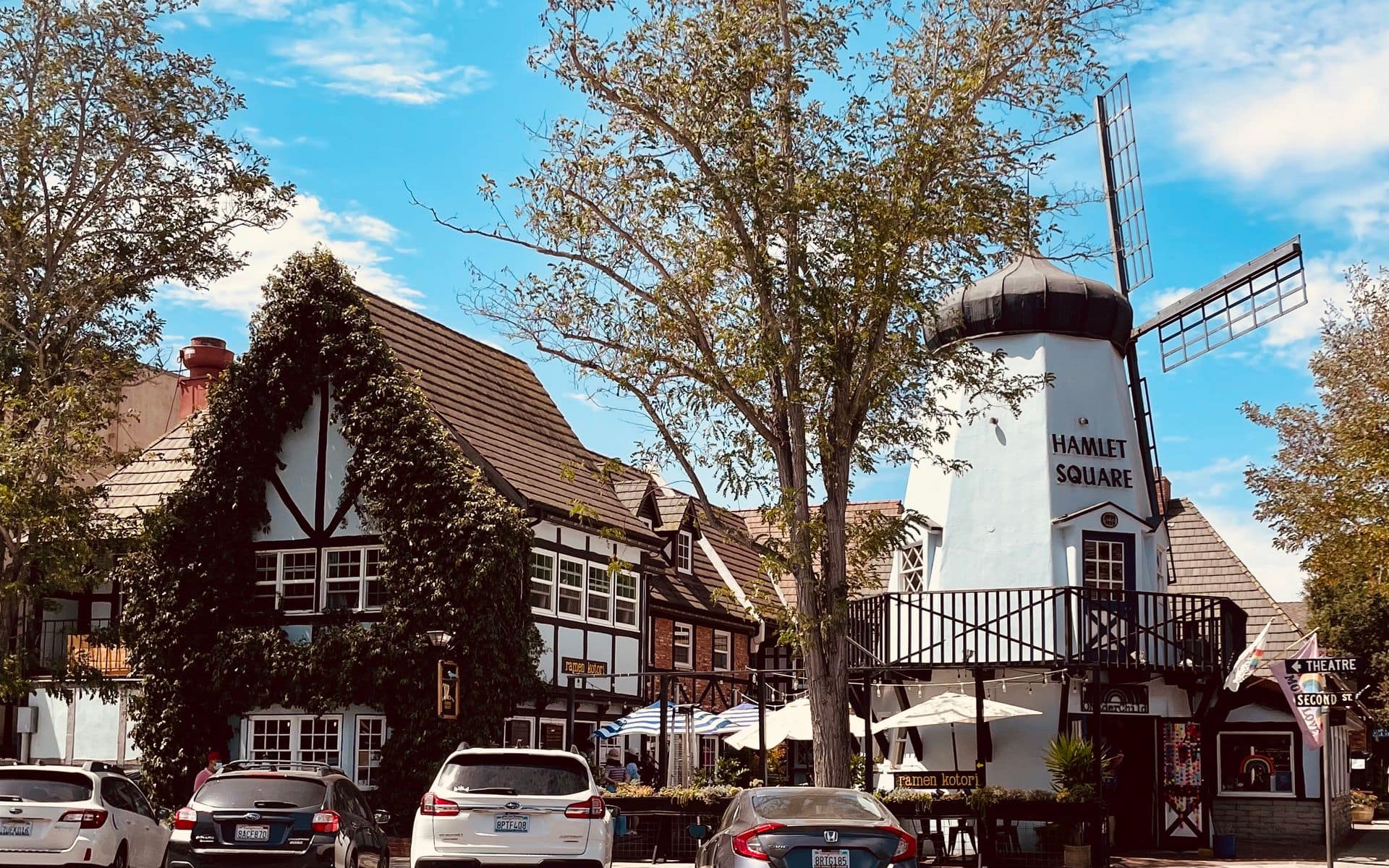
Solvang was founded in 1911 by Danish immigrants who wanted a colony far from the Midwest winters, and it leaned all the way into that heritage. The result is a walkable few blocks of half-timbered buildings, thatched-look roofs, working windmills, and Danish bakeries, set in the rolling Santa Ynez Valley about 45 minutes inland from Santa Barbara. It calls itself the Danish Capital of America, and the theme is thorough without being a theme park.
The town itself is small, maybe three or four square blocks of shops, bakeries, and tasting rooms you can cover on foot in a morning. What makes Solvang more than a photo stop is where it sits: right in the heart of the Santa Ynez Valley wine country, the Pinot Noir and Syrah region made famous by the film Sideways. That combination, a compact Danish village you can walk plus serious wine country all around it, is the whole draw.
Plan on a relaxed overnight rather than a rushed day trip. Solvang works best as a base for the surrounding valley: taste wine in the afternoon, eat aebleskiver in the morning, and use it as a launch point for the coast. It sits inland from the Central Coast and pairs well with the region's best coastal towns in California a short drive away.
What to Do
Start on foot in the village. Copenhagen Drive and the surrounding blocks hold the windmills, the Danish shops, and the bakeries, and eating your way through them is half the point. Order aebleskiver, the round Danish pancake balls dusted in sugar and jam, and try the Danish pastries the town is known for. The small Hans Christian Andersen Museum and the Elverhoj Museum of History and Art cover the Danish story, and the Solvang Festival Theater hosts outdoor summer performances.
Just east of the village, Old Mission Santa Ines is one of California's original Spanish missions, dating to 1804, with a quiet church and garden that predate the Danish settlers by a century. It is a five-minute walk from downtown and a reminder that the valley has a longer history than the windmills suggest.
The main event beyond the village is wine tasting. Solvang has walkable tasting rooms right in town, and the surrounding Santa Ynez Valley, including the nearby villages of Los Olivos and Santa Ynez, is dense with vineyards pouring Pinot Noir, Syrah, and Chardonnay. Because tasting and driving do not mix, guided outfits like Sustainable Wine Tours out of Santa Barbara run the valley so no one has to be the sober driver. If you would rather stay put, the in-town tasting rooms let you sample valley wine on foot.
Getting There and Around
Solvang is about 45 minutes north of Santa Barbara, a pretty drive over San Marcos Pass on Highway 154, and roughly two and a half hours up Highway 101 from Los Angeles. The nearest airport is Santa Barbara (SBA), about 40 minutes away, and larger LAX is a bit over two hours south. You will want a car: while the village is walkable, the wineries, the coast, and everything beyond downtown require driving.
In town, park once and explore the village on foot, since it is only a few blocks. For the valley wineries, you are back in the car, or better, in a tour van so the whole group can taste. Los Olivos and Santa Ynez, the neighboring wine villages, are only 10 to 15 minutes away, and Buellton, home to the Sideways-famous Hitching Post and Pea Soup Andersen's, is even closer.
As a base, Solvang puts a lot within reach. The Santa Barbara coast is 45 minutes south, and Channel Islands National Park, reached by boat from Ventura, is a longer day trip down the coast for those who want to trade vineyards for sea caves and island hikes.
Best Time to Go
Fall, from September into October, is the best all-around time: warm days, harvest energy in the vineyards, and clear valley skies. The Santa Ynez Valley runs hotter and drier than the coast, so inland summer afternoons can climb into the 90s while Santa Barbara stays mild, something to keep in mind if you are sensitive to heat.
Spring, March through May, brings green hills, wildflowers, and mild days, one of the prettiest times in the valley and quieter than fall. Winter is cool, sometimes rainy, and the calmest and cheapest season, with the village decked out for the holidays; Solvang's Julefest lights in December are a genuine draw. Summer is warm, busy, and the peak for family visits.
For events, the Danish-themed festivals cluster around Danish Days in September and the Julefest holiday lights from November into early January. If wine is your focus, harvest in fall adds the most energy, but the tasting rooms and valley wineries are open year-round.
Where to Stay and Eat
Solvang has a good supply of small inns and Danish-style hotels right in the walkable village, which is the move if you want to stroll to bakeries and tasting rooms. A few minutes away in Santa Ynez, the Chumash Casino Resort is the area's largest full-service hotel, with a spa, multiple restaurants, and a casino, and it works well as a base if you want more amenities than the village inns offer.
Eating in Solvang means Danish first. The town's bakeries turn out pastries, kringle, and aebleskiver, and a handful of Danish restaurants serve smorrebrod open-faced sandwiches, frikadeller meatballs, and the like. Beyond the theme, the surrounding valley has strong farm-to-table and wine-country dining, and nearby Buellton's Hitching Post is a well-known spot for oak-grilled steaks and its own Pinot Noir.
For a small town, Solvang and the valley punch above their weight on food and wine, so it is worth booking dinner ahead on weekends and during festivals. For casual eating, the bakeries and delis in the village make it easy to grab pastries for the morning and a picnic for an afternoon at a winery.
Good to Know
Solvang is small, so set expectations accordingly. The village core is a few blocks you can walk in an hour or two; the reason to linger is the wine country around it, not endless attractions in town. Treat it as a charming, walkable base for the Santa Ynez Valley rather than a full-day destination on its own, and you will get the most out of it.
Plan the wine logistics like anywhere in California wine country: if you want to tour the valley vineyards, use a driver or a tour van rather than tasting and getting behind the wheel. The in-town tasting rooms are the walkable alternative when you would rather not organize transport.
Finally, dress for inland heat in summer and check the festival calendar. The valley runs notably warmer than the nearby coast, so pack accordingly, and if you are coming for Danish Days in September or the Julefest lights in December, book lodging early, because the small village fills fast during its signature events.
Frequently asked questions
Is Solvang worth visiting?
Yes, especially if you pair it with the surrounding wine country. The Danish village itself is small, a few walkable blocks of bakeries, windmills, and tasting rooms, but it sits in the heart of the Santa Ynez Valley, so it works best as a charming base for wine touring rather than a destination on its own.
How far is Solvang from Santa Barbara?
About 45 minutes north over San Marcos Pass on Highway 154, a scenic drive. From Los Angeles it is roughly two and a half hours up Highway 101. The nearest airport is Santa Barbara (SBA), about 40 minutes away.
What is there to do in Solvang besides the village?
Wine tasting is the main draw. The Santa Ynez Valley around Solvang, including Los Olivos and Santa Ynez, is dense with vineyards pouring Pinot Noir and Syrah. You can taste in walkable in-town rooms or take a guided tour of the valley wineries, and Old Mission Santa Ines is a five-minute walk from downtown.
How long should you spend in Solvang?
An overnight is ideal. The village itself takes only a couple of hours to walk, but staying a night lets you enjoy the wine country at an unhurried pace, eat Danish breakfast, and use Solvang as a base for the valley and the nearby coast.
When is the best time to visit Solvang?
Fall, from September into October, brings warm days and harvest energy in the vineyards. Spring is green and quieter, and December's Julefest holiday lights are a popular draw. Note that the inland valley runs hotter than the coast, with summer afternoons often in the 90s.