Lake Tahoe is really two different trips depending on when you come. In summer it is a high alpine beach town: 6,225 feet of elevation, cold clear water, kayaks, and hiking. In winter it is one of the biggest concentrations of ski terrain in North America, with a dozen resorts within an hour of the shoreline. Both are worth doing. Which one you book comes down to what you want to do, how much you want to spend, and how you feel about driving mountain roads in snow. Here is the honest breakdown. For the full destination picture, start with the Lake Tahoe page.
The Quick Comparison
Here is how the two seasons stack up on the dimensions travelers weigh:
| Factor | Summer (Jun–Sep) | Winter (Dec–Mar) |
|---|---|---|
| Daytime highs | 75–82°F lakeside | 30–45°F, colder up high |
| Water temperature | 60s–low 70s by August | Around 40°F, too cold to swim |
| Main activities | Beaches, hiking, kayaking, boating | Skiing, snowboarding, snowshoeing |
| Crowds | Heavy, peaks in July | Heavy on powder days and holidays |
| Lodging cost | High, books out early | High at resorts, deals midweek |
| Daily lift ticket | N/A | ~$150–$220 at the window |
| Driving | Easy, all passes open | Chains often required, closures possible |
| Daylight | Long, 14+ hours in June | Short, dark by 5 p.m. in December |
| Best base | South Lake Tahoe or Tahoe City | South Lake Tahoe or Truckee/Northstar |
Neither season is the cheap one. Tahoe runs expensive year-round. The real difference is what you get for the money and how much the weather can complicate your plans. One thing the table cannot capture: winter carries schedule risk that summer does not. A storm can turn a six-hour drive from the Bay Area into ten, or close a pass on the day you meant to leave. Summer’s worst case is traffic and a full parking lot.
Summer: Beach and Trail Season
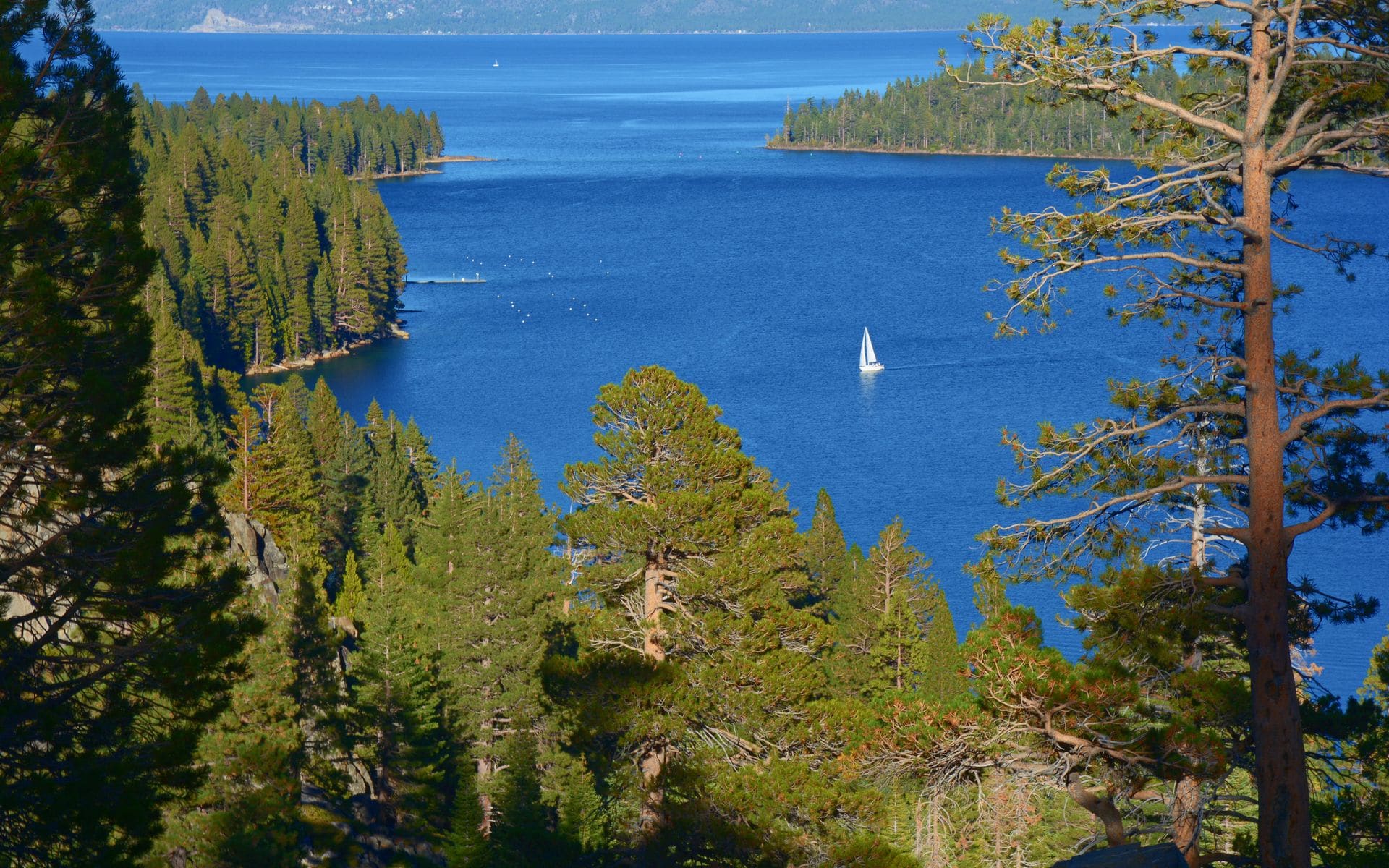
From late June through September the snow is gone from lake level, the water warms into the 60s and low 70s by August, and the whole basin turns outdoor. Sand Harbor State Park on the Nevada east shore has the clearest water and best swimming, so it fills by mid-morning on weekends; arrive before 9 a.m. or you will be turned away at the lot. Emerald Bay on the southwest side is the most photographed spot on the lake, with a 1.5-mile trail down to Vikingsholm, a 1929 stone mansion you can tour. D.L. Bliss State Park next door has the Rubicon Trail hugging the shoreline.
Summer is prime for kayaking and paddleboarding out of Kings Beach, Zephyr Cove, and the south shore, and for hiking the Tahoe Rim Trail, which circles the entire lake over 165 miles with dozens of day-hike access points. Popular day hikes off it include Eagle Lake out of the Emerald Bay trailhead, a 2-mile round trip, and the climb to Mount Tallac, a serious 10-mile day with 3,300 feet of gain and the best view over the lake if you have the fitness. Boat rentals, parasailing, and the paddlewheeler cruises on the M.S. Dixie II run out of South Lake Tahoe and Zephyr Cove. If you want to get on the water without renting a boat, the Zephyr Cove Marina and Tahoe City’s Commons Beach both rent kayaks and paddleboards by the hour.
The trade-off is traffic and crowds. The Fourth of July and the weeks around it are the busiest of the year, and the two-lane roads around the lake back up. Parking at the marquee spots is the real bottleneck: the Emerald Bay and Sand Harbor lots fill by 9 or 10 a.m. on summer weekends and there is no overflow, so you either arrive early or come back at dinnertime. Sand Harbor charges about $10 to $15 per vehicle for Nevada day use, and several California state parks around the lake run a similar day-use fee. Book lodging two to three months ahead. Edgewood Tahoe Resort on the south shore is the high-end option with a golf course on the water, the Landing Resort and Spa sits right on the beach downtown, and Base Camp Pizza Co. at the base of Heavenly Village is the reliable apres-anything spot. On the north shore, Jake’s on the Lake in Tahoe City has been the go-to waterfront dinner for decades. Summer is also the easy-driving season, which matters if you are nervous about mountain roads.
Wildfire smoke is the one summer variable worth watching. Late summer, roughly August into September, is California’s peak fire season, and a bad year can fill the basin with haze for days and cancel the clear-water views you came for. It is not every year and not predictable months out, but check air-quality forecasts in the week before you travel and keep your plans a little flexible if you are coming in that window.
Winter: Ski Season
December through March is why a lot of people know Tahoe at all. Within an hour of the shoreline you have Palisades Tahoe (the former Squaw Valley, host of the 1960 Winter Olympics), Heavenly straddling the California-Nevada line above South Lake, Northstar near Truckee, Kirkwood south of the lake for the deepest snow, and Sierra-at-Tahoe. Lift tickets at the big resorts run roughly $150 to $220 a day at the window, so buy online in advance or get an Ikon or Epic pass if you are skiing multiple days; the pass math beats window prices fast.
Snowfall here is huge in a good year, often 300 to 500 inches at the upper resorts, which means both incredible powder and real driving risk. Interstate 80 and Highway 50 both climb over passes into the basin, and during storms the California Highway Patrol requires tire chains or all-wheel drive with snow tires. Passes occasionally close outright during big storms. Build a weather buffer into your plans and never try to beat a storm over Echo Summit. If you would rather not deal with chains yourself, read our notes on renting a car in California, because rental snow-tire and chain policies vary and matter here.
The resorts are not interchangeable, and picking one shapes your base town. Palisades Tahoe and Northstar sit on the north and west sides near Truckee and Tahoe City, so base there if those are your mountains. Heavenly rises straight out of South Lake Tahoe with a gondola from town, which makes it the easiest ski-in option if you want walkable dining and casinos at the end of the day. Kirkwood, about 35 minutes south of the lake, catches the deepest snow but has almost no town around it, so people day-trip in. If you are traveling with mixed abilities, Northstar and Heavenly have the most beginner and intermediate terrain, while Palisades and Kirkwood reward stronger skiers.
Winter is not only skiing. Snowshoe and cross-country trails run through Camp Richardson and Tahoe Meadows, tubing hills operate at Hansen’s Resort and Adventure Mountain near South Lake, and Harrah’s Lake Tahoe and the other Stateline casinos on the Nevada side give South Lake a nightlife that the north shore lacks. Emerald Bay stays open and gorgeous in the snow, though the trail down to Vikingsholm closes and the overlook parking is limited when it is plowed. Book winter lodging around the resort you plan to ski so you are not driving snowy passes every morning to reach the lifts.
Getting There Either Season
However you come, Tahoe is a drive from the nearest airport. Reno-Tahoe International is the closest, about an hour to the north shore in good weather and the smart choice for a ski trip since it puts you above the worst of the passes. Sacramento International is roughly two hours west, and San Francisco and Oakland are about three and a half to four hours, all of them climbing Interstate 80 over Donner Summit or Highway 50 over Echo Summit to reach the basin. In winter both of those passes are exactly where chain controls and closures hit, so a Reno arrival can dodge the sketchiest miles. In summer any of them is a straightforward drive. Whichever you pick, you want your own vehicle at the lake, because transit around the shoreline is thin and the trailheads and beaches are spread out.
Shoulder Seasons and How to Decide
April and May are messy: the ski resorts are closing, the lake is still cold, and the high trails are still under snow. That said, late spring can hand you a rare combination on a warm year, skiing the upper resorts in the morning and sitting on a sunny lakeshore in the afternoon, if the timing breaks right. October and early November are quieter and cheaper, with crisp days and open roads, though you gamble on an early storm. If you want reliable conditions, stick to the two main seasons.
Decide like this. Book summer if you want beaches, hiking, and easy driving, and you are bringing kids who want to swim. Book winter if you ski or ride and you are comfortable with chains, storms, and the chance of a travel day getting eaten by weather. For where Tahoe fits in a longer route, our best California road trips rundown includes the Sierra, and the California travel guide ties the whole state together. If you are still choosing your travel window across regions, the best time to visit California page compares the coast, the desert, and the mountains side by side.