What to Expect
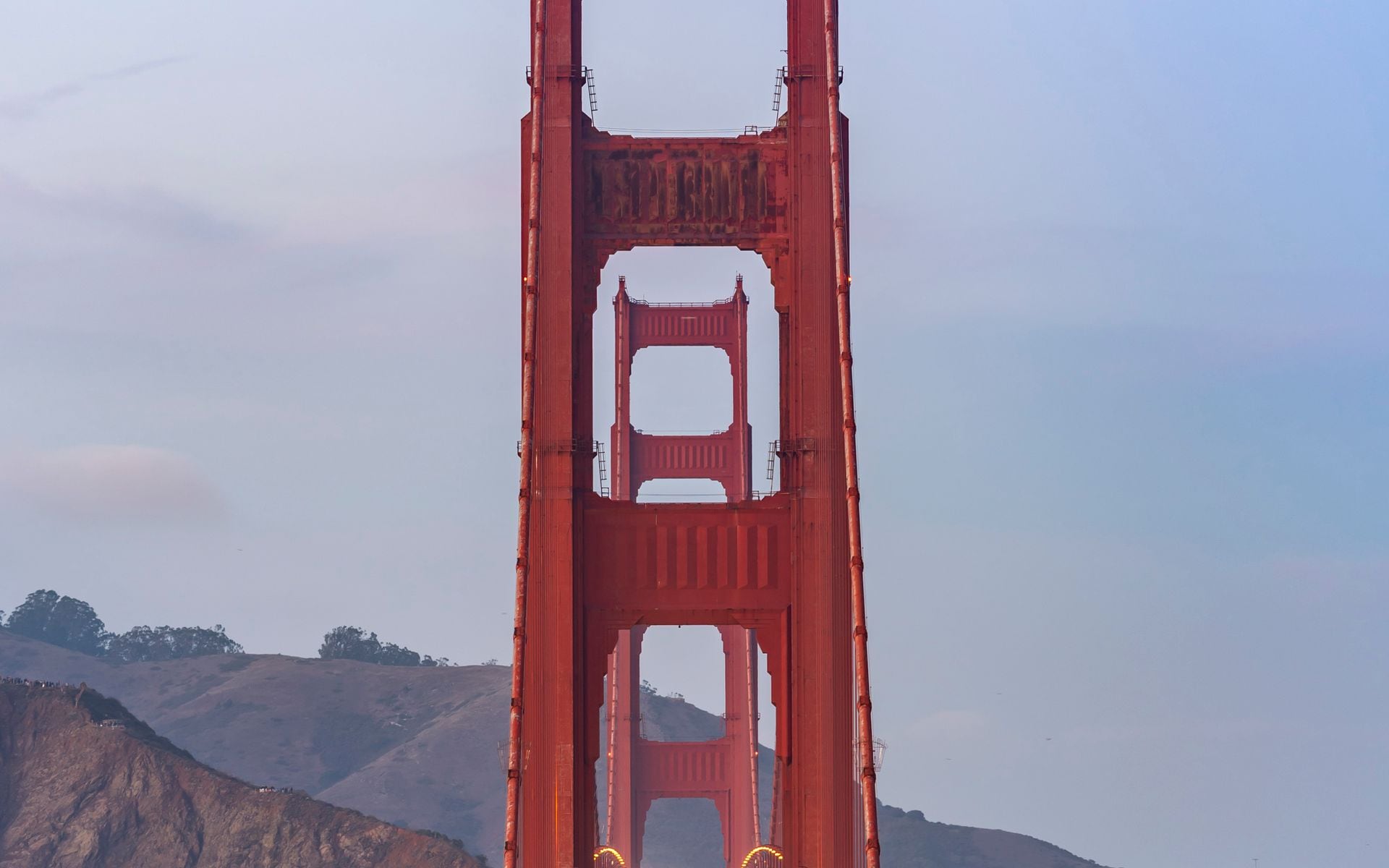
The Golden Gate Bridge opened in 1937 and spans 1.7 miles across the strait where San Francisco Bay meets the Pacific. Its towers rise 746 feet, and the color, officially International Orange, was chosen partly so ships and aircraft could see it through the fog. It carries U.S. Route 101 and California Route 1, and it remains one of the most-visited free attractions in the state. You do not buy a ticket to see it, walk it, or bike it. The only cost is the southbound vehicle toll.
The bridge sits at the north edge of San Francisco, connecting the city to Marin County. Because it spans a fog-prone gap, conditions change fast: a socked-in morning can turn clear by early afternoon, and a sunny start can vanish under gray by dinner. That variability is part of the deal, and it shapes when you should show up. There is a free visitor plaza and welcome center on the San Francisco side with parking, restrooms, and history exhibits.
A visit here fits neatly into a wider tour of the San Francisco Bay Area, and the bridge is one of the anchor stops on any first trip through the state you plan from our California travel guide. Pair it with a stretch along the coast, since some of the best beaches in California sit within a short drive on either side of the span. The bridge also opens onto one of the state's best scenic drives: cross into Marin and Highway 1 climbs north through the headlands toward the coast.
Best Viewpoints and How to Photograph It
For the classic postcard angle, cross to the Marin side and climb to Battery Spencer in the Marin Headlands. From that bluff you look back across the full span with the towers framed against the city, and it is the single best spot for a wide shot, especially when fog sits low around the deck. Vista Point at the north end of the bridge is the easy, no-hike option with a large parking lot, though it fills fast.
On the San Francisco side, Fort Point sits directly beneath the southern anchorage and gives you a dramatic look straight up at the underside and the arch. Crissy Field and the Presidio's Marshall's Beach offer the bridge with foreground beach and bay, and Baker Beach to the west is the go-to for a sunset shot with waves in front. For the top-down overview, drive up to Hawk Hill above Battery Spencer.
Light matters as much as location. Early morning and the hour before sunset give you warm color on the orange steel, and the fog often photographs best when it is low enough to leave the tower tops clear. If you have a clear day, shoot from the Marin side in the morning when the sun is behind you lighting the bridge and the city.
Walking and Biking Across
Walking the bridge is free. The east sidewalk is open to pedestrians during daylight hours and gives you the bay-and-city side; it is about 1.7 miles each way, so a round-trip walk is roughly a two-hour outing with photo stops. Dress warmer than you think, because wind and fog on the deck make it far colder than the streets in town even in summer. Many people walk partway out to the first tower and back rather than the whole span.
Biking across is one of the best half-day rides in California. The standard route runs from Fisherman's Wharf through the Presidio to the bridge, across to Sausalito, about 8 miles, where you can eat lunch and take the ferry back to the city instead of riding the return. Rental shops near the wharf set you up with the bike, helmet, and ferry information. Cyclists use the west sidewalk on weekends and share the east side on weekdays, so check the posted schedule.
Vehicles crossing southbound into San Francisco pay a toll, currently around $9 to $10 with FasTrak and a few dollars more for pay-by-plate, and there is no cash booth: the toll is charged electronically and billed to the rental car or your account. Northbound into Marin is free, and pedestrians and cyclists never pay.
Best Time to Go and the Fog
San Francisco's summer fog, which locals nickname Karl, is the defining weather here. From roughly June through August the fog rolls through the Golden Gate on most mornings and evenings, driven by cold ocean air meeting the warm inland valleys. It often burns off by late morning to early afternoon and returns near sunset, so the clearest window on a summer day is usually the middle hours, roughly 11 a.m. to 4 p.m.
The genuinely clearest, warmest weather in San Francisco comes in September and October, after the summer fog pattern eases. Spring and late fall are also good bets. If your goal is a sharp, sunny photo of the whole span, those shoulder months give you the best odds. If you love the moody look of fog swirling around the towers, summer mornings deliver it almost on schedule.
Whenever you come, plan for wind and layers. The strait funnels cold air, and the bridge deck can be 15 to 20 degrees cooler than downtown. Sunrise and the last hour of daylight give the best light and the thinnest crowds at the popular viewpoints.
Getting There, Parking, and Where to Stay Nearby
The San Francisco welcome center and plaza are at the south end off U.S. 101, about 15 to 20 minutes from downtown by car outside rush hour. Parking there is limited and fills by mid-morning in summer, so arrive early or use the Marin-side Vista Point lot. Muni buses run to the bridge from the city, and rideshare drops you right at the plaza, which spares you the parking hunt entirely.
Most visitors base in San Francisco proper. Near the waterfront, the Argonaut Hotel at Fisherman's Wharf puts you close to the bike-rental shops and the ferry terminals for a Sausalito ride. Downtown, the Fairmont San Francisco on Nob Hill, the Hyatt Regency San Francisco on the Embarcadero, and the Hilton San Francisco Union Square give you a range of price points within a short drive of the bridge.
For food after a walk or ride, House of Prime Rib is a San Francisco institution worth a reservation, Brenda's French Soul Food does a serious breakfast, and Kokkari Estiatorio is the pick for a nicer Greek dinner downtown. If you cross to Marin, Sausalito's waterfront is full of casual seafood spots a short walk from the ferry landing.
Frequently asked questions
Is it free to walk across the Golden Gate Bridge?
Yes. Walking and biking across the Golden Gate Bridge are free. The east sidewalk is open to pedestrians during daylight hours. Only vehicles pay, and only when heading southbound into San Francisco: the toll runs about $9 to $10 with FasTrak, charged electronically with no cash booth. Northbound into Marin is free for everyone.
When does the fog clear at the Golden Gate Bridge?
In summer the fog usually burns off by late morning and returns near sunset, so the clearest window is roughly 11 a.m. to 4 p.m. For genuinely clear, sunny days overall, come in September or October, after the summer fog pattern eases. If you want the moody look of fog around the towers, summer mornings deliver it almost daily.
Where is the best place to photograph the Golden Gate Bridge?
Battery Spencer in the Marin Headlands is the top spot, looking back at the full span with the city behind it. Fort Point sits directly under the southern end for a dramatic upward angle, Baker Beach is best for sunset with waves in front, and Vista Point at the north end is the easy no-hike option. Morning light from the Marin side is ideal.
How long does it take to walk or bike across?
Walking the 1.7-mile span one way takes 40 to 60 minutes, so a round trip with photo stops is about two hours. The popular bike route runs from Fisherman's Wharf to Sausalito, about 8 miles, where most riders take the ferry back rather than riding the return. Dress in layers, because wind and fog make the deck much colder than the city.
Where should I park to visit the bridge?
The San Francisco welcome center has a small lot that fills by mid-morning in summer, so arrive early. The Marin-side Vista Point lot is the other option and also fills fast. Muni buses and rideshare both serve the plaza and save you the parking hunt entirely, which is often the easier call on a busy day.