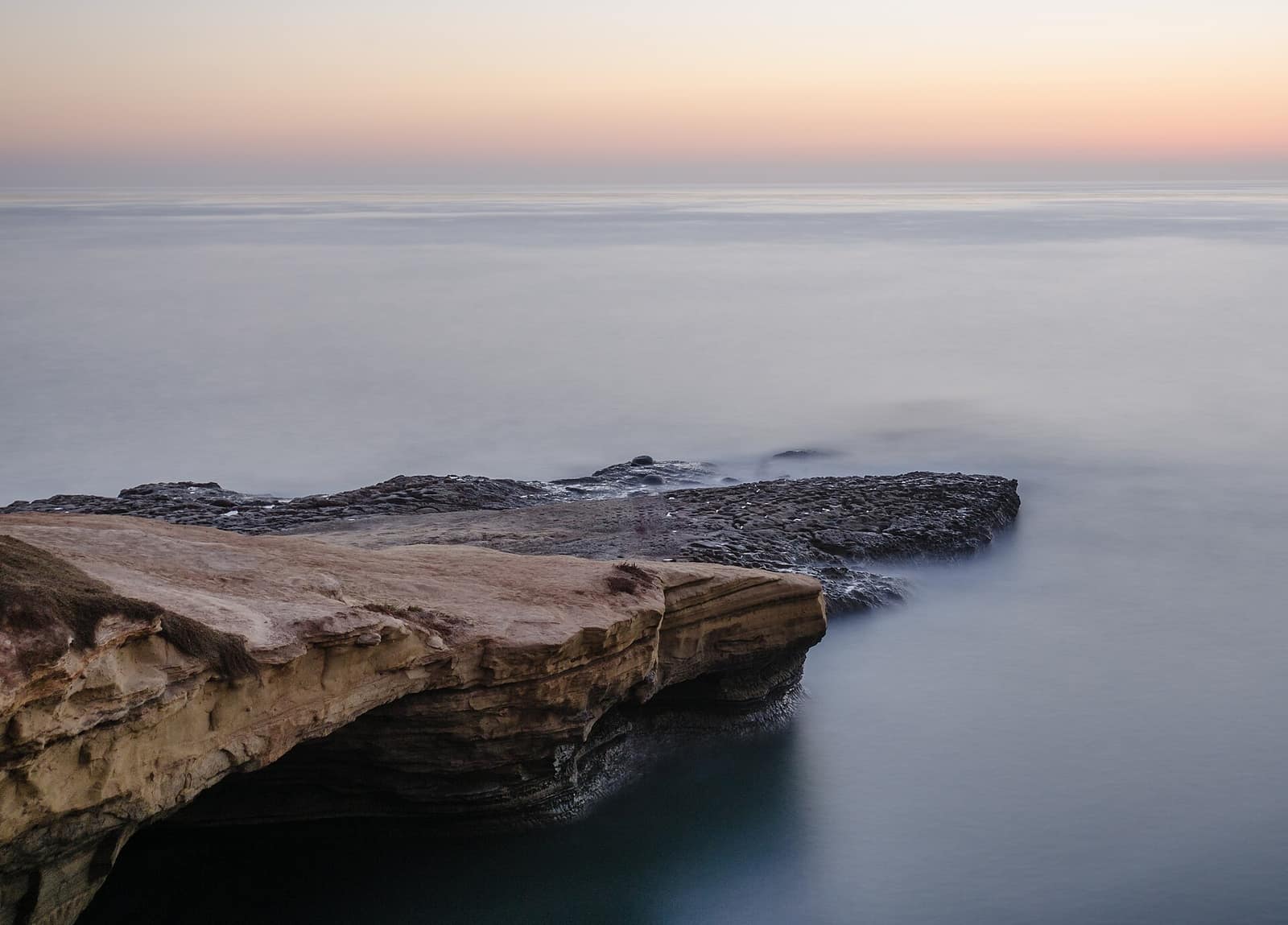
Sunset Cliffs Natural Park runs along about 1.5 miles of San Diego’s western shoreline, in the Ocean Beach neighborhood south of Mission Bay. The cliffs are sandstone, stacked in horizontal layers and carved by waves into sea caves, arches, and narrow coves you can reach at low tide. There is no entry fee, no ranger station, no organized attraction. You park on the street, walk to the bluff, and watch the sun drop into the Pacific. That is the whole experience, and it is one of the better free afternoons San Diego offers. This guide covers where to go along the park, when to time your visit for the best light and low tides, what to watch out for, and what to add to a visit in the neighborhood.
What the Park Is and Who Manages It
The park runs along Sunset Cliffs Boulevard from Point Loma Avenue at the north end down to Ladera Street near the southern tip of Ocean Beach. The City of San Diego Park and Recreation Department manages it; information on hours and access is on the city’s parks website at sandiego.gov. The park is free to enter and open during daylight hours, though people are at the bluff at dusk routinely and the city generally permits it.
The geological story here is visible in the rock. The sandstone is soft and horizontally layered, which is why the waves carve it so efficiently. Caves open at the base of the cliffs. Arches form and eventually collapse. The city has roped off several sections where the edge is actively eroding, and those ropes are worth respecting: the edge can give way without warning, and the drop to the water is 20 to 30 feet in most places. This is a real hazard, not a theoretical one.
The Best Spots Along the Bluff
The northern stretch, from Point Loma Avenue down to Cornish Drive, is the most popular section and the easiest to access. A paved walkway follows the bluff here, and on summer evenings this section fills with a crowd ranging from families to photographers on tripods. The path is relatively flat, which makes it comfortable for a wider range of visitors.
Around Adah Street, the bluff steps down slightly and you get closer to the water level. The sea caves in this section become visible at lower tides, and if you scramble down the rough rock steps, you can walk into a few of them when the surf is calm. Do not go in during high surf or high tide: the surge in these caves is forceful and people have been swept off the rocks. Check the tide before you attempt any lower access.
Farther south, the stretch from Cornish Drive toward Ladera Street quiets down. Fewer people make it this far on a typical evening. A concrete overlook near Cornish gives you a clean westward view with less foreground clutter than the northern section, and one of the better angles on the sea caves without needing to scramble down.
At the southern end near Ladera Street, a staircase leads to a lower terrace and the tide pools. The tide pool zone is a California Marine Protected Area, which means no collection of anything, living or dead. Shore crabs, hermit crabs, sea anemones, and limpets are the most common finds. When the ocean is calm and the tide is low (roughly minus 0.5 feet or below), the pools are at their best. You can track San Diego tide predictions on NOAA Tides and Currents using the San Diego Bay station.
When to Go: Light, Tides, and the Marine Layer
The name is not accidental. Sunset is the reason most people come, and the timing matters more than you might expect.
In summer, the sun sets somewhere between 7:30 and 8:00 pm. In fall and winter, that shifts to 4:45 to 5:30 pm, which changes the logistics entirely: you can come after a late afternoon and still catch the light, and the fall and winter sky tends to be warmer and clearer than what you get in early summer. June Gloom is the factor people underestimate. From about mid-May through late June, a marine layer rolls off the ocean every afternoon and often does not burn off before sunset. You can arrive at 6:30 pm expecting vivid color and find a flat gray ceiling instead.
July through October is the most reliable window for clear sunset light at Sunset Cliffs. If the orange-and-pink sky in the photos is what you are after, aim for late September or October. See the best time to visit California for the full seasonal breakdown.
Weekend evenings in summer draw significant competition for street parking. If you are coming on a Friday or Saturday in July or August, plan to arrive by 5:30 pm to secure a spot with time to walk the bluff before the crowd peaks. Weekday evenings are noticeably calmer.
For tide access to the sea caves and tide pools, a low tide of zero or below opens the lower rock shelves. Even then, check the NOAA marine forecast alongside the tide chart: a strong swell makes the lower areas dangerous regardless of the tide reading.
Getting to Sunset Cliffs San Diego: Parking and Transit
Sunset Cliffs is about 10 to 12 minutes from downtown San Diego by car. Take I-8 west to Sunset Cliffs Boulevard, which runs south along the ocean and through the park. Parking is free and on-street along Sunset Cliffs Boulevard, with more options on Cornish Drive and the cross streets heading into Ocean Beach.
On busy summer evenings, street parking fills earlier than it looks on a map. If you can’t find a spot on the boulevard, the Ocean Beach neighborhood streets a few blocks east (Bacon Street, Cable Street, Voltaire Street) usually have availability. The walk to the bluff from there is short. The Metropolitan Transit System’s Route 35 runs along Sunset Cliffs Boulevard if you are coming by bus.
There is no parking fee, no day-use fee, and no reservation required.
What to Wear and What to Watch For
Shoes with grip matter if you plan to access the lower shelves or caves. The rock is uneven and can be slippery where the waves reach. Flip-flops are not the right choice for anything below the paved path. A light layer is worth packing even in summer: the sea breeze at the bluff top is consistent, and the temperature drops quickly once the sun sets.
Do not swim here. There are no lifeguards, no sandy entry points, and the surge in the coves is unpredictable. The park is explicitly not a swimming beach. For actual swimming, Ocean Beach proper is about a mile north with a wide, lifeguarded strand.
Dogs are allowed on leash. The northern paved section is comfortable for strollers; the southern end near the tide pools involves scrambling over uneven rock.
Ocean Beach: What to Pair with the Visit
Sunset Cliffs sits at the western edge of Ocean Beach, a neighborhood worth spending time in before or after. Newport Avenue, a few blocks inland, is the main commercial drag: used record shops, independent coffee, Mexican food, and some of the more relaxed bar energy in San Diego. The Ocean Beach Pier is about a 10-minute walk north of the park, a long free-standing pier with fishing access and a view back toward Point Loma.
For a beach day tied to the cliff visit, Ocean Beach a mile north has the sand and lifeguards that Sunset Cliffs lacks. The San Diego region guide covers the major beaches, neighborhoods, and day trips in the area. For comparisons across the full Southern California coast, the best beaches in Southern California post covers everything from La Jolla Cove to Malibu.
If you are spending a few days along the coast, the Southern California beach itinerary puts Sunset Cliffs into a route that also hits La Jolla, Coronado, and the Orange County coast. For a broader look at what California’s coastline offers, the California beaches guide is the starting point.
Pairing It with Point Loma
Sunset Cliffs is at the northern end of Point Loma peninsula, and Cabrillo National Monument is at the southern tip, about a 10-minute drive. The monument has its own Pacific-side tide pools (distinct from Sunset Cliffs, and also a Marine Protected Area) along with views across the harbor entrance to downtown San Diego and Coronado. Winter months, roughly December through February, are when gray whales move through the channel close to the point, and the overlook at Cabrillo is one of the more reliable shore-based whale-watching spots on the California coast.
The drive south on Cabrillo Memorial Drive from Ocean Beach to the monument takes about 15 minutes and gives you a bay view on one side and the open ocean on the other.
For the best chance of watching the sunset light the cliffs in full color: arrive an hour before sunset, walk south toward Ladera Street, and find a rock that faces west. The park is free, no reservation required, and the cliffs will be there regardless of what the guidebooks say about them.