How This Loop Works
Ten days lets you do what a week cannot: add Napa and Sonoma, add the giant sequoias, and still finish on the coast without racing. This route starts in San Francisco, swings north to wine country, crosses to the Sierra for Yosemite and Sequoia, then drops to the coast at Monterey and works south through Big Sur to Los Angeles. It is a one-way plan, so fly into San Francisco (SFO) and out of Los Angeles (LAX) and rent a car for one-way drop-off.
The transfers are spread out so no single day is punishing: San Francisco to Yosemite is about 4 hours, Yosemite to Sequoia about 4, and Sequoia to the Monterey coast about 4.5. Everything else is 2 to 3 hours. Start each drive early and the afternoons stay open. If ten days still feels like a lot of parks, the coastal-only San Francisco to Los Angeles road trip trims the Sierra, and the California national parks road trip goes the other way and doubles down on them.
Reserve early. Yosemite and Sequoia in-park lodging books months ahead, wine-country rooms are pricey on weekends, and you should check whether Yosemite is running its peak-season day-use reservation for your dates. If you are still shaping the trip, the California travel guide lays out the regions before you lock in this order.
Days 1-2: San Francisco
Give the San Francisco Bay Area two full days before you pick up a car. Day one: walk or bike the Golden Gate Bridge, ride a cable car, and wander Fisherman's Wharf and Chinatown. The Argonaut Hotel sits on the waterfront and the Fairmont San Francisco crowns Nob Hill. House of Prime Rib is the old-school dinner institution, carving tableside since 1949.
Day two: take the morning ferry to Alcatraz Island, book through Alcatraz City Cruises well ahead because it sells out, then spend the afternoon in Golden Gate Park or the Mission. Brenda's French Soul Food does a memorable breakfast, and Kokkari Estiatorio is a strong Financial District dinner. The city runs fine on foot and transit, so don't rent the car until you leave.
Pick up your rental on the morning of day three. Parking in San Francisco is expensive and slow, and you gain nothing by garaging a car for two days you spend walking. Fill the tank on your way out of the city toward the North Bay.
Day 3: Napa and Sonoma Wine Country
Napa is about an hour and a quarter north of San Francisco. Spend the day in the vineyards of Napa and Sonoma valleys, and plan tastings ahead because most wineries now require reservations. Domaine Carneros pours sparkling wine on a hilltop terrace, Trefethen Family Vineyards is a classic estate in a restored 1886 winery, and the Oxbow Public Market in downtown Napa is the easy lunch stop with a dozen food stalls under one roof.
If you would rather not drive between tastings, book a small-group tour or a driver for the day; the pours add up fast and the sheriff patrols these roads. Sonoma is a shorter, more laid-back alternative to Napa, with a walkable plaza and tasting rooms you can reach on foot. Either valley makes a full, satisfying day.
Stay the night in the wine country or drive back toward the Central Valley to shorten tomorrow's mountain leg. A one-night wine-country stop is easy to expand: the dedicated Napa and Sonoma weekend itinerary covers a two-day version if you want more time in the vineyards before heading to the Sierra.
Days 4-5: Yosemite National Park
Drive to Yosemite on day four, roughly 4 hours from the Bay Area or a bit less from wine country. Enter via Big Oak Flat (Highway 120) or Arch Rock (Highway 140), and reach Yosemite Valley by early afternoon. Start at Tunnel View, where El Capitan, Bridalveil Fall, and Half Dome line up in one frame, then settle into Yosemite Valley Lodge near the base of Yosemite Falls, or a motel in the entrance towns of Mariposa or Oakhurst if the park is full.
Day five is your full Yosemite day. Hike the Mist Trail up the granite steps beside the Merced River to Vernal Fall (about 3 miles round trip) or on to Nevada Fall (about 7 miles), and drive up to Glacier Point (open roughly late May through October) for the straight-down valley view. Yosemite is one of the country's busiest national parks, close to four million visitors a year, so start early and expect company. Entrance is $35 per vehicle for seven days.
In late spring the waterfalls are at full roar from the Sierra snowmelt; by August many slow to a trickle. If you have an evening to spare, the flat valley loop is an easy bike ride, and the Ansel Adams Gallery runs photo walks. Rest up, because tomorrow adds a second park.
Day 6: Sequoia and Kings Canyon
There is no direct road between Yosemite and Sequoia, so you loop around through Fresno, about 4 hours and 130 miles. The reward is the biggest trees on earth. In Sequoia National Park, the General Sherman Tree is the largest living thing by volume anywhere, and the Congress Trail loops through the Giant Forest past groves of sequoias that make Yosemite's crowds feel far away.
If you have time and a head for heights, climb the granite stairway up Moro Rock for a Sierra panorama, or detour into neighboring Kings Canyon, where the road drops into one of the deepest canyons in North America. The parks share an entrance fee and a boundary, so a single $35 vehicle pass covers both. Cell service is thin, so download maps before you arrive.
Stay near the park in Three Rivers, the small town just outside the Sequoia entrance, which has lodges and diners along the Kaweah River. This pairing of Yosemite and Sequoia is the heart of any Sierra parks trip; the full California national parks road trip strings more of them together if the giant trees leave you wanting more.
Day 7: Sequoia to the Monterey Coast
Trade the mountains for the sea. Sequoia down to Monterey is about 230 miles and 4.5 hours, crossing the Central Valley before the coast opens up around Monterey Bay. Arrive by mid-afternoon and spend what's left of the day on the peninsula. The Monterey Bay Aquarium on Cannery Row is one of the best in the world, and the 17-Mile Drive through Pebble Beach ($11.75 per car) loops past the Lone Cypress.
Just south, Carmel-by-the-Sea is a walkable village with galleries and a white-sand beach, and Point Lobos State Natural Reserve has short cliff trails past sea lions and jade coves ($10 parking, fills early). This is prime whale-watching water, with gray and humpback trips running out of Old Fisherman's Wharf much of the year.
Stay in Monterey. The Monterey Plaza Hotel & Spa sits over the water on Cannery Row, and Old Fisherman's Grotto on the wharf does the classic clam chowder in a bread bowl. Tomorrow is the Big Sur drive, so turn in early.
Day 8: Big Sur to Santa Barbara
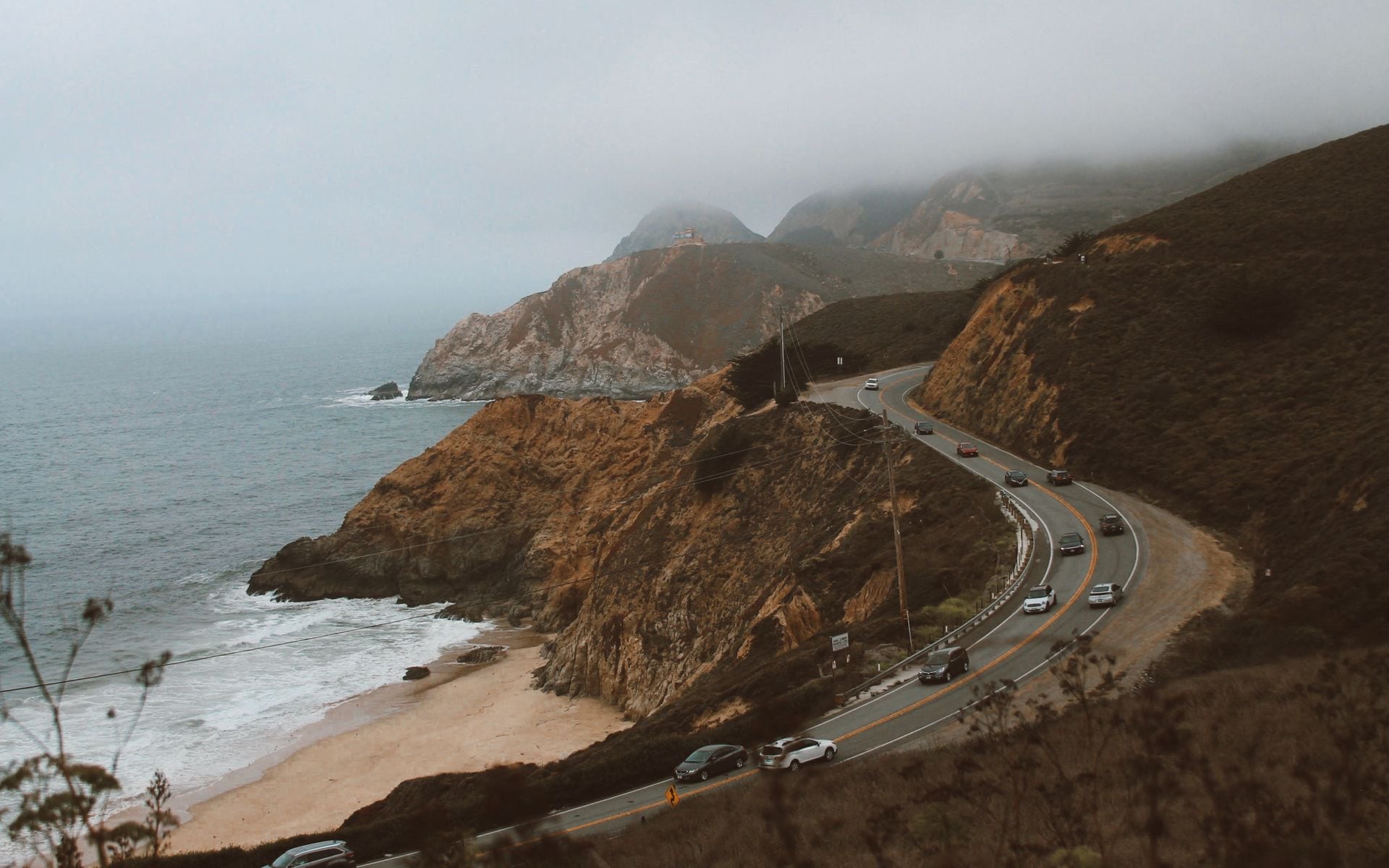
Highway 1 from Monterey through Big Sur to Santa Barbara is about 245 miles and a full day with stops. Cross Bixby Creek Bridge 20 minutes south of Carmel, walk to the McWay Falls overlook in Julia Pfeiffer Burns State Park, and have lunch on the terrace at Nepenthe, 800 feet above the water. Further south, the Piedras Blancas elephant seal rookery near San Simeon puts hundreds of seals within feet of a free boardwalk.
Check Caltrans QuickMap before you drive, because Big Sur closes for landslides more than any road in California, and a slide forces a long inland detour on Highway 101. Fuel up in Monterey, since gas between Carmel and San Simeon is sparse and expensive, and download offline maps for the dead cell zones.
Reach Santa Barbara by evening. The town backs a Spanish mission and red-tile roofs against the Santa Ynez Mountains and the sea. Have dinner at Brophy Bros. on the harbor and stay near downtown State Street. If Big Sur is closed, Solvang and the Chumash Casino Resort in the Santa Ynez Valley make a good inland alternate.
Days 9-10: Los Angeles and San Diego
Day nine: Santa Barbara to Los Angeles is about 95 miles and 2 hours without traffic. Take Highway 1 through Malibu for a last stretch of coast, then base in the city. The Hollywood Roosevelt sits on Hollywood Boulevard across from the Chinese Theatre, and the InterContinental Los Angeles Downtown anchors the tallest tower on the West Coast. Philippe The Original has served French-dip sandwiches since 1908, and Bottega Louie is the loud downtown brunch.
Day ten depends on your flight. With a full day, drive south: Los Angeles to San Diego is about 2 hours on I-5, and San Diego rewards it with the coves of La Jolla, Balboa Park, and the beaches of Coronado, where the Hotel del Coronado has stood since 1888. Fly home from San Diego (SAN) or loop back to LAX, allowing extra time because both airports run slow.
If your ten days lean more toward beaches than parks, you can swap the Sequoia day for extra coast and follow the deeper San Francisco to Los Angeles road trip down Highway 1. Either way, this loop gives a first-timer the city, the wine country, the Sierra, and the coast in one clean pass.
Frequently asked questions
Is 10 days enough to see California?
Ten days covers a first trip well: San Francisco, wine country, Yosemite and Sequoia, the Central Coast, and Los Angeles with an optional San Diego day. It does not cover the deserts (Death Valley, Joshua Tree, Palm Springs) or the far north, which would need a second trip or a longer one. The pace here is comfortable without backtracking.
Which airports should I use?
Fly into San Francisco (SFO) and out of Los Angeles (LAX) or San Diego (SAN), and rent a car for one-way drop-off. This is a one-direction loop, so flying round-trip into one airport would cost you a day of backtracking.
How much time is spent driving?
The longest legs are San Francisco to Yosemite (4 hours), Yosemite to Sequoia (4 hours), Sequoia to Monterey (4.5 hours), and the Big Sur day (a full day with stops). The rest are 2 to 3 hours. Spread across ten days, that leaves most afternoons free.
Can I do wine country and the parks in the same trip?
Yes, and ten days is enough time to. This route puts Napa and Sonoma on day three on your way from San Francisco toward the Sierra, so wine country and the parks fit together without a special detour. Book tastings ahead and use a driver if you plan to sample much.
When is the best time for this itinerary?
Late May through June gives you full Yosemite waterfalls, open Sierra roads, and mild coast. September and October bring the clearest coastal weather and the wine-country harvest. Avoid winter, when Glacier Point Road and the Sierra high country close under snow and the Big Sur coast sees the most rain and slides.